

Key Takeaways
- Speed perception is genuinely unreliable - drivers routinely misjudge how fast they're traveling in reduced-speed zones.
- Familiar routes breed complacency, making repeat offenders of otherwise careful drivers.
- Stopping distances at 35 mph are dramatically longer than at 25 mph, especially near pedestrians.
- Fines in active school and work zones are typically doubled or tripled compared to standard violations.
- Simple habits - early deceleration, phone silencing, and visual scanning - significantly reduce risk in these zones.
The Gap Between What Drivers Think and What's Actually Happening
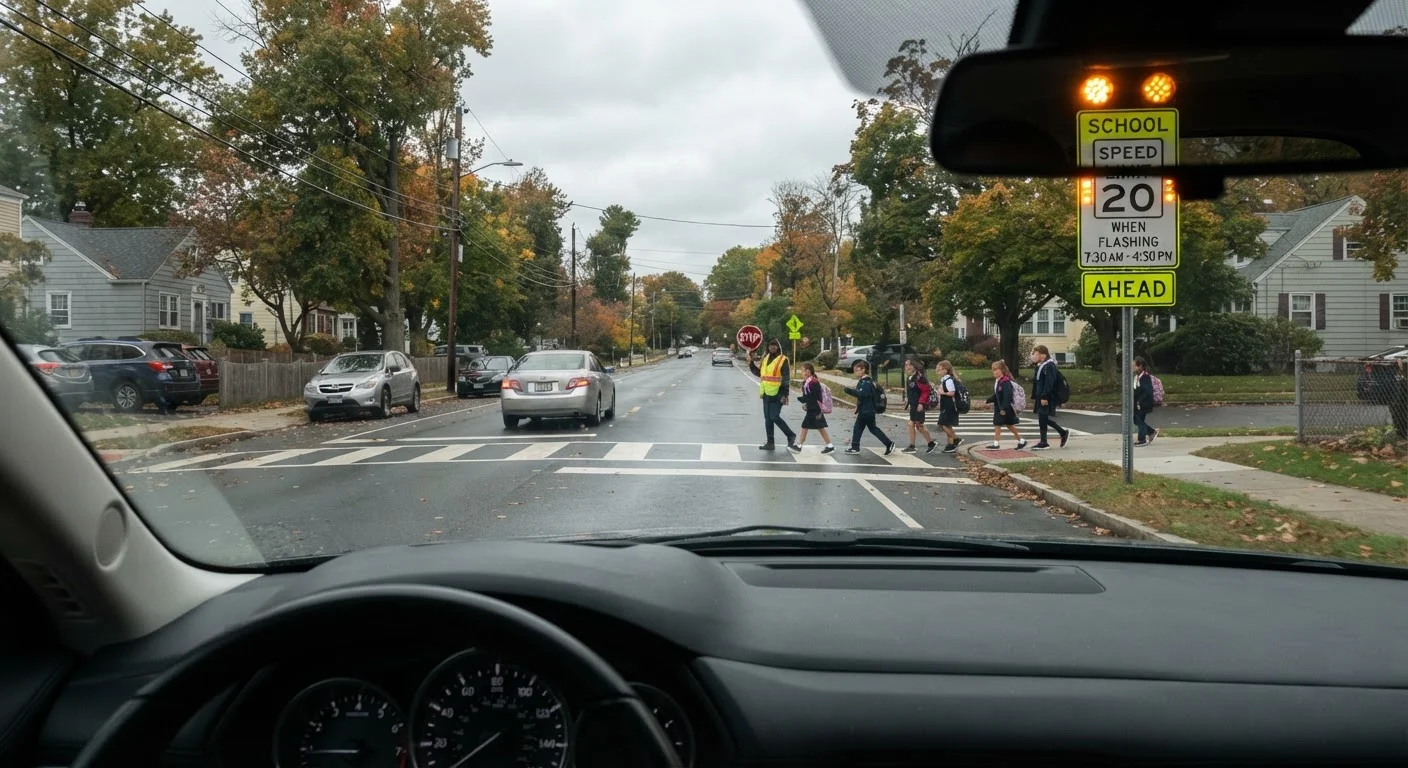
Most drivers consider themselves safe and law-abiding. Yet speed-zone violations - particularly in school and construction areas - are among the most common traffic infractions recorded by law enforcement. The disconnect isn't mostly about disregard for the law. It's rooted in how human perception actually works at the wheel.
Research in traffic psychology consistently shows that drivers are poor self-judges of speed, particularly when transitioning from a higher-speed corridor (like a 45 mph arterial road) to a reduced-speed zone. The nervous system calibrates to what feels normal - and after several minutes at highway speeds, 35 mph can genuinely feel like crawling. That feeling is misleading, and in zones where children or road workers are present, the consequences of acting on it can be severe.
Understanding the specific mistakes drivers make in these zones - and why they happen - is the first step toward correcting them. This is also core to what defensive driving actually means: anticipating hazards before they materialize, not reacting after.
Relying on how speed 'feels' rather than checking the speedometer.
Why it happens: After extended driving at higher speeds, slower speeds feel more sluggish than they are. The brain adapts to the pace, making 35 mph feel like 20 mph.
Treating a familiar route as low-risk, even when zone conditions change daily.
Why it happens: Familiarity breeds autopilot driving. Drivers who pass the same school or construction site every day tend to stop reading the environment and revert to routine behavior.
Braking late - waiting until inside the zone to slow down.
Why it happens: Drivers often focus on the posted sign rather than planning the deceleration needed before reaching it, especially when distracted or following closely behind another vehicle.
Using a phone or adjusting in-car controls while passing through the zone.
Why it happens: Reduced speeds can paradoxically feel less urgent, leading some drivers to use the 'slower' moment to check messages or adjust music - exactly when full attention is most needed.
Assuming the zone is inactive if no workers or children are visible.
Why it happens: Drivers rationalize that if nobody is present, the speed limit doesn't really apply. In many states, this reasoning is legally incorrect and still results in citations.
Why These Zones Demand a Different Mindset
School and work zones share a common thread: they place vulnerable people - children, pedestrians, and road workers - in close, often unpredictable proximity to moving vehicles. A child darting between parked cars or a flagman stepping into a lane doesn't give drivers much reaction time, even under ideal conditions.
~40%
Work zone crashes involving speeding
The Federal Highway Administration has reported that speeding is a contributing factor in a significant share of work zone crashes each year in the US.
51 ft
Extra stopping distance at 35 vs. 25 mph
Under typical dry-road conditions, stopping distance increases substantially between 25 and 35 mph - a critical difference when pedestrians are nearby.
Physics makes this even less forgiving. The stopping distance at 35 mph is roughly 136 feet under normal dry-road conditions; at 25 mph, that drops to about 85 feet. That 51-foot difference can mean the difference between a near-miss and a fatality. Distracted or fatigued driving compounds the problem further - both impair reaction time in ways that drivers frequently underestimate. For a closer look at how those impairments differ, see our article on drowsy driving vs. distracted driving.
Penalties also escalate sharply in these zones. Most states impose fines two to three times the standard rate for speeding violations when workers or children are present. In some jurisdictions, repeat offenses can carry license suspension. These consequences are worth knowing - not as a scare tactic, but as context for why the reduced limits are enforced so seriously.
Zone Speed Limits Are Often Legally Active 24/7
Many drivers assume reduced speed limits only apply when workers or children are visibly present. In a large number of US states, posted work zone and school zone speed limits are legally enforceable at all times the signs are displayed - regardless of activity. Assuming otherwise is both a legal risk and a safety risk. Always verify the specific laws in your state.
If you're working on building safer habits across everyone in your household, a structured approach helps. The family driver safety plan framework is a practical starting point for establishing consistent expectations with new and experienced drivers alike.