

Key Takeaways
- Overpacked itineraries are the single most common reason family trips feel like punishment rather than vacation.
- Young children's sleep schedules should anchor the daily plan, not compete with it.
- Skipping destination research specific to young kids leads to avoidable logistical headaches on the ground.
- Budget estimates that ignore child-specific costs consistently leave families short on funds mid-trip.
- Jet lag affects toddlers differently than adults and requires a deliberate adjustment plan.
Why Planning for Young Kids Is a Different Exercise Entirely
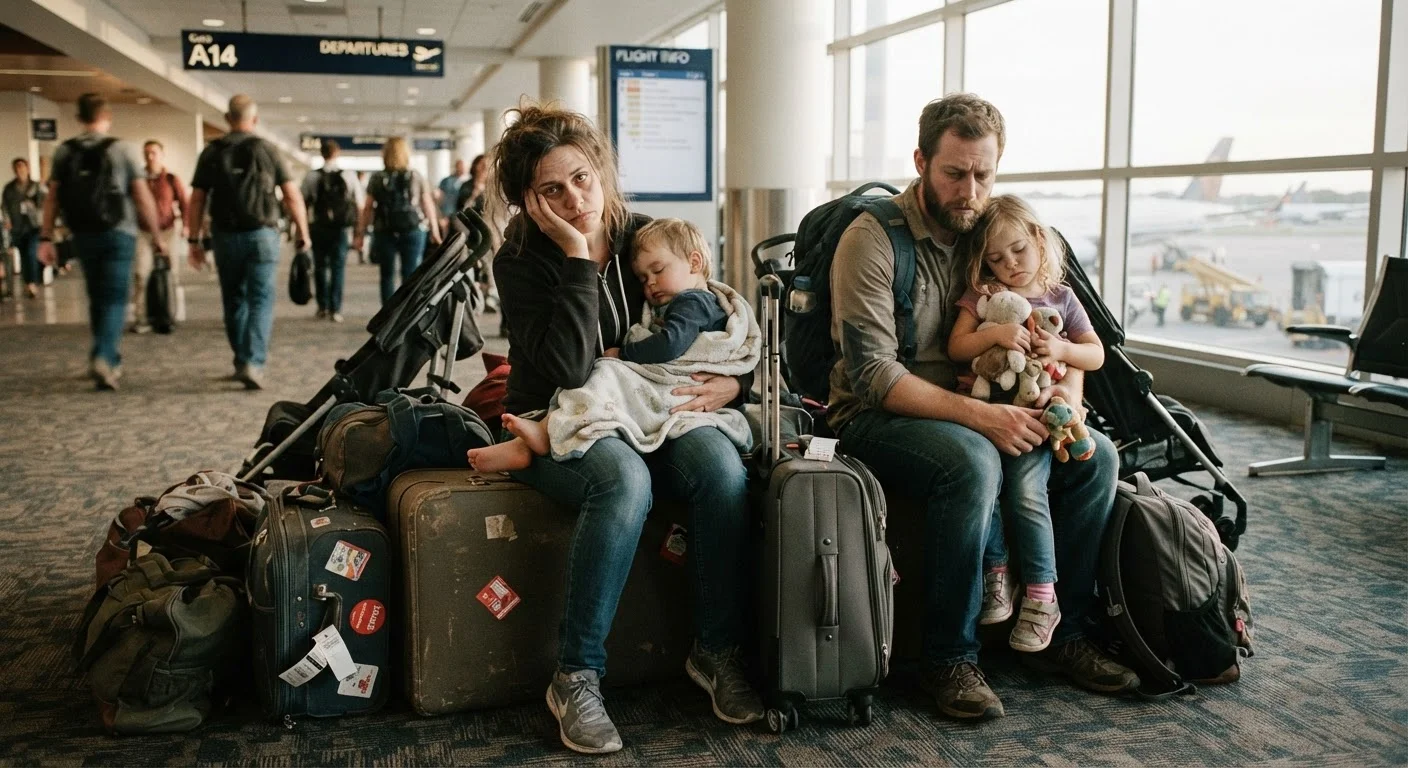
Traveling with young children - roughly ages one through five - isn't a scaled-down version of adult travel. It operates on a completely different set of constraints: nap windows, feeding schedules, mobility limits, and attention spans measured in minutes. Families who don't account for these realities upfront tend to discover them the hard way, usually somewhere between a meltdown at a museum entrance and a rushed taxi back to the hotel during what should have been dinner.
The good news is that most of these problems are avoidable. They stem from predictable planning errors, not from travel being inherently incompatible with young kids. See our common myths about traveling with young kids for perspective on why so many families delay unnecessarily. Understanding what goes wrong - and why - is the first step toward building a trip that actually works.
The Most Common Planning Mistakes (And How to Fix Them)
The mistakes below consistently surface across family travel planning. They're not random - each one follows from a specific, understandable assumption that doesn't hold up once young children are in the mix.
Overpacking the daily itinerary with back-to-back activities.
Why it happens: Parents plan trips while envisioning a best-case version of the day, forgetting that young children require transition time, unscheduled play, and unpredictable rest periods.
Ignoring or working around the child's regular sleep schedule.
Why it happens: Families assume sleep can flex during vacation, or they try to shift nap times to fit activities rather than structuring activities around nap times.
Underestimating the effect of jet lag on toddlers and young children.
Why it happens: Parents often plan for their own jet lag recovery but don't account for how significantly time zone shifts affect young children's behavior, appetite, and sleep quality.
Skipping child-specific destination research before committing to a trip.
Why it happens: Families rely on general travel reviews that don't flag stroller accessibility, feeding room availability, proximity to pediatric care, or the noise and crowd levels that affect young children.
Underbudgeting by not accounting for child-specific travel costs.
Why it happens: Budget estimates are often built around adult costs, with children treated as a small additional line item - when in reality, child admissions, special food requirements, early check-outs, and emergency pharmacy runs can add substantially to total costs.
Choosing accommodation primarily on price without considering layout or location for a family with young kids.
Why it happens: Families optimize for nightly rate without fully thinking through what a one-room hotel configuration means for bedtime routines, or how far a budget property might be from the activities and amenities they need.
For a broader look at how these errors compound over the course of a trip, the reasons family trips fall apart article covers the downstream consequences in detail.
Building a More Realistic Framework
Fixing these mistakes doesn't mean lowering your ambitions - it means restructuring how you pursue them. A few practical principles help:
- Plan around sleep, not despite it. Identify your child's nap window and treat it as a non-negotiable daily anchor. Schedule transit, downtime, or accommodation time during that window rather than activities.
- Use the two-activity rule. Aim for no more than two structured activities per day. Anything beyond that is aspirational, not planned.
- Research destinations through a child-specific lens. Stroller accessibility, proximity of accommodation to green space, availability of familiar foods, and proximity to medical care all matter more with young kids. Our destination research checklist for families is a useful starting framework.
- Budget for the real costs. Child admission fees, food substitutions, laundry, and unexpected pharmacy runs add up. Build a 20% buffer into any family travel budget and treat it as structural, not pessimistic.
Don't Assume 'Family-Friendly' Labels Tell the Whole Story
A destination or attraction marketed as family-friendly may still pose real logistical challenges for families with children under five specifically. Cobblestone streets, multi-floor venues without elevators, and long queuing environments can all make an otherwise appealing destination genuinely difficult. Always verify the specifics before committing - particularly for international trips where returning home mid-trip isn't a realistic option.
For families considering urban destinations specifically, what makes a city trip actually work with young children breaks down which urban features matter most and which are overrated for this age group.
Long travel days deserve their own preparation. keeping kids engaged on long travel days offers practical, non-screen approaches that hold up across flights and drives. And if you're building a road trip itinerary, a realistic family road trip itinerary framework addresses pacing in a format built around how families actually travel.
The core insight across all of it: young children don't need less travel - they need travel planned differently.