

Key Takeaways
- Checked bag fees can cost families $100 or more per round trip - packing to carry-on size eliminates that expense entirely.
- Bringing snacks and reusable water bottles from home consistently reduces food spending at airports and attractions.
- A packing list built around versatile, mix-and-match clothing reduces overpacking and baggage weight.
- Packing a basic first-aid and medicine kit avoids paying inflated prices for essentials at tourist-area pharmacies.
- Pre-packing non-perishable groceries for the first day or two can significantly cut destination food costs.
Why Packing Decisions Have a Real Dollar Impact
Most families think of packing as a logistics problem, not a financial one. In reality, what goes into your bags - and how many bags you bring - directly shapes how much you spend before, during, and after a trip.
Airline checked bag fees routinely run $30-$40 per bag each way on domestic routes. For a family of four checking two bags round-trip, that's $120-$160 before you've left the airport. Add overpriced bottled water, forgotten sunscreen bought at a resort shop, or an emergency pharmacy run for children's pain reliever, and packing gaps become a quiet but persistent budget drain.
For a broader look at where family travel money typically goes, see what to know before planning a budget family trip. This article focuses specifically on the packing habits that cut costs trip after trip.
Pack every family member into carry-on luggage whenever the trip allows it.
Checked bag fees add up quickly for families, often representing a meaningful chunk of the overall transportation budget. Eliminating them entirely by packing light removes a recurring, predictable cost from every air trip.
Build your clothing list around mix-and-match neutral pieces rather than full outfits.
Overpacking is the primary reason families end up checking bags. Planning clothing in combinations - where each top works with multiple bottoms - reduces total items significantly without sacrificing options.
Pack a dedicated snack bag filled from home before departure.
Airport and attraction food prices are substantially higher than grocery-store prices. A family that arrives with its own snacks avoids the most common impulse food purchases that quietly inflate daily spending.
Include a reusable water bottle for every family member.
Single-use bottled water at airports and theme parks can cost $3-$5 per bottle. Over a multi-day trip, a family of four relying on purchased water spends far more than the cost of four reusable bottles.
Assemble a travel-ready essentials kit and keep it stocked between trips.
Buying travel-size toiletries, medications, and first-aid supplies at a destination pharmacy or hotel shop typically costs two to three times the standard retail price. A pre-packed kit removes that vulnerability.
Pack one or two shelf-stable grocery items for the first day at the destination.
The first evening in a new place - before families have found a grocery store or settled in - is when the most expensive convenience food purchases happen. Arriving with a meal's worth of backup food closes that gap.
Quick Actions You Can Take Before Your Next Trip
Some of the most effective packing habits take less than an hour to put in place. These don't require special gear or significant upfront spending - just a shift in how you approach the bag-filling process.
The Hidden Costs Packing Prevents
Smart packing isn't just about avoiding baggage fees - it's about not recreating your medicine cabinet and pantry at destination prices. Tourist-area convenience stores and hotel shops routinely charge two to three times standard retail for basics like sunscreen, pain relievers, bandages, and single-serve snacks.
$120-$160+
Typical round-trip bag fees for a family of four
Based on standard domestic checked bag fees of $30-$40 per bag each way across major US carriers, for a family checking two bags.
$20-$30
Daily water costs for a family at a theme park
Estimated based on single-use bottled water priced at $3-$5 per bottle at typical US theme park and attraction venues.
Families who pack a compact kit of everyday essentials - medications dosed for their children's weights (per their pediatrician's guidance), a small first-aid kit, and at least one day's worth of non-perishable snacks - consistently report fewer unplanned purchases. Reusable water bottles are especially high-return: a family of four buying bottled water throughout a theme park day can spend $20-$30 on hydration alone.
For a fuller breakdown of the surprise expenses that derail family travel budgets, hidden costs that blow family travel budgets covers what to watch for and how to plan around them.
The same discipline that reduces unnecessary spending on the road mirrors good household budgeting habits at home. If you've worked on reducing grocery overspending patterns, many of those planning instincts transfer directly to travel.
The Night-Before Pack Check Saves Money
Rushing to pack the morning of travel is when costly mistakes happen - forgotten items that get purchased at airport prices, overstuffed bags that trigger checked-bag fees, or snack bags left on the counter. A 15-minute pack review the evening before departure catches those gaps when you can still fix them for free.
Building a Packing System That Travels Well Every Time
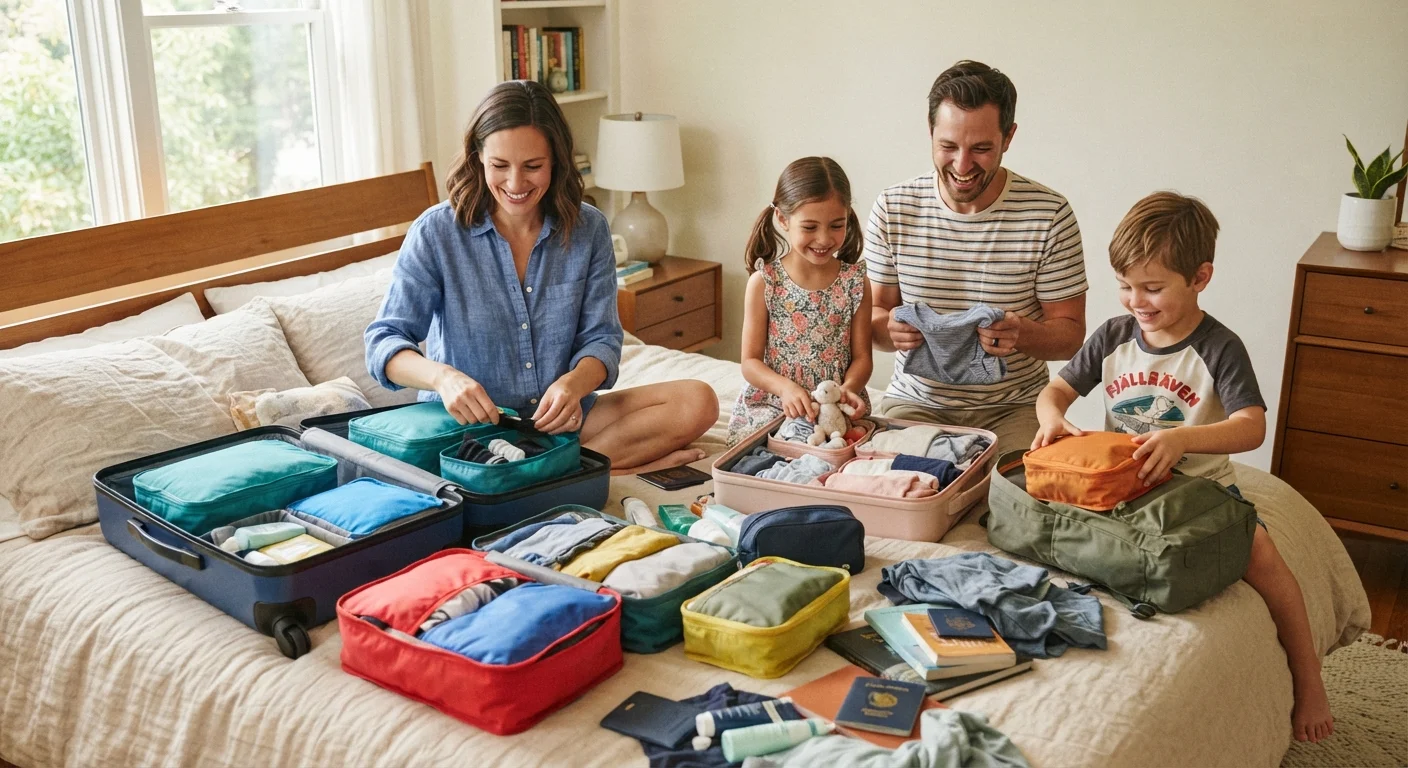
One-off packing decisions drain time and money. Families who build a repeatable system - a master list, a dedicated set of travel-size toiletries kept topped off between trips, and a set of packing cubes that fit a carry-on - remove the guesswork and the last-minute convenience-store runs that inflate trip costs.
For complementary strategies around reducing airport stress while keeping bags light and manageable, packing strategies that reduce airport stress for families offers practical approaches that work well alongside these budget habits.
The goal isn't to pack the absolute minimum at the expense of comfort - it's to pack intentionally so that what you bring serves you rather than costs you. A family that arrives with what it needs spends its travel budget on experiences, not replacements.
For a comprehensive view of where to prioritize savings across every stage of a family trip, see the full picture of budget family travel.