

Key Takeaways
- Carry-on-only travel eliminates checked bag fees and the risk of lost luggage at the airport.
- Packing cubes and a consistent system reduce last-minute scrambles and forgotten essentials.
- Each child carrying their own small backpack distributes the load and teaches responsibility.
- A printed or digital master packing list prevents duplicate items and costly airport purchases.
- Keeping snacks, documents, and comfort items in one accessible bag speeds up security lines.
Why Packing Strategy Is a Real Time and Money Issue
For families, the airport experience begins well before the terminal. Overstuffed bags, forgotten documents, and last-minute pharmacy runs are the kind of friction that turns an ordinary travel day into an exhausting one - and often an expensive one. Checked bag fees and airport convenience purchases are among the most commonly overlooked line items in a family travel budget.
The good news is that packing smarter - not lighter for its own sake, but more intentionally - directly cuts those costs while making the physical experience of moving through an airport faster and calmer. The practices below are built around what actually creates airport stress for families and what eliminates it.
$35-$40
Typical domestic checked bag fee per bag, per flight
Most major U.S. carriers charge per checked bag each way, meaning a round trip for a family with two checked bags can add over $140 in fees before any extras.
25 min
Average extra time spent at baggage claim
Industry estimates suggest domestic passengers spend an average of 20-30 minutes waiting at baggage claim, time that families with tired children feel acutely.
Core Packing Practices That Work for Families
The following approaches address the most common family packing failure points: too many bags, inaccessible essentials, and poor item distribution across travelers. Implement these before your next departure and the difference at the airport will be immediate.
Commit to carry-on only whenever your trip length and destination allow it.
Checked bags add per-bag fees on most domestic carriers, create wait time at baggage claim, and introduce the risk of lost or delayed luggage - all of which compound the stress of traveling with children. Eliminating checked bags keeps the family moving faster from gate to ground transportation.
Use a master packing list that you update after every trip.
Without a list, families consistently forget the same items - a child's medication, the travel sound machine, an adapter - and end up buying replacements at inflated airport or resort prices. A running list also prevents overpacking by making duplicate items visible before you zip the bag.
Assign every family member their own bag with age-appropriate responsibility.
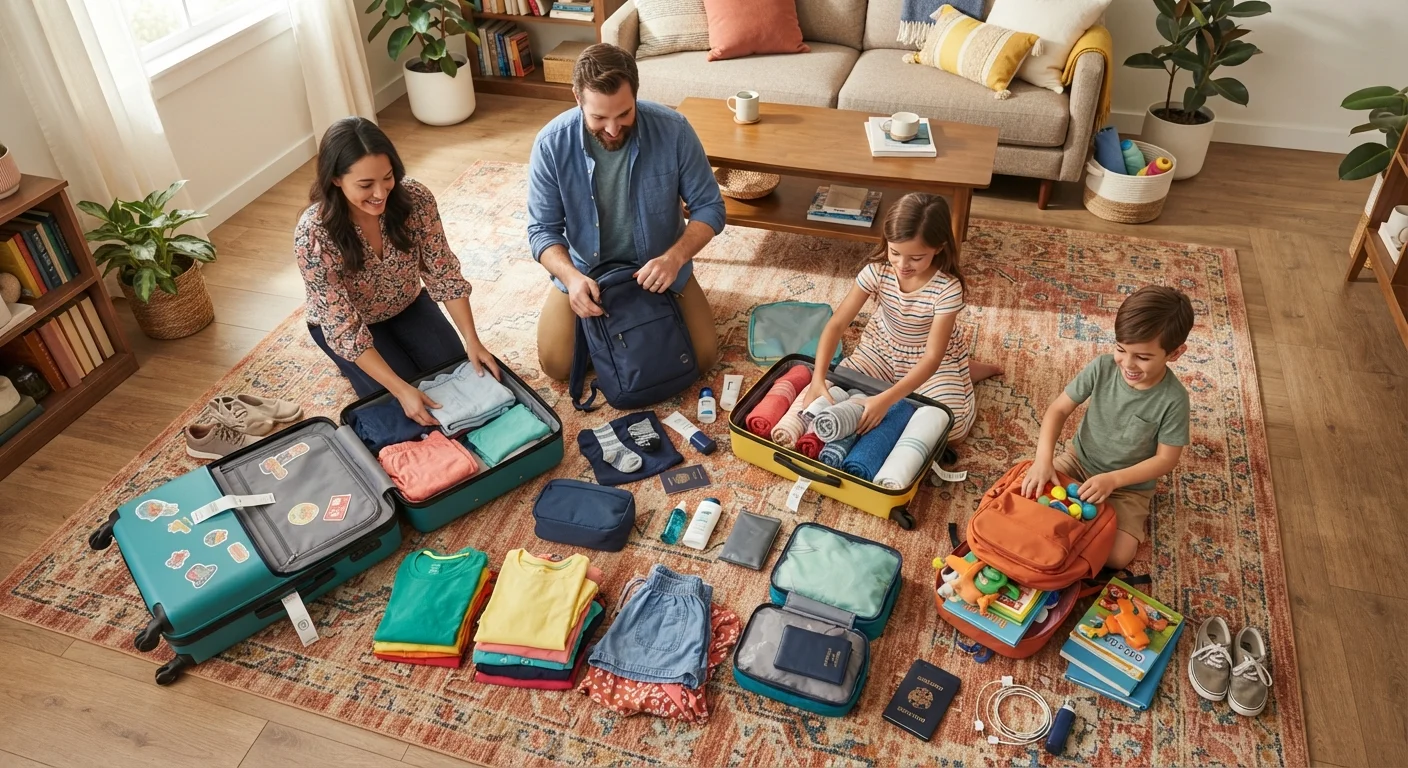
When each person owns their bag, parents aren't solely responsible for locating every item at security or during a gate change. Children as young as four can carry a small backpack with their own snacks, a toy, and a change of clothes, which also reduces the total weight adults carry.
Pack a dedicated 'airport layer' bag that stays accessible throughout the journey.
Digging through a main suitcase at the security checkpoint or during a long layover is one of the most common sources of family airport frustration. Keeping documents, snacks, medications, wipes, a change of clothes for young children, and entertainment in a single top-of-bag or personal-item pouch means everything you need during transit is reachable without unpacking.
Plan and lay out all clothing flat before packing, then remove 20 percent.
Overpacking is nearly universal among family travelers, and excess weight and bulk slow everyone down. Seeing all items laid out at once makes it easier to identify redundancies and cuts the temptation to add 'just in case' pieces that ultimately go unworn.
Pre-pack a TSA-ready toiletry pouch and keep it stocked between trips.
Assembling travel-sized toiletries from scratch before every departure wastes time and often results in non-compliant containers flagged at security. A permanently stocked, quart-sized clear bag that lives in your travel gear eliminates this friction entirely.
For a broader look at how these habits affect overall trip spending, see smart packing habits that save money on every trip.
Quick Actions You Can Take Before Your Next Flight
These steps don't require buying anything or overhauling your entire packing system. They're entry-level adjustments that have an outsized effect on how smoothly the airport portion of your trip runs.
Roll, Don't Fold, for Kids' Clothing
Rolling children's clothing instead of folding it compresses volume significantly and makes it easier to see every item in a packing cube without unpacking the whole thing. It also tends to reduce wrinkling on casual travel clothes. Pair rolling with color-coded packing cubes - one color per child - so each person's gear is instantly identifiable at a hotel or during a bag check.
If you're still building out your full trip planning process, a structured approach to planning without overspending gives you a step-by-step framework from budget-setting to booking.
Airline Policies Vary - Always Verify
Carry-on dimensions, personal item allowances, and fees for gate-checked strollers differ by airline and even by fare class on the same carrier. Before finalizing your packing plan, check the specific airline's current baggage policy on their official website. Policies can change, and what worked on your last flight may not apply to your next one.
Once the bags are sorted, the next challenge is the journey itself. Keeping kids engaged on long travel days offers realistic strategies for managing flights, layovers, and drives without relying entirely on screens.