

Key Takeaways
- A single missing or cracked shingle can allow water to penetrate roof decking within weeks of sustained rain.
- Interior water stains often appear far from the actual roof breach due to water migration along rafters.
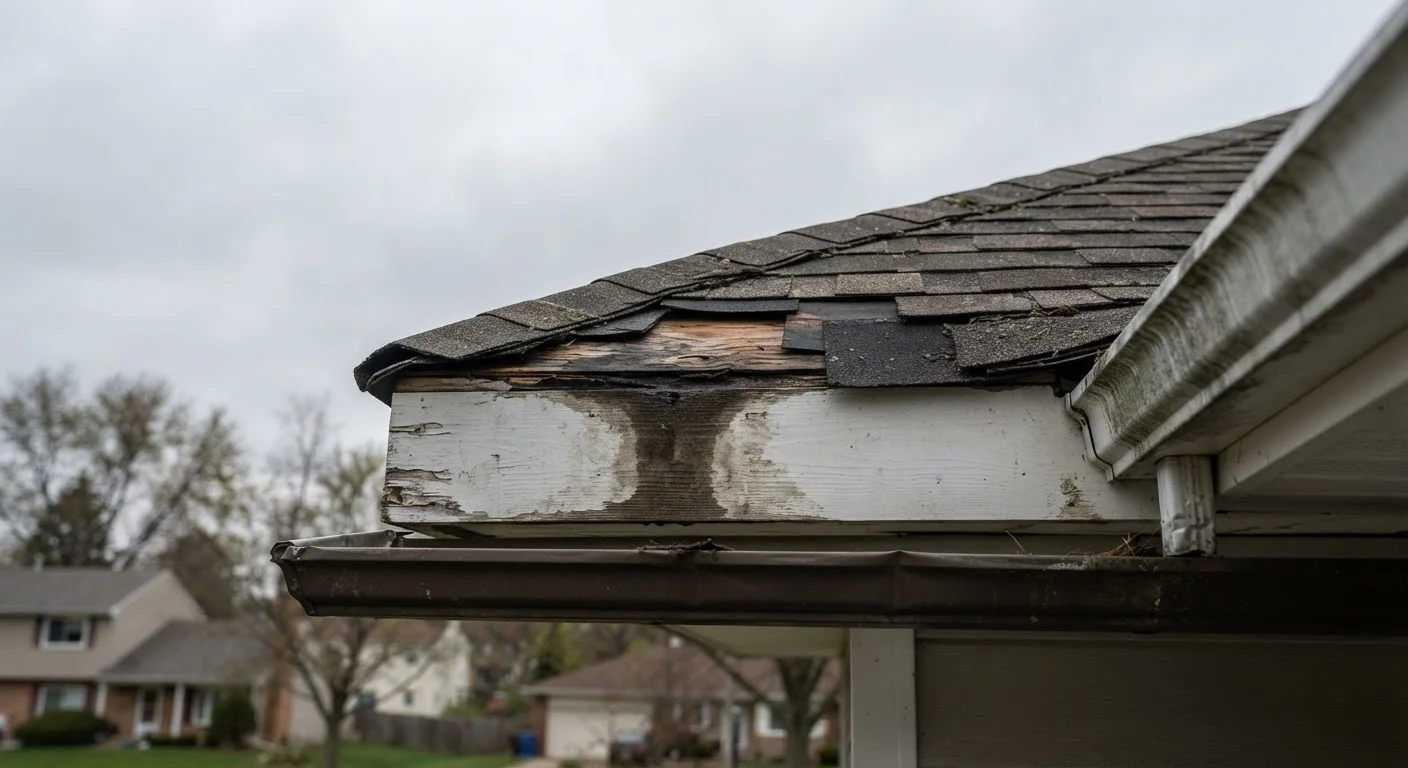
- Clogged gutters are a leading driver of roof edge and fascia rot, turning a free fix into a costly repair.
- Most early roof warning signs can be safely spotted from the ground or attic - no ladder required.
- Catching damage early typically costs hundreds of dollars; waiting can mean repairs in the thousands.
Roof Damage Escalation
Roof damage escalation is the process by which a small, inexpensive roof problem - such as a cracked shingle or a clogged gutter - grows into a much larger and costlier repair if left unaddressed. Water, the primary culprit, finds and widens any opening over time. What starts as a minor leak can eventually compromise insulation, framing, and even interior ceilings.
Roofing professionals refer to the path water travels from an entry point to where damage becomes visible as 'water migration.' Because water moves along rafters and sheathing before dripping, the visible damage indoors is often several feet away from the actual breach.
How a Single Shingle Starts a Chain Reaction
A roof is a system, not just a surface. Every component - shingles, underlayment, decking, flashing, and gutters - works together to move water away from your home. When one piece fails, it shifts stress onto everything around it.
Consider a common scenario: one asphalt shingle cracks or curls at a corner after a harsh winter. Rain now has a direct path to the felt underlayment beneath. Underlayment is water-resistant, not waterproof, and repeated soaking eventually breaks it down. Within a season or two, water reaches the wooden roof decking. Wet wood swells, softens, and invites mold. By the time a ceiling stain appears inside the home, the damage may already extend across several square feet of decking - a repair that can cost several times what patching the original shingle would have.
Learning to read your home's early warning signs is one of the most cost-effective skills a homeowner can develop.
~40%
Of home insurance claims involve water damage
Water and moisture-related claims are consistently among the most frequent property insurance claims filed by US homeowners, according to industry loss data.
Up to 10×
Cost multiplier when roof leaks reach decking
Roofing industry estimates suggest that repairs escalate dramatically once water penetrates beyond the shingle layer into structural components, compared to surface-only fixes.
24-48 hrs
Time for mold to begin growing in wet wood
The EPA notes that mold can begin to develop on damp building materials within one to two days under the right temperature conditions.
The Spots Homeowners Most Often Overlook
Roof problems don't always start in the middle of a field of shingles. The highest-risk areas are the transitions and edges - and they're easy to forget about between rainstorms.
- Flashing: The thin metal strips sealing roof joints around chimneys, skylights, and vents are among the most common failure points. Flashing can pull away from its seal gradually, allowing water to seep in with every rain.
- Gutters and downspouts: Gutters clogged with leaves and debris cause water to back up against the roof edge and fascia board. Over time, this creates rot and can push water under the shingles along the eave - a condition called an ice dam in colder climates. Common home maintenance myths often lead homeowners to underestimate how much damage a neglected gutter can do.
- Attic ventilation: Poor attic airflow traps heat and moisture, which accelerates shingle aging from below and encourages mold in the framing. Proper ventilation is a roof's behind-the-scenes defender.
- Pipe boots: The rubber collars sealing plumbing vent pipes through the roof degrade with UV exposure and can crack within 10 years, creating a slow, hidden drip.
What You Can Safely Look For Without Climbing Up
You don't need to get on your roof to catch most early problems - and doing so without proper training and equipment carries real fall risks. A safe inspection from the ground and attic covers most of what matters.
Make Your Inspection Safer and More Effective
A pair of 8×42 binoculars gives you a surprisingly clear ground-level view of most residential roof surfaces. Walk all four sides of your home and take photos of anything that looks out of place - lifted shingles, discolored patches, or gaps near the chimney. Photos also give a roofing contractor useful context before they arrive, which can streamline the quote process.
From outside, using binoculars: Scan for shingles that appear lifted, curled, cracked, or darker than surrounding ones (a sign of moisture retention). Look for gaps or rust stains near flashing. Note any areas where the roofline appears to sag or dip.
From the gutters (safely, from a ladder leaning against the fascia - not the gutter itself): Check for an unusual accumulation of granules - the sand-like coating that washes off aging asphalt shingles. Heavy granule loss signals a shingle nearing the end of its useful life.
From inside the attic: On a sunny day, switch off the light and look for any pinpoints of daylight coming through the decking. With a flashlight, check rafters and the underside of decking for dark staining, soft spots, or visible mold.
If any of these checks reveal something concerning, that's your cue to call a licensed roofing contractor for a professional evaluation - not to attempt repairs yourself. For context on how deferred maintenance compounds costs in other systems around the home, see our guide to prioritizing maintenance on a tight budget.
The Real Cost of Waiting
The numbers behind roof neglect are sobering. A straightforward shingle repair or flashing re-seal is typically a modest expense. Once water has penetrated to the decking, costs climb sharply because labor and materials must address both the roof surface and the structural layer beneath. If water reaches insulation, attic framing, or interior ceilings, the project can expand further still - and may trigger mold remediation on top of roofing work.
The same principle applies across home systems. Deferred maintenance in vehicles follows an identical pattern: a small ignored symptom becomes a compounding repair bill. Roofs are no different.
The most budget-friendly roof decision any homeowner can make is a simple one: don't wait for a ceiling stain to appear before taking a look. An annual visual check, clean gutters every fall, and a professional inspection every few years will catch the vast majority of problems while they're still cheap to fix.
This article is for general informational purposes only. Roof inspection and repair work involves fall hazards and may require permits depending on your local jurisdiction. Always consult a licensed, qualified roofing professional before undertaking any roof-related work, and verify local building code requirements with your municipality.