
Reading Your Home's Warning Signs: What Cracks, Stains, and Sounds Actually Mean

Key Takeaways
- Hairline cracks in drywall are usually caused by normal settling and are rarely serious.
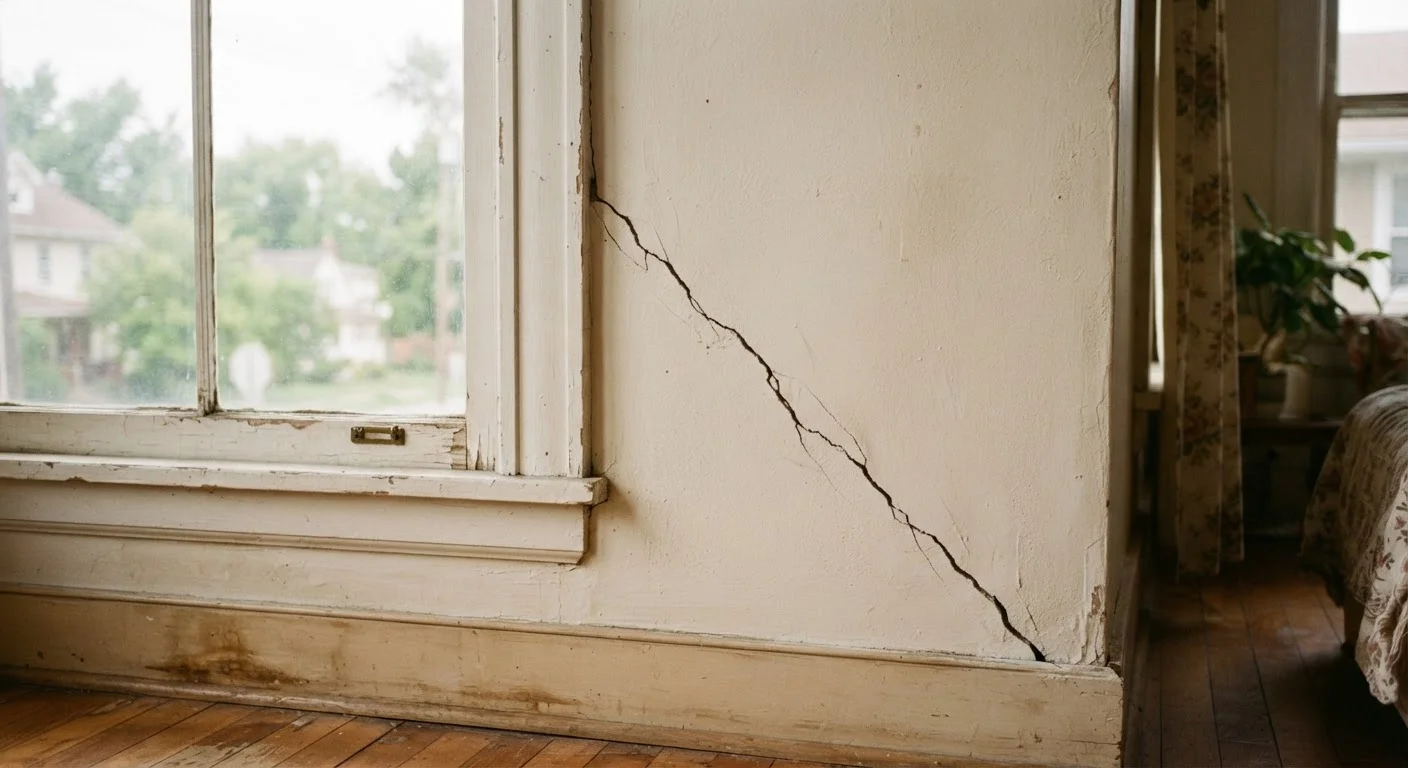
- Diagonal cracks near door or window corners can signal foundation movement and deserve professional evaluation.
- Yellow or brown ceiling stains almost always indicate an active or past water leak above.
- Sounds like creaking floors or ticking walls often have benign explanations tied to temperature changes.
- Persistent or worsening symptoms - especially in combination - warrant a licensed inspector's assessment.
- Catching problems early almost always costs less than waiting for them to escalate.
Home Warning Signs
Home warning signs are visible, audible, or physical changes in your house that indicate something may be wrong - ranging from normal settling to serious structural or moisture problems. They include things like wall cracks, ceiling stains, sticky doors, or unexplained sounds. Learning to read these signals correctly helps you decide whether to monitor, repair yourself, or call a professional.
Distinguishing between cosmetic issues and structural ones often comes down to pattern, location, and progression - not just severity.
How to Think About Your Home's Warning Signs
Your home communicates constantly. A crack that appears after a dry summer, a stain that shows up after heavy rain, a squeak that develops as temperatures drop - each of these is a message worth decoding. The challenge is that homeowners often either panic over normal settling or ignore symptoms that genuinely need attention.
The most useful framework is to look at pattern, location, and change over time. A single small crack in the middle of a drywall panel is almost never serious. The same crack running diagonally from the corner of a window frame - and growing by a quarter-inch over two months - is a different story entirely. Context matters more than the symptom itself.
Use this guide to build a practical vocabulary for what you're seeing, hearing, and smelling in your home, so you can make smarter decisions about when to monitor, when to fix it yourself, and when to pick up the phone.
~35%
Of home insurance claims involve water damage
Water-related damage is consistently among the most common and costly home insurance claims, according to industry data from the Insurance Information Institute.
$4,000-$10,000+
Typical foundation repair cost range
Foundation repairs vary widely based on severity and method; early intervention on minor settlement issues is almost always significantly less expensive than delayed repair.
2-5 years
How long slow roof leaks can go undetected
Roofing professionals note that small penetration leaks can drip into attic insulation and framing for years before appearing as ceiling stains in living areas.
Cracks: What Shape and Location Tell You
Not all cracks are created equal. Here's how to read them by type:
- Hairline vertical cracks in drywall or plaster are almost always the result of normal settlement or seasonal humidity changes. They're cosmetic and can be filled with spackling compound.
- Horizontal cracks in basement or foundation walls are more concerning. They can indicate lateral pressure from soil - water-saturated ground pushing inward. This warrants a professional evaluation.
- Diagonal cracks running from the corners of doors or windows are a classic sign of differential settlement - meaning one part of the foundation has moved more than another. These should be monitored and assessed by a licensed structural engineer.
- Stair-step cracks in brick or block follow the mortar joints and often indicate foundation movement. Small ones may be repointed (mortar repaired); recurring or widening ones need professional attention.
A useful habit: mark the ends of any crack with a pencil and date it. Check back in 30 and 90 days. Stable cracks are usually cosmetic. Growing ones need investigation.
Before assuming any crack is structural, also see our guide on understanding load-bearing walls - because the location of a crack relative to structural elements matters significantly.
Stains: Reading the Story Behind the Color
Water stains are among the most informative warning signs a home can show you, but they require a bit of detective work.
- Yellow or brown ceiling stains almost always trace back to a water source above - a plumbing leak, a failing roof, or a bathroom overflow. Even a stain that looks dry may indicate an intermittent or seasonal leak. Trace the source before patching.
- White chalky residue on basement walls (called efflorescence) is mineral deposits left behind when water moves through concrete or masonry and evaporates. It's a sign of moisture infiltration, not necessarily structural failure - but it tells you water is finding a way in.
- Dark or fuzzy patches on walls or ceilings, especially in bathrooms or basements, often indicate mold. Mold requires moisture, so the root cause is always water. Small surface mold on non-porous materials can sometimes be cleaned safely, but significant or recurring mold growth should be addressed by a professional.
Roof-related stains often appear along the edges of ceilings or near chimneys. Our article on how small roof issues escalate explains why catching these early makes a real financial difference.
Document Changes With Your Phone
When you spot a crack or stain, photograph it next to a ruler or tape measure and note the date. Revisit and re-photograph every 30 days. This simple habit helps you determine whether a symptom is stable or worsening - and gives a professional inspector valuable context if you do need to call one.
Sounds: Normal House Noises vs. Red Flags
Houses make noise - and most of it is benign. Here's how to sort signal from background noise:
- Ticking and popping in walls or ceilings typically come from wood framing and metal ductwork expanding and contracting with temperature changes. Expect more of this in the morning as heating systems kick on, or in late afternoon as structures warm in the sun. This is normal.
- Squeaky floors are usually caused by subflooring rubbing against joists as the wood dries and shrinks. Annoying, but not typically dangerous. In some cases, squeaks can be dampened from below by a helper.
- Running water sounds with no fixtures on may indicate a plumbing leak inside a wall or slab. Don't ignore this one - check your water meter and call a plumber if you suspect a hidden leak.
- Banging or hammering in pipes (called water hammer) occurs when water flow is suddenly stopped. It's addressable with pressure regulators or hammer arrestors and shouldn't be ignored long-term, as it can stress pipe joints.
- Grinding or persistent cracking sounds from a foundation area are not normal. If sounds are localized to one part of the structure and recurring, have it assessed.
For a systematic approach to catching these issues room by room, the weekend walkaround checklist gives you a structured starting point.
When to Act - and How Urgently
Most home warning signs fall into one of three categories:
- Monitor: Stable hairline cracks, old dry stains with a confirmed resolved source, seasonal door sticking. Document and recheck periodically.
- Repair when convenient: Small cosmetic cracks, minor efflorescence, squeaky floors. These won't become emergencies overnight, but addressing them prevents slow deterioration.
- Act promptly: Active water leaks, growing diagonal cracks, signs of mold, running water sounds with no fixtures on, or any combination of symptoms suggesting foundation movement. These should be evaluated by a licensed professional - a structural engineer, plumber, or home inspector depending on the issue.
A general rule: if two or more warning signs appear together, the urgency goes up. A sticking door alone is usually seasonal humidity. A sticking door plus a diagonal crack at the frame plus a sloping floor nearby is a pattern that deserves professional eyes.
If you do decide to tackle repairs yourself, be aware that some common fixes have predictable pitfalls. Our guide to DIY repairs homeowners often get wrong can help you avoid compounding the problem.