

Key Takeaways
- Scratching is a normal, healthy behavior cats use to maintain claws and mark territory.
- Yowling can signal medical issues, stress, or mating behavior - persistent cases warrant a vet visit.
- Knocking things over is often attention-seeking or exploratory behavior rooted in feline instinct.
- Redirecting unwanted behaviors is more effective than punishing them.
- Understanding cat communication helps owners respond appropriately rather than reactively.
Your Cat Isn't Misbehaving - They're Being a Cat
If you've ever watched your cat shred a sofa cushion, yowl at 3 a.m., or deliberately push a glass off the counter while making eye contact with you, you've probably wondered what on earth is going on in that furry head. The reassuring truth: most of these behaviors are completely normal expressions of feline instinct. Understanding the "why" behind them is the first step toward a calmer, happier household.
Whether you're a seasoned cat owner or just starting out - check out our guide to bringing your first cat home for a broader foundation - this breakdown will help you decode the behaviors that puzzle or frustrate most owners.
Scratching: Claw Care, Not Vandalism
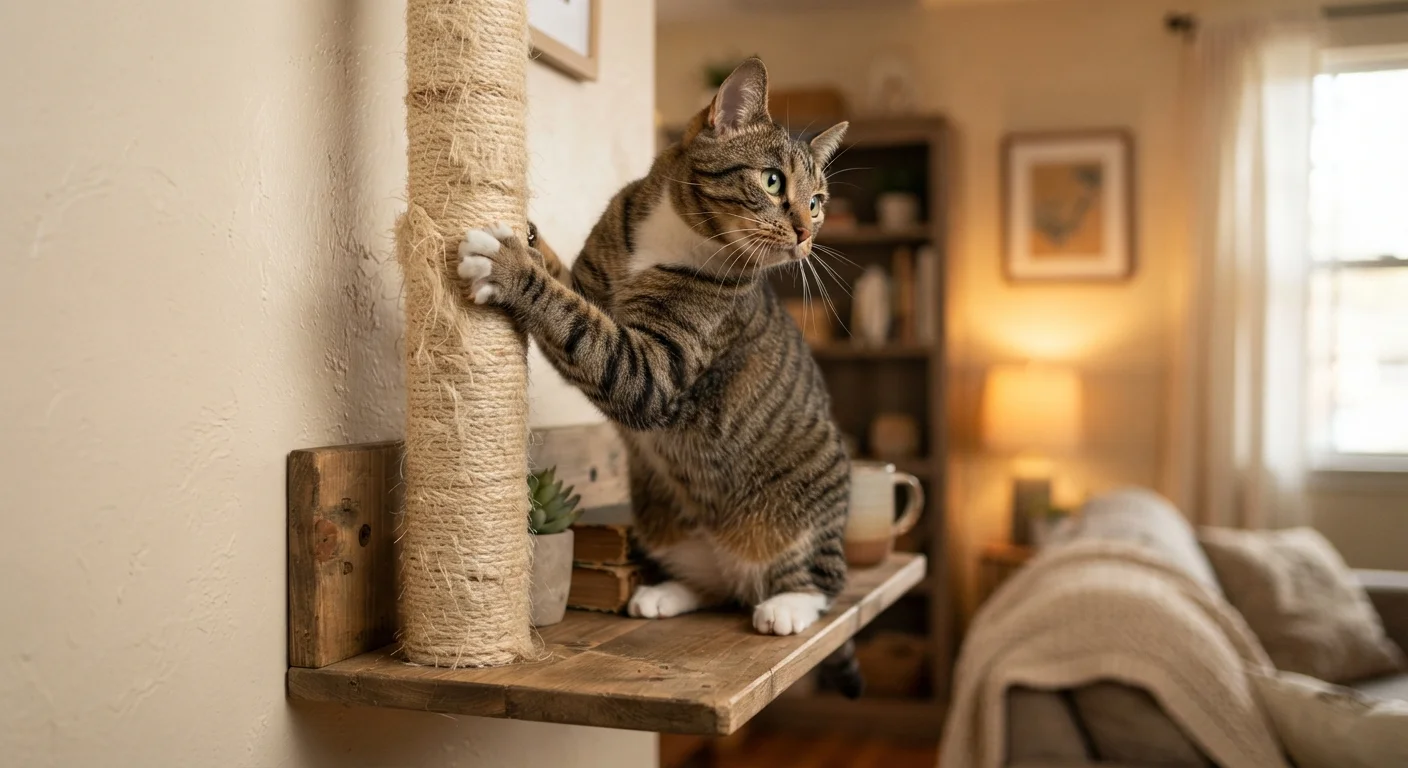
Cats scratch surfaces for three distinct reasons: to shed the outer sheath of their claws, to stretch the muscles of their legs and back, and to deposit scent from glands in their paw pads. It's a grooming and communication behavior rolled into one - not an act of defiance.
The fix isn't stopping the scratching; it's redirecting it. Offer a sturdy scratching post tall enough for your cat to fully extend, placed near the spots they already favor. Horizontal scratchers work better for some cats. If they're still targeting the couch, placing a deterrent (like double-sided tape) on that specific spot while making the post more appealing often shifts the habit within a few weeks.
Scratching is grooming and communication - cats physically cannot stop doing it.
Yowling: A Loud Message With Many Meanings
Unlike the meow - which cats developed largely to communicate with humans - the yowl is a more primal vocalization. Common triggers include mating behavior in unspayed or unneutered cats, territorial disputes with outdoor cats visible through a window, disorientation in older cats (sometimes associated with cognitive changes), pain or illness, and plain old boredom.
If your cat is already spayed or neutered and the yowling is new or frequent, a vet check is the right first move. Sudden behavioral shifts can be early indicators of thyroid issues, hypertension, or cognitive dysfunction in senior cats. Don't dismiss persistent yowling as personality - listen to it as information.
Persistent yowling in a spayed or neutered cat always deserves a veterinary conversation.
Knocking Things Over: Hunting Practice and Attention
That deliberate, slow-motion paw tap that sends your coffee mug sailing off the table is infuriating - and also makes complete sense from a feline perspective. Cats are hardwired to test objects for movement, which is essentially prey-assessment behavior. When the object moves (or better yet, when you react), they've achieved a result. If they're doing it while staring at you, they've likely also learned it's a reliable way to get your attention.
The solution is twofold: give your cat more structured play sessions with wand toys or puzzle feeders to satisfy that hunting drive, and try not to react dramatically when the knocking happens - any response, even scolding, can reinforce the behavior as attention-getting.
Knocking things over is prey-testing behavior - and your reaction is the reward.
Nighttime Zoomies: Built-In Crepuscular Activity
Cats are crepuscular by nature, meaning they're biologically primed to be most active at dawn and dusk. Indoor cats on a predictable schedule may shift some of that activity to the middle of the night, especially if their daytime environment is unstimulating. A burst of sprinting, pouncing, and general chaos at midnight isn't a sleep disorder - it's pent-up energy finding an outlet.
An energetic play session in the evening, followed by a small meal, can help reset your cat's internal schedule closer to yours. The play mimics the hunt-catch-eat sequence cats follow instinctively, which naturally leads to grooming and then sleep.
An evening play-then-feed routine can significantly reduce overnight activity bursts.
Bringing 'Gifts': Instinct, Not Generosity
If your cat has outdoor access and occasionally delivers a mouse or bird to your doorstep (or living room), it can feel alarming or even sweet depending on your perspective. Behaviorally, this is a deeply rooted hunting instinct. Some researchers suggest cats may be sharing prey with household members they regard as part of their social group, similar to how mother cats provide food for kittens.
Stopping the behavior entirely usually means restricting outdoor access, which has its own trade-offs. A well-fitted collar with a bell can reduce hunting success for birds in particular, though it won't eliminate it. This is worth discussing with your vet in the context of your cat's overall lifestyle and environment.
Gift-giving is a natural hunting behavior, not something cats can simply be trained out of.
Kneading: A Comfort Holdover From Kittenhood
That rhythmic pushing of paws against a soft surface - sometimes called "making biscuits" - originates from the nursing behavior kittens use to stimulate milk flow from their mothers. Adult cats carry the motion forward as a self-soothing habit associated with contentment, comfort, and safety. It's almost always a compliment when directed at a person or a favorite blanket.
Some cats retract their claws; others don't. If kneading on your lap is uncomfortable, a thick blanket between you and their paws works well. There's no reason to discourage the behavior - it means your cat feels genuinely at ease.
Kneading is a sign of deep comfort - it means your cat feels completely safe.
Working With Your Cat's Nature, Not Against It
The common thread running through nearly all of these behaviors is that cats aren't being spiteful - they're following deep-seated instincts shaped by thousands of years of evolution. Your job as an owner isn't to suppress those instincts but to give them an appropriate outlet.
Enrichment Solves More Than You'd Think
A significant proportion of frustrating cat behaviors - from midnight zoomies to excessive scratching - are rooted in understimulation. Before assuming a problem is purely behavioral, look at your cat's daily environment: Do they have vertical space to climb? Rotating toys? A window perch with something to watch? Small environmental upgrades often resolve issues that seem intractable.
When a behavior persists despite environmental enrichment, or shows up suddenly in a cat that was previously calm, it's worth ruling out a medical cause. Cats are famously good at hiding discomfort, so behavioral changes are sometimes the first clue something physical is wrong. Our article on signs your cat may be in pain is a useful companion read. And for a deeper look at how your cat expresses themselves day-to-day, reading cat body language will give you a whole new perspective on those tail flicks and slow blinks.
This article is for general informational and educational purposes only and is not a substitute for professional veterinary advice. If your cat's behavior changes suddenly or you have health concerns, consult a licensed veterinarian.