

Key Takeaways
- The crossed-out "was" price is chosen to make the current price look more attractive, not necessarily to reflect what the item typically sold for.
- Anchoring bias is a well-documented cognitive pattern - awareness of it doesn't automatically neutralize its effect.
- Retailers use anchor pricing across channels: in-store tags, online product pages, and promotional emails.
- Checking independent price history is the most reliable way to evaluate whether a discount is genuine.
- The anchor price is one pricing tactic among many - understanding the full vocabulary helps you shop more clearly.
Anchor Pricing
Anchor pricing is a retail strategy where a higher "original" or "was" price is displayed alongside a lower current price, creating a reference point that makes the sale price feel like a bargain. The higher number is the "anchor" - it sets your mental baseline before you've compared anything externally. Even if that anchor was never a realistic market price, it shapes how much value you perceive in the deal.
In behavioral economics, this exploits "anchoring bias" - a cognitive tendency described by researchers Amos Tversky and Daniel Kahneman, where the first number encountered disproportionately influences subsequent judgments.
What the Anchor Is Actually Doing
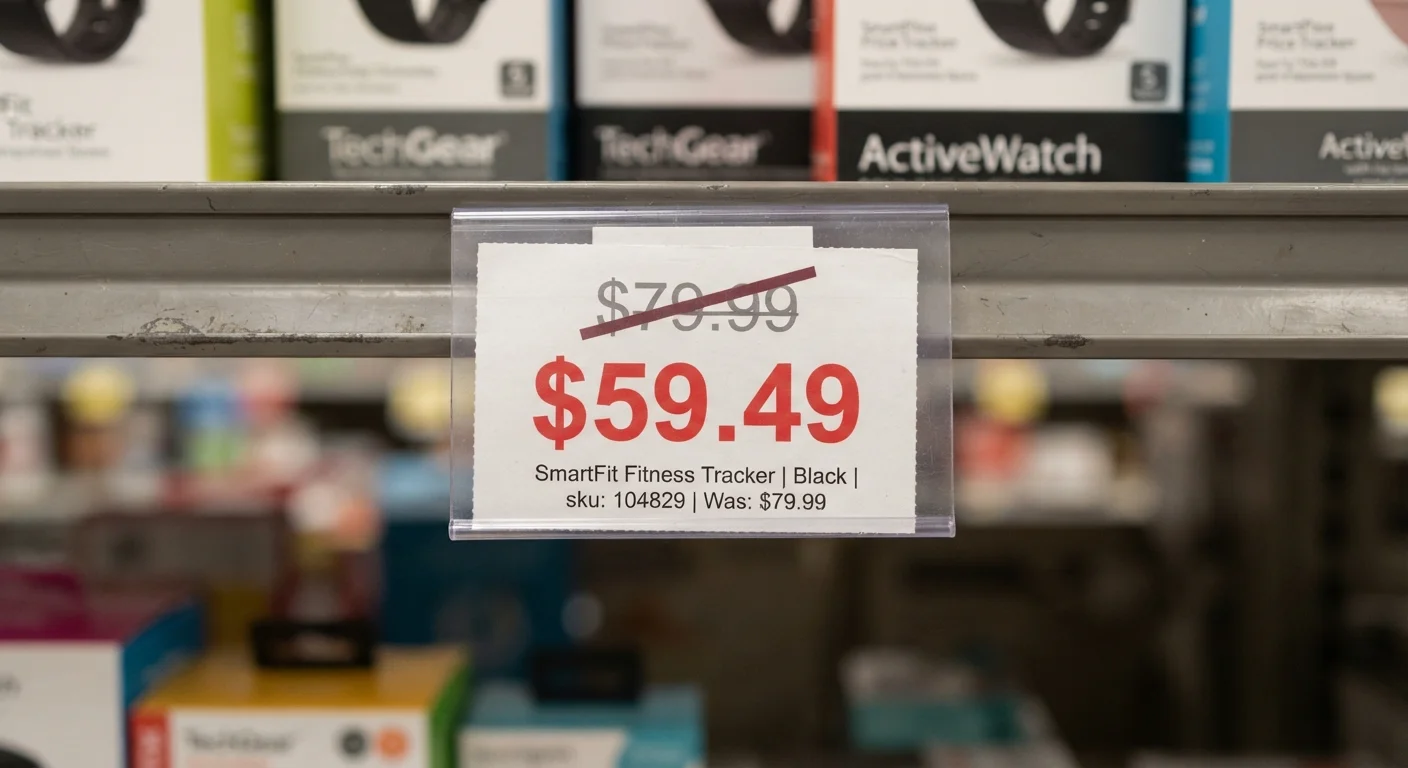
Walk through any store - or scroll any product page - and you'll encounter the same format: a price in bold, and above or beside it, a higher number crossed out or labeled "was" or "regular." That higher number is the anchor.
The anchor's job isn't to inform you of historical pricing. Its job is to establish a reference point that makes the current price feel like a relative win. Once that number is in your head, you're no longer evaluating the item's price on its own terms - you're measuring it against a figure the retailer selected.
This is anchoring bias in action: a well-documented tendency in behavioral research where the first number we encounter influences our subsequent assessment, even when we consciously try to adjust away from it. The effect is strong enough that an arbitrarily high anchor still shifts perception, even when observers know it's arbitrary.
Awareness Reduces, But Doesn't Eliminate, the Effect
Knowing about anchoring bias is genuinely useful, but behavioral research suggests it doesn't make you immune. Even informed shoppers show measurable anchoring effects. The practical takeaway: don't rely on awareness alone - replace the anchor with external data before deciding.
Where Anchor Pricing Shows Up
Anchor pricing isn't confined to one channel or one product category. You'll find it in:
- In-store price tags: The classic crossed-out price next to the "sale" price, often on brightly colored tags that signal urgency.
- Online product pages: A strikethrough "list price" or "was" price, sometimes accompanied by a percentage savings badge.
- Promotional emails: Items featured at "X% off" where the original price sets the frame.
- Bundle offers: A total "value" assigned to a bundle that may exceed what individual items would realistically sell for separately - our guide on bundle pricing math goes deeper on this pattern.
- Dealership lot pricing: Sticker prices on vehicles function as anchors in negotiation - relevant context covered in the Car Costs & Savings hub.
The format shifts by channel, but the mechanism is identical: set a high reference number, then present the current price as a discount from it.
~60%
Shoppers who check just one source before buying
Consumer research consistently finds that a majority of shoppers do not compare prices across multiple retailers before making a purchase decision, making anchors more influential.
Billions
Annual US retail ad spend on promotional pricing
Promotional pricing - including sale tags and "was/now" formats - represents one of the largest categories of retail marketing investment in the US, according to industry analysts.
How to Evaluate a Price Without the Anchor's Influence
The most practical defense against anchor pricing is substituting the retailer's reference point with an independent one. A few approaches that hold up across categories:
- Check price history: Tools that track historical prices for online products let you see what an item actually sold for over time - not just what the retailer claims it was. Our article on what price-tracking tools do and their limitations covers how to use these effectively.
- Search across multiple sellers: A current price only means something relative to the market rate. Five minutes of cross-referencing can tell you whether the "sale" price is actually competitive or simply lower than an inflated anchor.
- Ignore the crossed-out number: Mentally replace it with a blank. Ask: Is this price fair for this item, independent of what the tag claims it used to cost?
- Understand the terminology: Labels like "compare at," "MSRP," and "regular price" have different meanings and legitimacy. The retail pricing terms glossary explains each one plainly.
Use the "blank anchor" test
Before looking at the crossed-out price, ask yourself: what would I consider a fair price for this item based on what I know? Write it down or hold it in mind. Then compare that figure to the current price - not to the anchor. This gives you a reference point that the retailer didn't set.
Building consistent habits around price verification - not just for big purchases but routine ones - is one of the core ideas behind deal-finding strategies that work across product categories. The Smart Budgeting hub offers broader frameworks for keeping spending decisions grounded in actual value.