

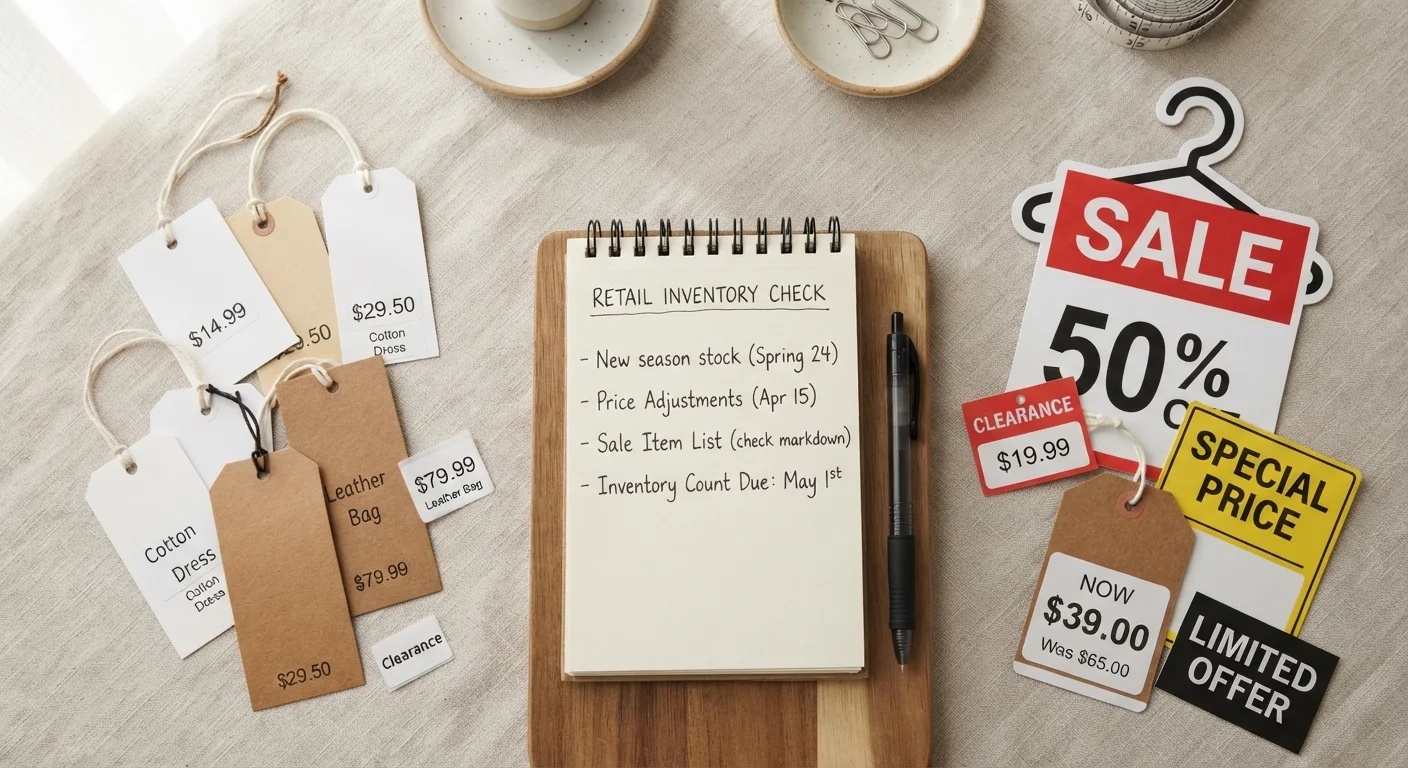
Why Pricing Vocabulary Matters
Retailers have spent decades developing a language designed to make prices feel more attractive than they are. Terms like "was/now," "MSRP," and "clearance" each carry specific meanings - but they're often used loosely or strategically. When you understand what these words actually mean, you stop reacting to them emotionally and start evaluating them rationally.
This glossary covers the core pricing terms you'll encounter across grocery, apparel, electronics, and home goods. It pairs cleanly with our broader guide on understanding value before hunting for deals, and it's worth bookmarking as a reference before any major purchase.
MSRP
Manufacturer's Suggested Retail Price - the price a manufacturer recommends retailers charge consumers. It is a suggestion, not a mandate, and actual shelf prices can be higher or lower. A discount from MSRP does not guarantee you're getting a fair market price.
Anchor Price
A reference price - often a higher "original" or "was" figure - displayed alongside the current price to make a discount feel larger. The anchor conditions your perception of value even when the original figure was never widely charged.
Loss Leader
An item priced at or below cost to attract customers to a store, with the expectation that shoppers will also purchase other, higher-margin products during the same visit. The deal on the loss leader is real; the margin is recovered elsewhere.
Markdown
A permanent or semi-permanent reduction from a product's original selling price, distinct from a temporary promotional discount. Clearance items are typically at the end of a markdown cycle.
Promotional Price
A temporary discount offered for a defined period - a weekend sale, a holiday event, or a loyalty member special. Once the period ends, the price reverts. Not all promotional prices reflect meaningful savings from a true market price.
Keystone Pricing
A traditional retail pricing method where the selling price is set at roughly double the wholesale cost, yielding a 50% gross margin. It is a baseline benchmark, not a universal rule - many categories price well above or below keystone.
Dynamic Pricing
Automated, algorithm-driven price adjustments based on real-time factors such as demand, inventory levels, time of day, or competitor prices. Common in e-commerce and travel; the price you saw yesterday may not match today's price.
Price Matching
A retailer's policy to match a lower price a competitor currently charges for the same item. Conditions typically include same item, same seller type, and in-stock status. Policies vary widely and often exclude marketplace third-party sellers.
Clearance
Pricing applied to inventory a retailer needs to move quickly - typically discontinued, seasonal, or overstocked items. Clearance prices can represent genuine discounts but also reflect reduced selection and no-return policies.
Bundle Pricing
A strategy where multiple products are sold together at a combined price that appears lower than buying each item separately. The savings can be real, but only if you would have purchased every component of the bundle individually.
Price Elasticity
A measure of how much consumer demand for a product changes in response to a price change. Necessities with few substitutes tend to be inelastic; discretionary or easily substituted items are more elastic and more likely to see meaningful promotions.
MAP (Minimum Advertised Price)
A floor price a manufacturer sets below which authorized retailers agree not to advertise an item. MAP governs advertising, not in-store shelf price, which is why some deals only appear after you add an item to a cart.
How Retailers Apply These Terms in Practice
Understanding individual terms is useful, but the real insight comes from seeing how they interact. A retailer might set a high MSRP specifically to enable a dramatic markdown, manufacture urgency with a short promotional price window, and recover margin on adjacent items using a loss leader as bait. These tactics often layer on top of each other within a single shopping trip.
Anchor pricing deserves special attention because it shapes perception before you've compared anything else. That crossed-out number on the tag is the first thing your brain processes. Our dedicated piece on anchor pricing explains the psychology and how to counter it.
Channel also matters. The same item may carry a different price online versus in-store, and understanding which channel tends to win for which category is covered in our comparison of in-store deals vs. online prices. Timing compounds those advantages further - retailers follow predictable markdown calendars, outlined in our guide to seasonal sales cycles.
For a comprehensive framework that ties all of these concepts together, see The Complete Shopper's Playbook. Additional budgeting strategies are available through our Smart Budgeting hub.