

Key Takeaways
- Children should remain rear-facing as long as the seat's height and weight limits allow.
- Graduating to the next stage too early reduces crash protection significantly.
- A car seat's stage is determined by your child's size, not just their age.
- Most car seats are installed or used incorrectly - a certified technician check is worth the time.
- All children under 13 should ride in the back seat for maximum protection.
- Seat belt fit, not age alone, determines when a child no longer needs a booster.
Start here
Why Car Seat Stages Exist
Next
Stage 1: Rear-Facing Car Seats
Then
Stage 2: Forward-Facing Car Seats
Keep going
Stage 3: Booster Seats
Almost there
Stage 4: Seat Belts Alone
Final step
Installation, Fit, and Common Mistakes
Why Car Seat Stages Exist
Motor vehicle crashes remain a leading cause of injury among children in the United States. Car seats are specifically engineered to manage crash forces in ways that a standard seat belt alone cannot - but only when the seat matches the child's current size and developmental stage.
The staged system exists because a child's body changes dramatically from infancy through early adolescence. A newborn's skeletal and muscular structure requires different crash protection than a 7-year-old's. Moving through the stages too quickly - which is very common - removes protective features before the child's body is ready for them.
Each stage is governed by height and weight thresholds, not birthdays. This distinction matters: a large 2-year-old may not be ready to move forward, and a petite 5-year-old may still need a harness. Understanding this helps families make decisions grounded in safety rather than social milestones. For a broader look at how safety systems work together in modern vehicles, see our guide to vehicle safety technologies.
Five-point harness
A safety harness with five attachment points - two at the shoulders, two at the hips, and one between the legs - that distributes crash forces across the strongest parts of a child's body.
LATCH system
Lower Anchors and Tethers for Children - a standardized set of anchor points built into most vehicles and car seats since 2002, designed to make installation more consistent and secure.
Convertible seat
A car seat designed to be used rear-facing for infants and toddlers, then reconfigured to forward-facing as the child grows, covering multiple stages with one seat.
Child Passenger Safety Technician (CPST)
A nationally certified specialist trained to inspect car seat installation and use, identify errors, and help caregivers correct them - often available for free at community events.
Seat belt fit
The measure of whether a vehicle's standard seat belt crosses the body at the correct points - lap belt on upper thighs, shoulder belt across the chest - without a booster to position it.
Weight and height limits
The maximum weight and height a specific car seat is designed to safely accommodate, as defined by the manufacturer. These limits - not age - determine when to move to the next stage.
Stage 1: Rear-Facing Car Seats
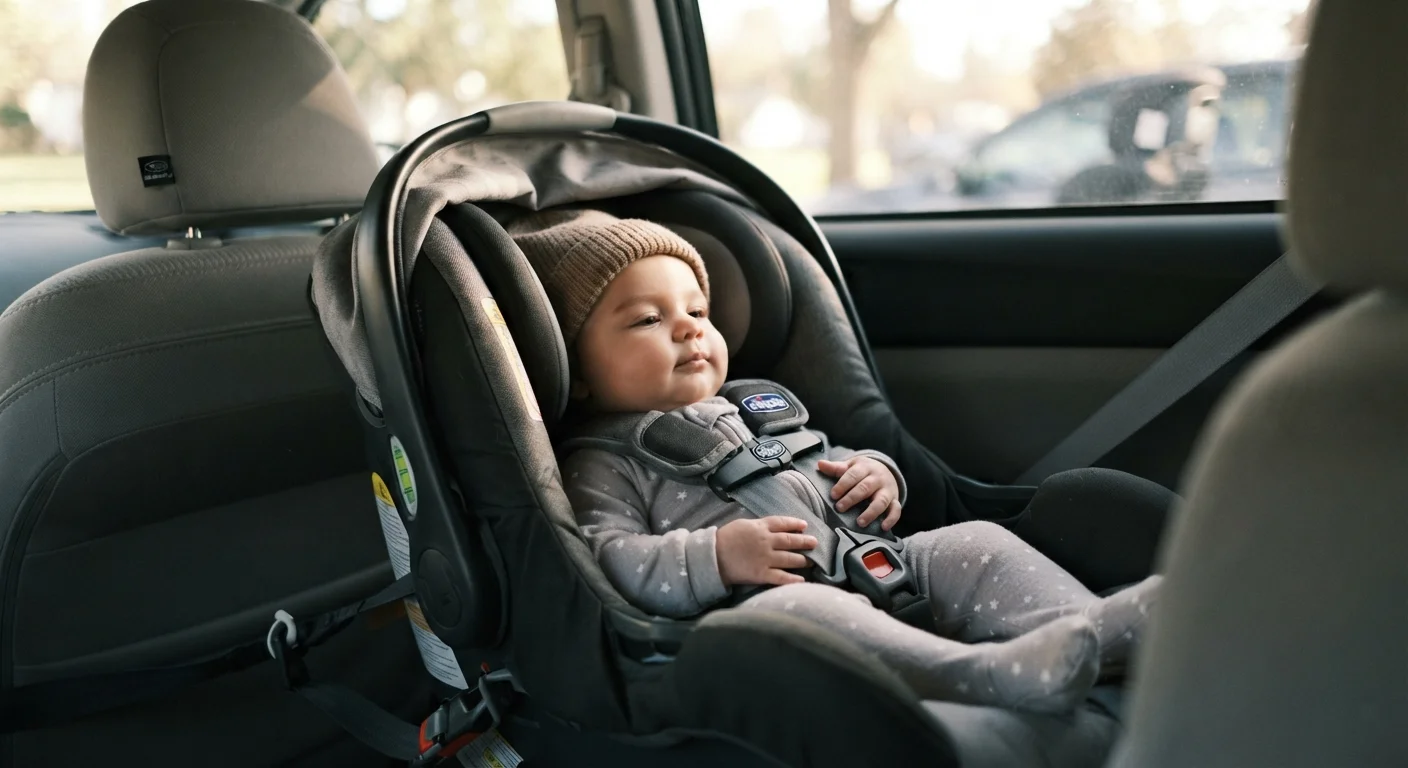
Rear-facing seats are designed for infants and toddlers. In a frontal crash - the most common severe crash type - a rear-facing seat cradles and moves with the child, distributing crash forces across the back, shoulders, and head rather than concentrating them on developing bones and organs.
There are two main types: infant-only seats (with lower weight limits, typically up to 22-35 lbs depending on the model) and convertible seats that can be used rear-facing for longer and then flipped forward-facing later. Current guidance from the American Academy of Pediatrics recommends keeping children rear-facing until they reach the maximum height or weight limit allowed by their specific seat - not a fixed age.
Newborns must be placed at the recline angle specified in the seat's manual. An incorrect angle can cause an infant's head to fall forward and restrict their airway. Many seats include built-in angle indicators to help with this.
Stage 2: Forward-Facing Car Seats
Once a child has genuinely outgrown their rear-facing seat's limits, a forward-facing seat with a five-point harness is the next step. The harness distributes crash forces across the strongest parts of a child's body - shoulders, hips, and chest - and prevents the child from being thrown forward during a sudden stop.
Forward-facing seats typically accommodate children from roughly 22 lbs up to 40, 65, or even 80 lbs, depending on the seat. Children should stay in the harness until they reach that seat's limit. Transitioning to a booster too early - when a harness would still fit - reduces crash protection measurably.
Register Your Car Seat After Purchase
Always register a new car seat with the manufacturer so you receive safety recall notifications. Recalls are more common than many parents realize, and an unregistered seat means you may never learn about a critical fix. Registration is typically free and takes just a few minutes online.
Many convertible and all-in-one seats cover both the rear-facing and forward-facing stages, which can make the transition smoother and more cost-effective over time. Building these kinds of thoughtful habits early parallels the approach described in teaching children preventive habits that last.
Stage 3: Booster Seats
Booster seats don't have their own harness. Instead, they raise the child so that the vehicle's seat belt fits correctly across the body. A properly positioned lap belt rests on the upper thighs, and the shoulder belt crosses the chest - not the neck or abdomen.
There are two types: high-back boosters, which provide head and neck support and work in vehicles without headrests, and backless boosters, which are appropriate for vehicles with adequate headrests and for older children who no longer need side support. Children should use a booster until seat belt fit - not age - indicates they've moved beyond it.
State laws vary on minimum age and weight requirements for boosters, but many safety experts consider legal minimums a floor, not a target. Checking your state's current regulations is a starting point, but actual seat belt fit should guide the final decision.
Stage 4: Seat Belts Alone
A child is ready to use a seat belt without a booster when the belt fits their body correctly with no positioning help. The lap belt should lie flat across the upper thighs - not the stomach. The shoulder belt should cross the center of the chest and shoulder - not the neck or face.
This fit typically occurs when a child is approximately 4 feet 9 inches tall, most often between ages 8 and 12, though body proportions vary. A child who slouches, tucks the shoulder belt behind their back, or sits in an awkward position to manage the belt is not yet ready.
Regardless of stage, all children under 13 should ride in the back seat. Front-seat airbags are designed for adult bodies and can cause serious injury to children. Building family-wide safe travel habits is part of a larger picture - the family driver safety plan approach can help you formalize those routines.
Installation, Fit, and Common Mistakes
Surveys conducted by child passenger safety organizations consistently find that a significant majority of car seats are used or installed incorrectly. The most common errors include: loose harness straps, incorrect chest clip placement (it should sit at armpit level), improper recline angle for rear-facing seats, and using the wrong installation method for the vehicle.
Car seats can be installed using either the LATCH system (lower anchors and tethers for children) or the vehicle's seat belt. Using both simultaneously is generally not recommended unless the seat's manual specifically permits it. The rear center seat often lacks LATCH anchors - check your vehicle manual before using that position.
Never Use a Seat That Has Been in a Crash
A car seat involved in a moderate or severe crash should be replaced, even if it looks undamaged. Structural integrity can be compromised in ways that aren't visible. Some manufacturers also recommend replacement after minor crashes - check the seat's manual for the specific guidance that applies to your model.
The single most effective action a parent can take is to have their installation checked by a certified Child Passenger Safety Technician (CPST). Many fire stations, hospitals, and community organizations host free inspection events. The National Highway Traffic Safety Administration (NHTSA) maintains a technician locator at SaferCar.gov. This investment of an hour can make a meaningful difference in how well a seat performs when it matters most.
This article is for general informational purposes only. Always follow the instructions provided with your specific car seat and consult current guidance from pediatric and highway safety authorities for decisions about your child's safety.