

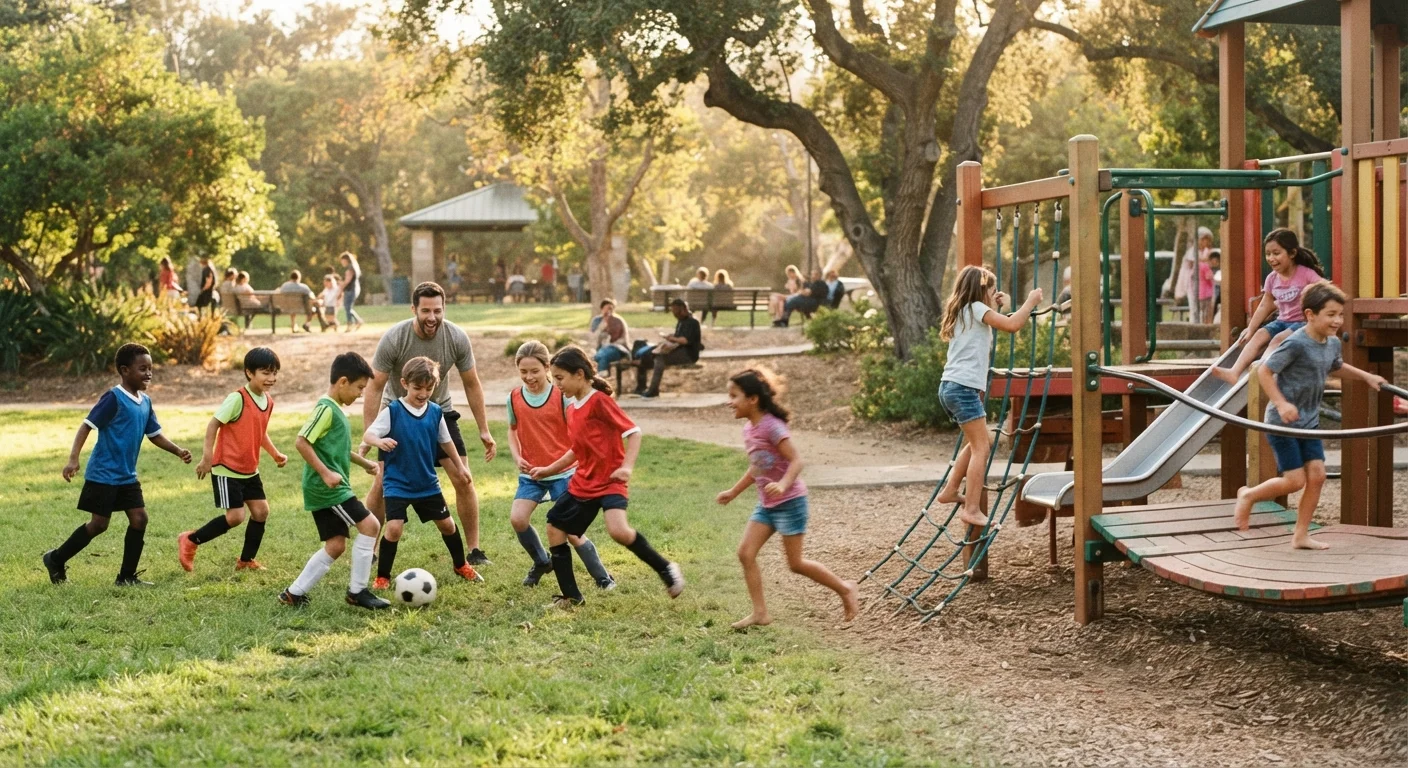
Key Takeaways
- Organized sports build teamwork, discipline, and consistent physical activity habits in children.
- Unstructured free play supports creativity, self-regulation, and intrinsic motivation to move.
- Neither approach alone is optimal - most children benefit from a mix of both throughout childhood.
- Cost, scheduling demands, and a child's temperament all matter when choosing the right balance.
- The American Academy of Pediatrics recommends at least 60 minutes of physical activity daily for school-age children.
Our Verdict
Organized sports and free play are genuinely complementary rather than competing choices. Structured activities offer consistency and skill-building, while unstructured time nurtures independence and imagination. Families who blend both - adjusting the ratio based on their child's age, personality, and energy - tend to support the broadest range of developmental benefits.
| Best for | Recommended |
|---|---|
| Children who thrive with routine, social connection, and clear goals | Organized sports |
| Children who need downtime, creativity, and child-led movement | Free play |
| Budget-conscious families seeking accessible physical activity | Free play |
| Most school-age children and families with flexible schedules | A balanced combination of both |
Why This Question Matters for Growing Kids
Parents today face a genuine dilemma: activity calendars fill up fast with practices, games, and clinics, yet pediatric health experts increasingly flag the disappearance of unscheduled outdoor time as a concern. The CDC recommends that children ages 6 to 17 get at least 60 minutes of moderate-to-vigorous physical activity every day - but the form that activity takes matters too, not just the minutes logged.
Organized sports and free play aren't simply different ways to hit a step count. Each activates different skills, serves different developmental needs, and places different demands on family time and finances. Understanding the tradeoffs helps parents make choices that fit their child's temperament and their family's real-world constraints. For a closer look at how unstructured outdoor time specifically affects development, see the case for less structure.
What Organized Sports Offer - and What They Cost
Structured youth sports - think recreational leagues, school teams, and coached classes - provide a reliable schedule that keeps children physically active even when motivation might otherwise flag. Research published in pediatric journals consistently links sports participation to improved cardiovascular fitness, bone density, and motor skill development. The social dimension is equally significant: children learn to cooperate, handle competitive pressure, and persevere through setbacks in ways that can transfer to classroom and social settings.
The drawbacks are real, however. Registration fees, equipment, and travel can add up quickly, making some programs inaccessible for families on tighter budgets. Scheduling demands - multiple practices per week plus weekend games - can crowd out downtime that children also need. There's also the risk of early specialization: when kids are steered into a single sport year-round before adolescence, injury rates and burnout tend to rise, according to guidance from the American Academy of Pediatrics (AAP).
| Organized Sports | Free Play | |
|---|---|---|
| Physical activity consistency | High - scheduled and routine | Variable - child-directed |
| Skill development | Sport-specific, coached progression | Broad motor skills, self-discovered |
| Social development | Teamwork, competition, coaching relationships | Peer negotiation, self-organization |
| Creativity and autonomy | Limited - adult-set rules and goals | High - child sets own objectives |
| Typical cost | Moderate to high (fees, gear, travel) | Low to none |
| Risk of burnout | Higher with early specialization | Lower - self-regulated intensity |
| Scheduling demand on family | High - fixed practices and games | Flexible - fits into available time |
Parents navigating these costs alongside other household priorities may find it helpful to review general guidance on family budgeting strategies when evaluating which programs are sustainable long-term.
The Real Value of Unstructured Free Play
Free play - child-directed movement without adult-set rules or objectives - has a strong body of evidence behind it. The AAP has described play as so essential to healthy development that it is now included in pediatric well-visit conversations. When children invent their own games, navigate neighborhood spaces, or simply roam a backyard, they practice risk assessment, creative problem-solving, and emotional self-regulation in ways that structured settings rarely replicate.
Physically, free play often produces more varied movement patterns than a single sport: running, jumping, climbing, and balancing in response to an ever-changing environment. This variety may be particularly beneficial for younger children whose fundamental movement skills are still forming. Free play is also virtually cost-free, requires no scheduling coordination, and scales easily to a child's energy level on any given day.
Protect Time for Unscheduled Play
Even one or two afternoons per week of completely unstructured outdoor time can make a meaningful difference. Try treating free play time the same way you'd treat a scheduled practice - block it on the calendar and protect it from other commitments. Simple outdoor spaces like a yard, a park, or even a sidewalk are more than enough.
One common concern is that without structure, children will default to sedentary activities - particularly screens. The evidence on this is more nuanced than the headlines suggest; for a grounded look at that topic, see what the research actually says about screens and child development.
Finding the Right Balance for Your Family
Most developmental experts advocate for a both/and rather than either/or approach. A practical framework: younger children (roughly ages 3-7) generally benefit from more free play with light introduction to structured movement; school-age children can handle more organized activity while still needing significant unscheduled time; adolescents may benefit from deliberate sport specialization but still need space to pursue personal interests outside of athletics.
Watch for signs that the balance has tipped too far in either direction. A child who seems stressed before every practice, loses enthusiasm for an activity they once loved, or complains of frequent pain may need less structure and more recovery time. Conversely, a child who seems restless, bored, or disconnected from peers might welcome the social engagement and challenge that a team sport provides.
Good nutrition fuels whatever activity path your family chooses. The Family Nutrition hub offers practical eating guidance that supports active kids across age groups. Whatever your family's balance looks like, the goal is simple: keep children moving, keep them enjoying it, and let that enjoyment sustain the habit for the long term.
This article is for general informational and educational purposes only and is not a substitute for professional medical advice. Always consult your child's healthcare provider with questions about their physical activity, development, or health.