

Key Takeaways
- Frozen vegetables are often just as nutritious as fresh, and sometimes more so, due to quick post-harvest processing.
- Fresh produce is ideal when eaten soon after purchase, but nutrient quality declines quickly in storage.
- Canned vegetables are budget-friendly and shelf-stable; rinsing reduces sodium by up to 40%.
- No single form is universally superior - the right choice depends on the vegetable, your budget, and your meal plan.
- Eating a variety of vegetables in any form is far more important than choosing the 'perfect' form.
Our Verdict
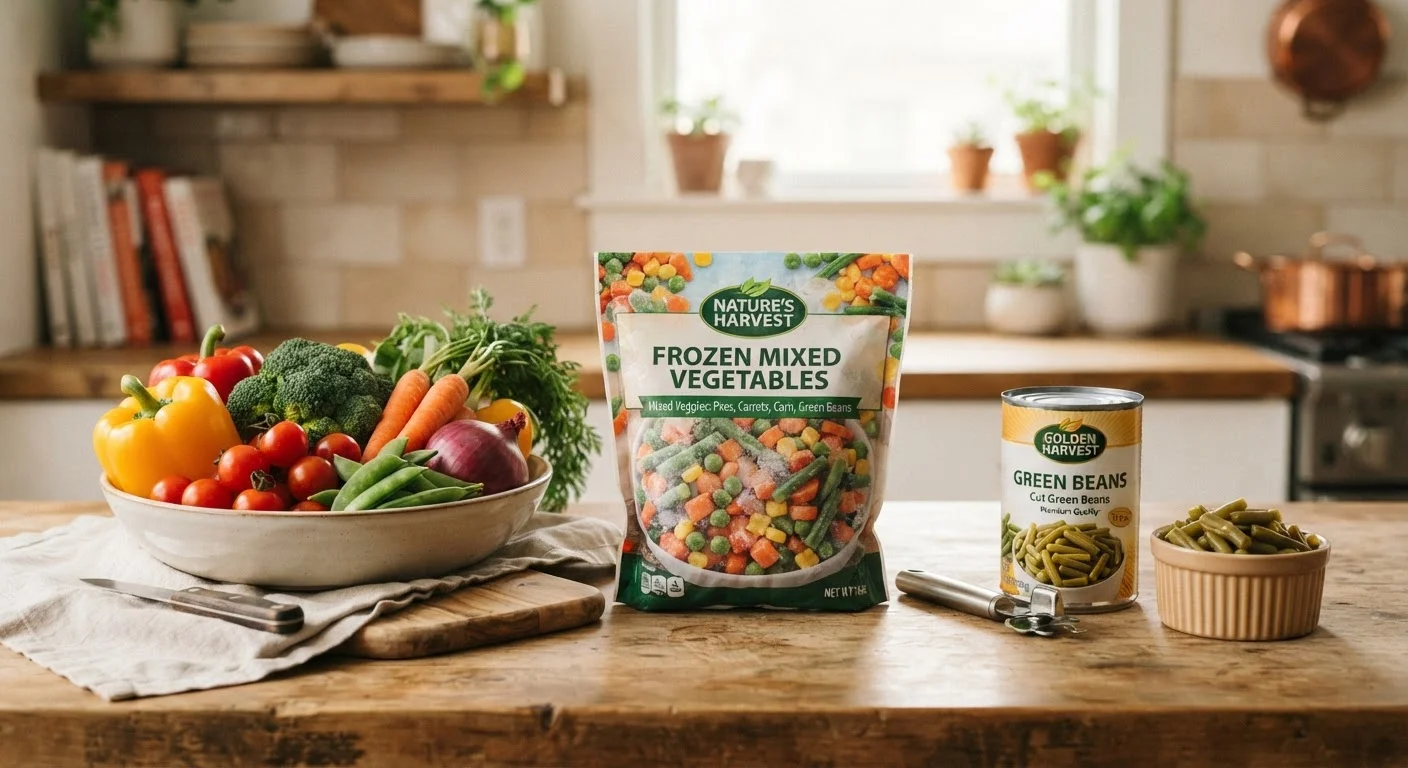
Frozen vegetables offer the strongest combination of nutrition, convenience, and cost for most families. Fresh produce shines when bought in season and eaten quickly. Canned options are a reliable, affordable backup - especially for legumes, tomatoes, and corn. Building a kitchen stocked with all three gives families the most flexibility without sacrificing nutrition or budget.
| Best for | Recommended |
|---|---|
| Families prioritizing nutrition and convenience on a budget | Frozen vegetables |
| Cooking with seasonal produce or for texture-sensitive dishes | Fresh vegetables |
| Long-term pantry stocking and lowest per-serving cost | Canned vegetables |
| Mixed-use families wanting maximum meal planning flexibility | A combination of all three |
The Nutrition Story: What Research Actually Shows
A common assumption is that fresh vegetables are always the most nutritious. The reality is more nuanced. Vegetables begin losing certain nutrients - particularly water-soluble vitamins like vitamin C and B vitamins - within hours of harvest. By the time fresh produce travels from farm to distribution center to store shelf to your refrigerator, several days may have passed.
Frozen vegetables are typically blanched and flash-frozen within hours of harvest, which helps lock in nutrients at or near their peak. Research published by institutions including the University of California, Davis has found that frozen vegetables frequently match or exceed their fresh counterparts in key nutrients like vitamin C and folate, especially when the fresh version has been refrigerated for several days.
Canned vegetables undergo high-heat processing, which does reduce some heat-sensitive vitamins. However, minerals like potassium and iron are largely preserved, and fat-soluble nutrients such as lycopene (found in tomatoes) are actually made more bioavailable through cooking. The main nutritional concern with canned vegetables is added sodium - something easily managed by choosing low-sodium options or rinsing before use.
| Fresh | Frozen | Canned | |
|---|---|---|---|
| Nutrient retention | High when very fresh; declines with storage | High; often comparable to fresh | Good for minerals; some vitamin loss |
| Average cost per serving | Moderate to high (seasonal variation) | Low to moderate | Lowest |
| Shelf life | Days (refrigerated) | 6-12 months (frozen) | 1-5 years (pantry) |
| Prep time | Highest (washing, chopping) | Low (ready to cook from frozen) | Lowest (drain and rinse) |
| Sodium concern | None | Usually none | Can be high; rinse or buy low-sodium |
| Best use case | Salads, roasting, in-season eating | Soups, stir-fries, weeknight sides | Tomatoes, beans, corn in cooked dishes |
Cost and Convenience: The Practical Family Math
For most families, budget and time are just as important as nutrition. On a per-serving basis, canned vegetables are generally the least expensive option, followed closely by frozen. Fresh vegetables vary widely in price depending on the season and whether they are locally grown or shipped long distances.
Frozen vegetables have a significant shelf-life advantage over fresh - often six to twelve months in the freezer - which means less food waste, a real cost driver in many households. Canned goods can last even longer when stored properly. Fresh vegetables, by contrast, may spoil within days if not used promptly.
From a convenience standpoint, frozen vegetables require minimal prep (no washing, peeling, or chopping) and cook quickly from frozen. Canned vegetables are ready to use immediately and require only draining and rinsing. Fresh vegetables offer the widest versatility for texture and presentation but demand the most prep time.
For more strategies on making the most of your grocery run, see our grocery budget strategies for families and how to stretch one shopping trip into five dinners.
Reducing Sodium in Canned Vegetables
Rinsing canned vegetables under cold water for 30 seconds can reduce their sodium content by roughly 40%, according to studies referenced by the American Heart Association. Choosing 'no salt added' or 'low sodium' labeled cans is another effective strategy. Either approach makes canned vegetables a heart-friendlier option for the whole family.
Matching the Form to the Vegetable and the Meal
Not every vegetable performs equally well across all three forms. Understanding these differences helps families make smarter choices without overthinking every shopping trip.
- Tomatoes and tomato products: Canned tomatoes are a standout - they are cost-effective, highly nutritious, and often more flavorful than out-of-season fresh tomatoes for cooked dishes.
- Leafy greens (spinach, kale): Frozen spinach works beautifully in soups, casseroles, and smoothies. Fresh is preferable for salads where texture matters.
- Corn, peas, and edamame: Frozen versions retain excellent flavor and nutrition. Canned corn is a reliable budget option for cooked recipes.
- Green beans and broccoli: Frozen retains good texture for stir-fries and sides. Fresh is preferred when roasting for crispness.
- Legumes (beans, lentils): Canned beans are an outstanding value - convenient, nutrient-dense, and shelf-stable. Dried are cheaper still but require planning ahead.
If getting your family to enjoy vegetables in any form is the challenge, cooking methods that make vegetables more appealing offers practical techniques that work across all three forms.
A Sensible Approach for Real Family Kitchens
The most useful takeaway isn't choosing one form and committing to it exclusively - it's understanding when each form earns its place. A well-stocked kitchen might keep frozen peas and broccoli in the freezer for quick weeknight sides, canned tomatoes and beans in the pantry as reliable recipe staples, and fresh produce purchased in manageable quantities that can realistically be eaten before they spoil.
The USDA's Dietary Guidelines for Americans emphasize increasing vegetable intake overall, regardless of form. From a public health standpoint, a family that regularly eats canned or frozen vegetables is meeting the spirit of that guidance far better than one that occasionally buys fresh produce only to discard much of it.
If your household has picky eaters or limited time on weeknights, leaning more heavily on frozen and canned options is a practical, nutrition-sound strategy - not a compromise. The goal is vegetables on the plate, consistently, in whatever form gets them there.
This article is for general informational and educational purposes only and is not a substitute for professional dietary or medical advice. Consult a registered dietitian or healthcare provider for guidance specific to your family's health needs.