

Key Takeaways
- Soil pH controls whether plants can absorb available nutrients, making it the most critical number to understand.
- The N-P-K values on a report indicate nitrogen, phosphorus, and potassium levels - the three macronutrients plants need most.
- A pH that is too high or too low can make nutrients chemically unavailable even when they are physically present in the soil.
- Most vegetable gardens and lawns thrive in a slightly acidic pH range of 6.0 to 7.0.
- Amendments like lime raise pH; sulfur lowers it - but always apply based on test results, not guesswork.
- State cooperative extension offices often provide low-cost soil testing with regionally tailored recommendations.
Soil Test
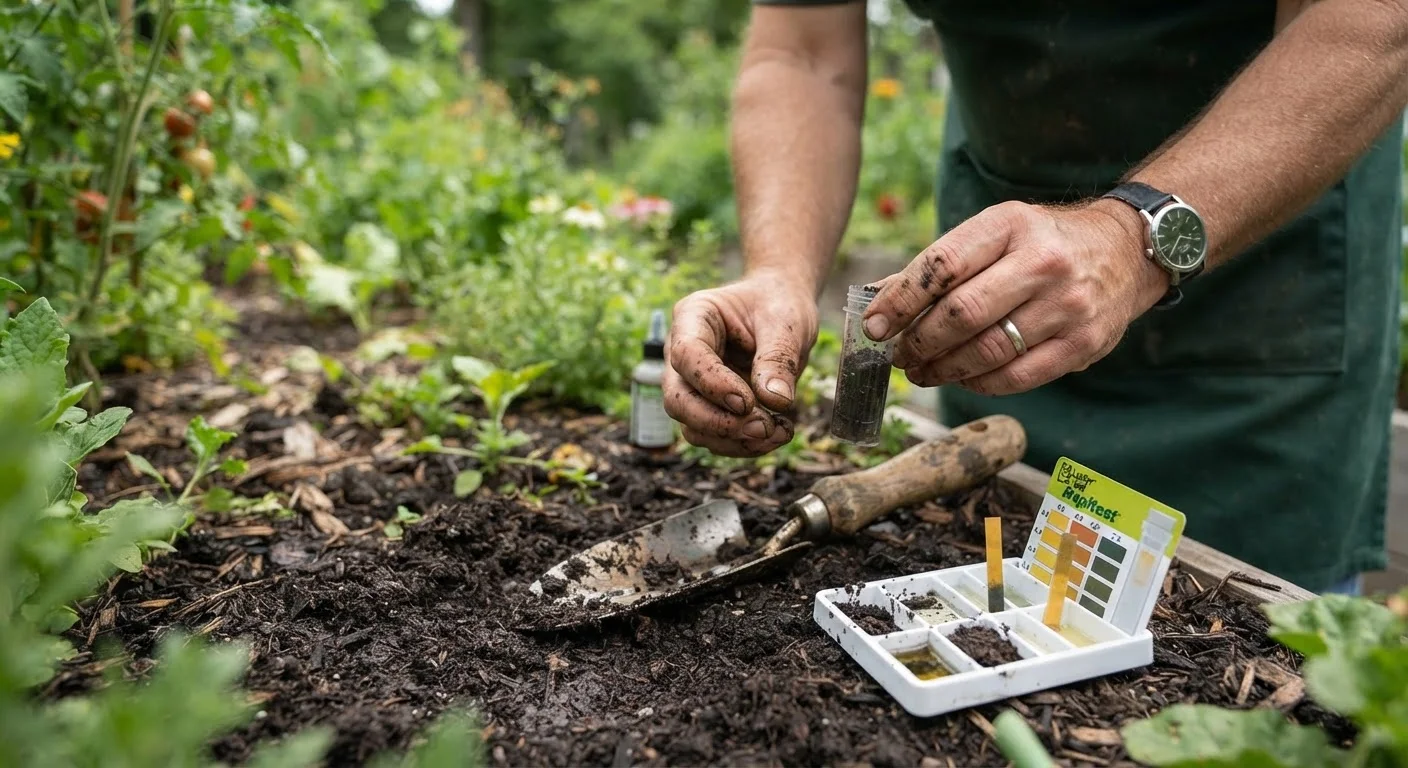
A soil test is a lab or at-home analysis of your garden soil that measures key chemical properties - most importantly pH, nitrogen, phosphorus, and potassium. The results tell you what nutrients are available to your plants and whether the soil's acidity or alkalinity is in a range where those nutrients can actually be absorbed. Think of it as a health checkup for your garden bed.
Most cooperative extension lab reports also measure secondary nutrients (calcium, magnesium, sulfur) and micronutrients, plus the soil's cation exchange capacity (CEC), which indicates how well the soil holds onto nutrients over time.
Why Soil Testing Beats Guessing
Many homeowners apply fertilizer or lime to their gardens out of habit or because a bag looked promising at the hardware store. Without knowing what your soil actually contains, those amendments may be unnecessary, or worse, push an already-imbalanced soil further out of range. A soil test removes the guesswork entirely.
The most accessible option in the US is your state's cooperative extension service, which typically offers lab testing for a small fee - often under $20. You collect a few tablespoons of soil from several spots in your garden, mix them together, and mail the sample in. Results usually return within one to two weeks with specific amendment recommendations for your region's common crops and conditions.
For gardeners comparing different growing setups, our guide on raised beds vs. in-ground plots explains how your chosen setup affects soil management from the start.
6.0-7.0
Optimal pH range for most vegetable gardens
This range is widely supported by extension horticulture programs across the US as the window where nutrient availability is highest for common crops.
$15-$25
Typical cost of a cooperative extension soil test
State university extension labs offer low-cost soil analysis with region-specific recommendations, making professional-grade results accessible to home gardeners.
2-3 years
Recommended retesting interval for established gardens
Most extension services suggest retesting on this cycle to track amendment effectiveness and catch gradual shifts before they affect plant performance.
Reading Your pH Number
Soil pH is measured on a scale from 0 to 14. A reading of 7.0 is neutral; below 7.0 is acidic, above 7.0 is alkaline. Most garden plants, including common vegetables and turf grasses, perform best in the 6.0 to 7.0 range.
Here's why pH matters beyond the number itself: it controls the chemical form nutrients take in the soil. At a pH that is too low or too high, essential nutrients like phosphorus and iron become chemically locked - they are physically present but unavailable to plant roots. You could pour fertilizer on highly acidic soil all season and see little benefit because the plants simply cannot access it.
- Acidic soil (pH below 6.0): Common in rainy, humid regions. Lime (calcium carbonate) is the standard amendment to raise pH.
- Alkaline soil (pH above 7.5): More common in arid Western regions. Elemental sulfur or acidifying fertilizers are typically used to lower pH.
Changes to soil pH happen slowly - budget several months and plan to retest before adding more amendment.
Collect Samples from Multiple Spots
Soil chemistry varies across even a small yard. For the most accurate results, collect small samples from six to eight different spots in the area you want to test, then mix them together before sending. Avoid sampling right next to a wall, compost pile, or recently fertilized area, as these spots skew readings.
N, P, and K: The Macronutrient Numbers
After pH, the three values you'll see most prominently on a soil report are nitrogen (N), phosphorus (P), and potassium (K) - the same trio printed on fertilizer bags. Each plays a distinct role.
- Nitrogen (N)
- Drives leafy, green growth and overall plant vigor. It depletes quickly and must be replenished regularly. Low nitrogen shows up as pale, yellowing older leaves and stunted growth.
- Phosphorus (P)
- Supports root development, flowering, and fruiting. It moves slowly through soil and tends to accumulate with repeated fertilization. Excess phosphorus can interfere with micronutrient uptake and is an environmental concern in areas near waterways.
- Potassium (K)
- Regulates water movement within plants and strengthens disease resistance. Deficiency often appears as scorched or browning leaf edges, particularly on older leaves.
Your report will express these as levels (low, medium, high, or excess) or as pounds per acre. Follow the lab's specific recommendations rather than defaulting to a general fertilizer - our comparison of organic vs. synthetic fertilizers can help you choose the right product type once you know what your soil needs.
Improving Soil Without Overcomplicating It
Once you understand your numbers, corrections are usually straightforward. The most cost-effective and broadly beneficial amendment for most home gardens is compost - it improves soil structure, adds organic matter, and provides a slow, steady supply of nutrients across the board. Making your own compost at home is one of the simplest ways to build healthier soil over time without spending much at all.
When specific deficiencies or pH problems exist, targeted amendments are the right tool. Apply them at the rates your soil report specifies - more is not better. Nitrogen is particularly easy to over-apply, which can burn plants and contribute to groundwater runoff.
One seasonal note: pH amendments like lime work best when incorporated in fall, giving them winter to react with the soil before spring planting. Nutrient amendments are often most effective applied closer to the growing season when plants can use them promptly.
“The single most important thing a home gardener can do before spending money on fertilizer is to get a soil test. Without it, you're essentially flying blind - and often throwing money at problems that don't exist, while missing the ones that do.”
— Extension Horticulture Specialist, University Cooperative Extension Program