

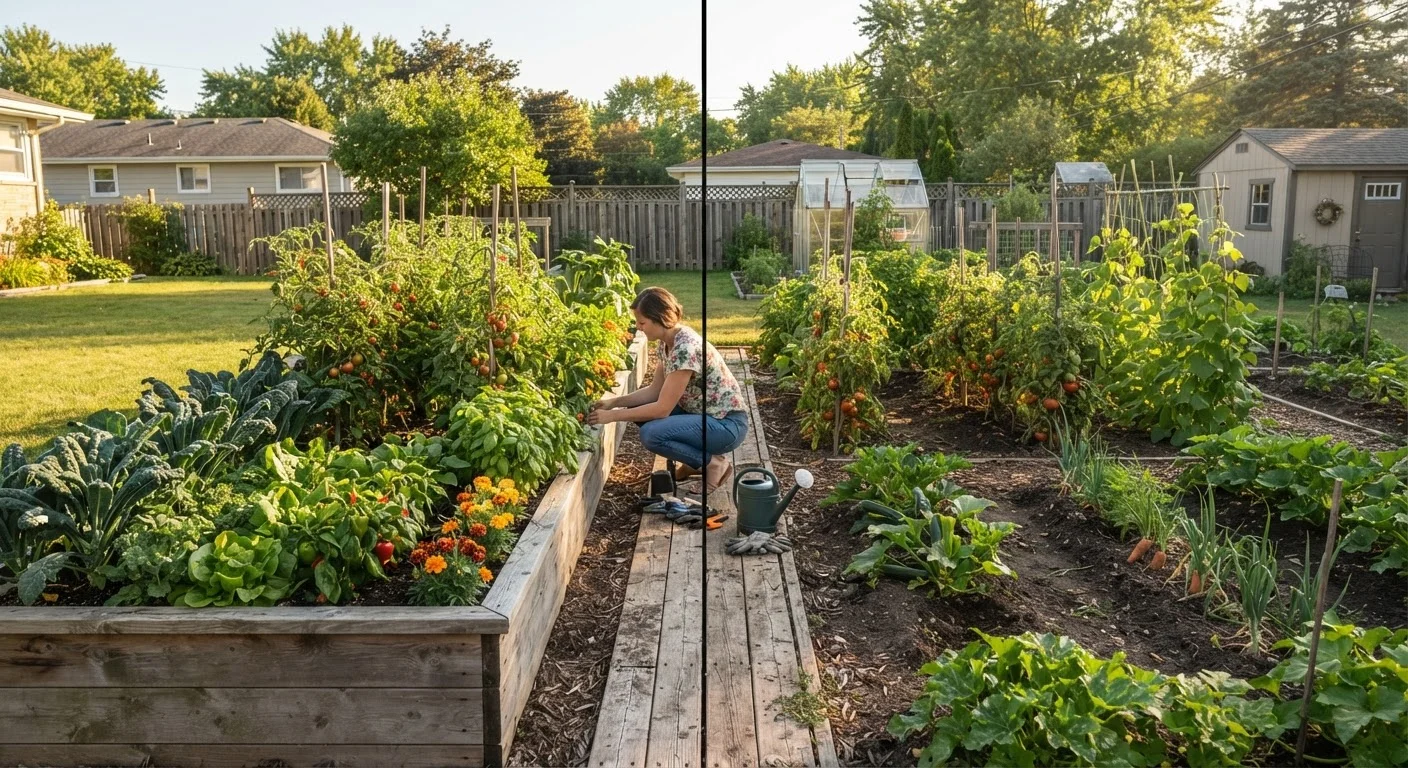
Key Takeaways
- Raised beds cost more upfront but give you immediate control over soil quality and drainage.
- In-ground plots are cheaper to start but may require years of soil amendment to reach peak productivity.
- Raised beds warm up faster in spring, extending your growing season in cooler climates.
- In-ground gardens scale more easily for large plantings of vegetables, flowers, or native plants.
- Your native soil quality is often the single most important factor in choosing between the two methods.
- Both approaches benefit from compost and mulch to maintain long-term soil health.
Option A
Raised Bed Gardening
The controlled, accessible growing environment.
Best for: Gardeners with poor native soil, limited mobility, or small, defined spaces who want quick results.
Option B
In-Ground Garden Plots
The traditional, low-cost approach for larger plantings.
Best for: Homeowners with decent existing soil and room to expand who prefer lower upfront costs.
If your yard has compacted clay, rocky, or contaminated soil
Raised Bed Gardening
Raised beds let you bypass poor native soil entirely by filling with a custom mix, so plants thrive from day one without years of remediation.
If you want to garden on a tight upfront budget
In-Ground Garden Plots
Digging an in-ground plot requires little more than labor and basic tools, making it the lowest-cost way to start growing food or flowers.
If you or a family member has difficulty bending or kneeling
Raised Bed Gardening
A raised bed built 24 inches or higher eliminates the need to kneel or crouch, making gardening more comfortable and sustainable long-term.
If you want to grow large quantities of vegetables or cut flowers
In-Ground Garden Plots
In-ground plots can expand as wide as your yard allows without the material cost of adding additional bed frames and fill soil.
If you garden in a region with a short growing season
Raised Bed Gardening
Raised beds warm up several weeks earlier than ground-level soil in spring, giving cold-climate gardeners a meaningful head start on the season.
Upfront Costs and Setup Effort
Cost is usually the first factor families weigh, and here the two approaches diverge sharply. An in-ground plot requires mostly labor: you clear the area, loosen the soil with a fork or tiller, and begin planting. Material expenses are minimal unless you need to import topsoil or amendments.
Raised beds carry real upfront costs. You need framing materials (untreated wood, galvanized metal, or composite boards), quality fill mix - typically a blend of topsoil, compost, and coarse material such as perlite - and fasteners or corner brackets. A single 4×8-foot bed can run anywhere from modest to several hundred dollars depending on material choice and local soil prices. Those costs multiply quickly if you want to cover a meaningful planting area.
That said, raised beds can pay back the investment through stronger early yields, fewer weeds, and reduced soil amendment costs over time. Think of the upfront spend as buying a head start rather than simply paying a premium. For families watching a budget, starting with one or two small raised beds alongside an expanded in-ground area is a practical middle ground. Our smart budgeting strategies can help you plan those costs before you commit.
| Criterion | Raised Bed Gardening | In-Ground Garden Plots |
|---|---|---|
| Upfront Cost | Moderate to high (frames + fill soil) | Low (mainly labor and tools) |
| Soil Control | Complete - you choose the mix | Limited by existing native soil |
| Drainage | Excellent; drains freely by design | Varies; poor in clay or low areas |
| Weed Pressure | Lower, especially when new | Higher; draws on existing seed bank |
| Season Length | Longer; soil warms faster in spring | Standard; follows local ground temps |
| Scalability | Costly to expand (more frames needed) | Easy to expand with minimal cost |
| Accessibility | High; adjustable height reduces bending | Lower; requires kneeling or bending |
| Long-Term Flexibility | Lower; relocation requires dismantling | High; easy to reshape or remove |
Soil Control, Drainage, and Root Health
Soil quality is where raised beds earn their strongest argument. When you fill a bed yourself, you know exactly what your plants are growing in - a consistent, loose mix that drains freely and holds enough moisture for roots to thrive. This matters most in yards where native soil is heavy clay, hardpan, or has a history of chemical contamination.
In-ground gardens depend on what's already under your lawn. If you're lucky enough to have good loamy native soil, an in-ground plot can be excellent with relatively little amendment. But many suburban lots have compacted subsoil pushed to the surface during construction, requiring years of organic matter additions before the soil reaches a productive state. A soil test is a smart first step either way - it reveals pH, nutrient levels, and texture so you know what you're actually working with before committing to a layout.
Drainage is closely tied to soil structure. Raised beds shed excess water efficiently because the growing medium is elevated and loose. In-ground plots in low-lying areas or clay-heavy yards can pool water after heavy rain, which stresses or kills roots. If drainage is a persistent problem in your yard, a raised bed may resolve it without any grading work.
6-8 weeks
Earlier spring planting in raised beds
University extension programs in northern US states commonly note raised beds can allow planting several weeks ahead of surrounding ground-level soil due to faster warming.
~30%
Less water use in raised beds vs. rows
The concentrated planting footprint and loose soil structure of raised beds can reduce irrigation needs compared to traditional wide-row in-ground planting, according to cooperative extension guidance.
3-5 years
Time to improve compacted in-ground soil
Consistently adding organic matter and avoiding soil compaction typically takes several growing seasons before clay-heavy or compacted native soil reaches a productive, crumbly texture.
Maintenance, Weeds, and Season Length
Weed pressure differs considerably between the two methods. A freshly filled raised bed starts relatively weed-free because the imported soil contains few weed seeds. Over time seeds blow in from surrounding areas, but weeding remains manageable because the loose soil makes pulling easy. In-ground plots draw on the existing seed bank in your native soil, which can be dense - especially if the bed was previously lawn. A thick layer of mulch suppresses weeds in both setups, but it tends to be more immediately effective in raised beds where the soil is already friable.
Season length is another practical advantage for raised beds in cooler climates. The elevated soil mass warms up faster in spring because it's surrounded by air on multiple sides. Experienced gardeners in USDA zones 5 and 6 often report planting two to four weeks earlier in raised beds than in adjacent in-ground plots. That difference can mean an extra round of cool-season crops before summer heat arrives.
Long-term fertility maintenance applies equally to both. Both methods benefit from annual compost additions. If you're not yet composting, our guide on backyard composting lays out honest pros and cons. You'll also want to revisit your fertilizer approach over time - see our comparison of organic and synthetic fertilizers for a grounded look at the trade-offs.
Scalability, Aesthetics, and Long-Term Flexibility
In-ground gardens win on scalability. Expanding a plot is as simple as extending your borders - no additional materials required beyond amendment and labor. For families who want to grow large quantities of vegetables, dedicate space to native plantings (see our overview of native plants for home landscapes), or try water-wise designs described in our drought-tolerant landscaping guide, in-ground plots offer near-unlimited room to grow.
Raised beds offer a tidier visual footprint that many homeowners prefer. Uniform frames give a garden a structured, intentional look that blends well with landscaped yards. They also act as a clear boundary that keeps garden soil out of lawn areas and vice versa. If aesthetics matter to your household - or if you're in an HOA community with design guidelines - raised beds often present fewer friction points.
Flexibility over time favors in-ground gardens. A raised bed is a semi-permanent structure; relocating it means dismantling the frame and hauling or redistributing the fill. An in-ground plot can be grassed over, replanted, or reshaped with nothing more than a shovel and some effort. If your household's needs are likely to shift - a growing family, changing mobility, or a move on the horizon - that flexibility may outweigh the soil-control advantages of a raised bed.
For hands-on help planning either type of setup, our DIY projects hub offers step-by-step guidance suited to a range of skill levels.