

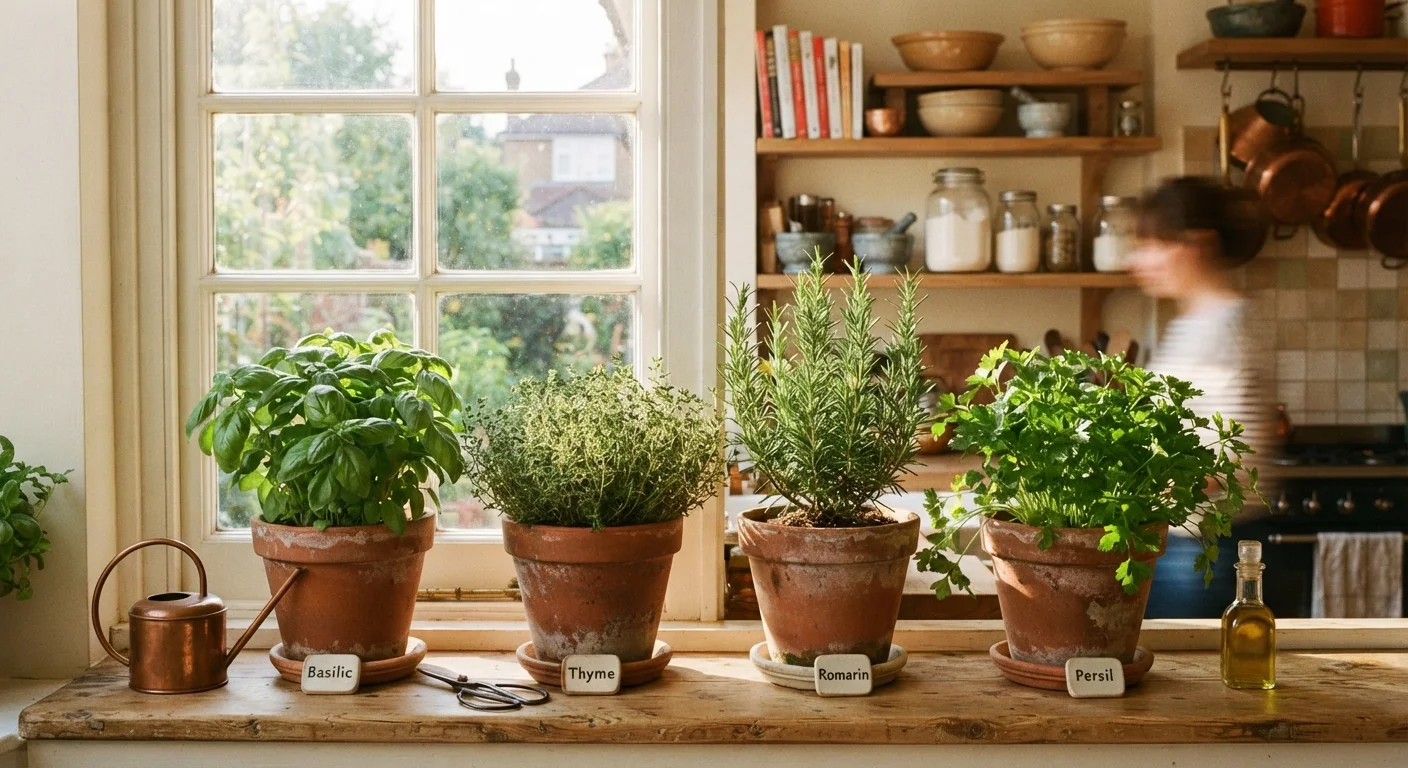
Key Takeaways
- Harvesting herbs regularly - rather than all at once - encourages bushier, more productive growth.
- Most culinary herbs need at least six hours of direct sunlight daily to thrive indoors or outdoors.
- Matching watering habits to each herb's preferences prevents the most common cause of herb failure: overwatering.
- Starting herbs from divisions or cuttings costs far less than buying new transplants each season.
- Grouping herbs by water and light needs makes ongoing care simpler and more consistent.
Why a Kitchen Herb Garden Is Worth the Effort
Fresh herbs elevate everyday cooking - and growing your own puts flavor within arm's reach while trimming the grocery bill. A small pot of basil or a window box of mixed herbs can replace frequent store purchases of herbs that wilt within days of purchase. If you're already working on reducing your family's grocery spending, an herb garden is one of the highest-return additions you can make.
The key is developing a few consistent habits rather than responding only when plants look stressed. Like most aspects of home upkeep, small regular actions prevent bigger problems - and keep your plants producing through the season.
Core Practices for a Productive Herb Garden
These habits apply whether you're growing in containers on a patio, a raised bed, or a sunny kitchen windowsill.
Position herbs where they receive at least six hours of direct sunlight each day.
Sunlight is the single biggest factor in herb health and flavor intensity. Insufficient light leads to pale, leggy growth with diminished essential oils - the compounds responsible for flavor and fragrance. South- or west-facing windows work best indoors; outdoors, avoid spots shaded by fences or structures for most of the day.
Harvest frequently and in small amounts rather than cutting heavily all at once.
Regular light harvesting keeps herbs in a vegetative growth phase, encouraging the plant to produce more stems and leaves. Taking more than one-third of the plant at a time stresses it and slows recovery, especially during hot weather.
Group herbs by water needs and treat each group on its own schedule.
Applying the same watering schedule to all herbs leads to either overwatering drought-tolerant varieties or underwatering moisture-loving ones. Keeping Mediterranean herbs together and moisture-loving herbs together simplifies care and reduces plant loss.
Propagate new plants from cuttings or divisions instead of buying replacements.
Many herbs - including mint, chives, oregano, and lemon balm - spread readily and can be divided from existing clumps. Others like basil and rosemary root easily from stem cuttings placed in water. This eliminates the cost of purchasing new transplants and extends your garden without extra spending.
Deadhead and remove flowering stems promptly to extend the harvest window.
When an herb flowers and sets seed, the plant shifts its energy from leaf production to reproduction. Removing flowers as they form redirects that energy back into foliage, prolonging the usable harvest by weeks or even months depending on the variety.
Smart Watering and Soil Habits
Overwatering kills more herbs than drought does. Mediterranean herbs like rosemary, thyme, and oregano evolved in dry, rocky soil and need to dry out partially between waterings. Moisture-loving herbs like basil, cilantro, and mint prefer more consistent moisture - but still not waterlogged roots.
Test Before You Water
Rather than watering on a fixed schedule, press your finger about an inch into the potting mix. If it feels dry, water thoroughly until it drains from the bottom. If it still feels damp, wait another day. This simple test works for nearly every culinary herb and prevents the root rot that is the most common cause of potted herb failure.
For container gardens, always use pots with drainage holes and a well-draining potting mix rather than dense garden soil. Heavy soil in pots holds too much moisture and can lead to root rot within days of a good rain. If you're building composting habits at home, finished compost mixed lightly into potting soil can improve drainage and fertility - see our guide on turning kitchen scraps into garden compost for details.
Harvesting and Seasonal Maintenance
How you harvest matters as much as how often. Always cut just above a leaf node (the point where a leaf or pair of leaves attaches to the stem). This signals the plant to branch outward rather than grow tall and leggy. Remove flowering stems on basil and cilantro as soon as they appear - once an herb bolts (goes to seed), leaf production drops sharply and flavor fades.
Pair your herb care with broader seasonal yard maintenance routines so both your garden and outdoor spaces stay in good shape year-round. If you're expanding beyond herbs, the habits you build here translate well to starting a vegetable garden when you're ready.