

Key Takeaways
- Six or more hours of direct sunlight per day is the minimum requirement for most vegetable crops.
- Starting small - even a 4×8-foot bed - reduces overwhelm and keeps costs manageable.
- Improving your native soil with organic matter is the single most impactful investment you can make.
- Beginner-friendly crops like lettuce, beans, and zucchini reward new gardeners with quick, visible results.
- Consistent watering and pest observation in early weeks prevents most first-season failures.
Start here
Choosing the Right Spot
Next
Preparing Your Soil
Then
Deciding What to Grow
When you're ready
Planting, Watering, and Early Care
Finish with
Setting Realistic First-Season Expectations
Choosing the Right Spot
Location is the foundation of a successful vegetable garden, and sunlight is the most critical factor. Most vegetables - tomatoes, beans, squash, peppers - require at least six hours of direct sun per day. Leafy greens like lettuce and spinach can tolerate four to five hours, making them useful options for partially shaded yards.
Walk your yard at different times of day and note where shadows fall. Avoid areas beneath large trees, not only for shade but because tree roots compete aggressively for water and nutrients. Also consider proximity to your home: a garden close to the kitchen door gets tended more regularly than one tucked in a far corner.
Flat or gently sloping ground drains better than low-lying areas that collect standing water after rain. If your only viable space has poor drainage, that's a strong case for building a raised bed - a decision explored in depth in our raised beds vs. in-ground garden plots guide.
Access to Water Matters More Than You Think
Locate your garden within reach of an outdoor spigot or hose connection. Carrying watering cans across a yard quickly becomes a chore that discourages regular watering. A garden that's convenient to water gets watered consistently - and consistent moisture is one of the strongest predictors of a productive vegetable patch.
Preparing Your Soil
Healthy soil grows healthy vegetables. Before planting anything, assess what you're working with. Good garden soil crumbles loosely in your hand, drains well, and has a dark, earthy smell. Compacted, clay-heavy, or sandy soil will limit plant growth regardless of how much you water or fertilize.
The most effective single improvement for almost any soil type is adding organic matter - compost, aged manure, or leaf mold. Work two to four inches of compost into the top six to eight inches of soil using a garden fork or tiller. This improves drainage in clay soils and water retention in sandy soils, while feeding beneficial soil microorganisms.
Making your own compost is one of the lowest-cost ways to enrich soil over time. Our guide to composting at home covers exactly how to build and maintain a pile. If you're weighing whether the effort is worth it for your situation, the honest pros and cons of backyard composting can help you decide.
Organic matter
Decomposed plant or animal material added to soil to improve its structure, water retention, and nutrient content. Compost is the most common example.
Direct sowing
Planting seeds directly into outdoor garden soil, as opposed to starting them indoors and transplanting them later.
Transplant
A young plant that was started in a container and is moved into the garden once it's large enough. Tomatoes and peppers are common examples.
Last frost date
The average calendar date after which freezing temperatures are unlikely in your area. Gardeners use this date to time when to plant warm-season crops safely outdoors.
Thinning
Removing some seedlings from a crowded row so the remaining plants have enough space, light, and nutrients to grow properly.
Cooperative extension service
A publicly funded network of offices, often affiliated with land-grant universities, that provides free, research-based gardening and agricultural guidance tailored to local conditions.
Deciding What to Grow
Choose vegetables your family actually eats - this keeps motivation high and reduces waste. Then filter that list by what grows well in your climate and season. Your local cooperative extension office publishes free regional planting guides that are far more reliable than generic advice.
For beginners, prioritize crops with a reputation for reliability:
- Lettuce and salad greens - fast-maturing, can be harvested repeatedly
- Green beans - productive and low-maintenance
- Zucchini - grows vigorously with minimal intervention
- Cherry tomatoes - more forgiving than large slicing varieties
- Radishes - ready in as little as three weeks, great for impatient first-timers
Herbs are also an excellent starting point. Basil, chives, and parsley grow happily alongside vegetables and add significant kitchen value in a small footprint. For a deeper look at managing herbs successfully, our kitchen herb garden guide covers light, watering, and harvesting habits that keep plants productive all season.
Resist the urge to plant everything at once. A focused first garden teaches you more and costs less than an overambitious one.
Planting, Watering, and Early Care
Some vegetables grow best started directly from seed in the ground - beans, carrots, radishes, and squash among them. Others, like tomatoes and peppers, benefit from being transplanted as seedlings, either ones you've started indoors six to eight weeks before planting time or young plants purchased from a nursery.
Follow spacing guidelines on seed packets. Crowded plants compete for light, water, and nutrients, producing less than properly spaced ones. Thin seedlings early rather than letting them struggle together.
Water consistently and at the base of plants rather than overhead, which reduces fungal disease risk. Most vegetable gardens need roughly one inch of water per week. A simple rain gauge helps you track how much nature is providing so you can fill the gap without overwatering, which can cause root rot.
Label Everything from Day One
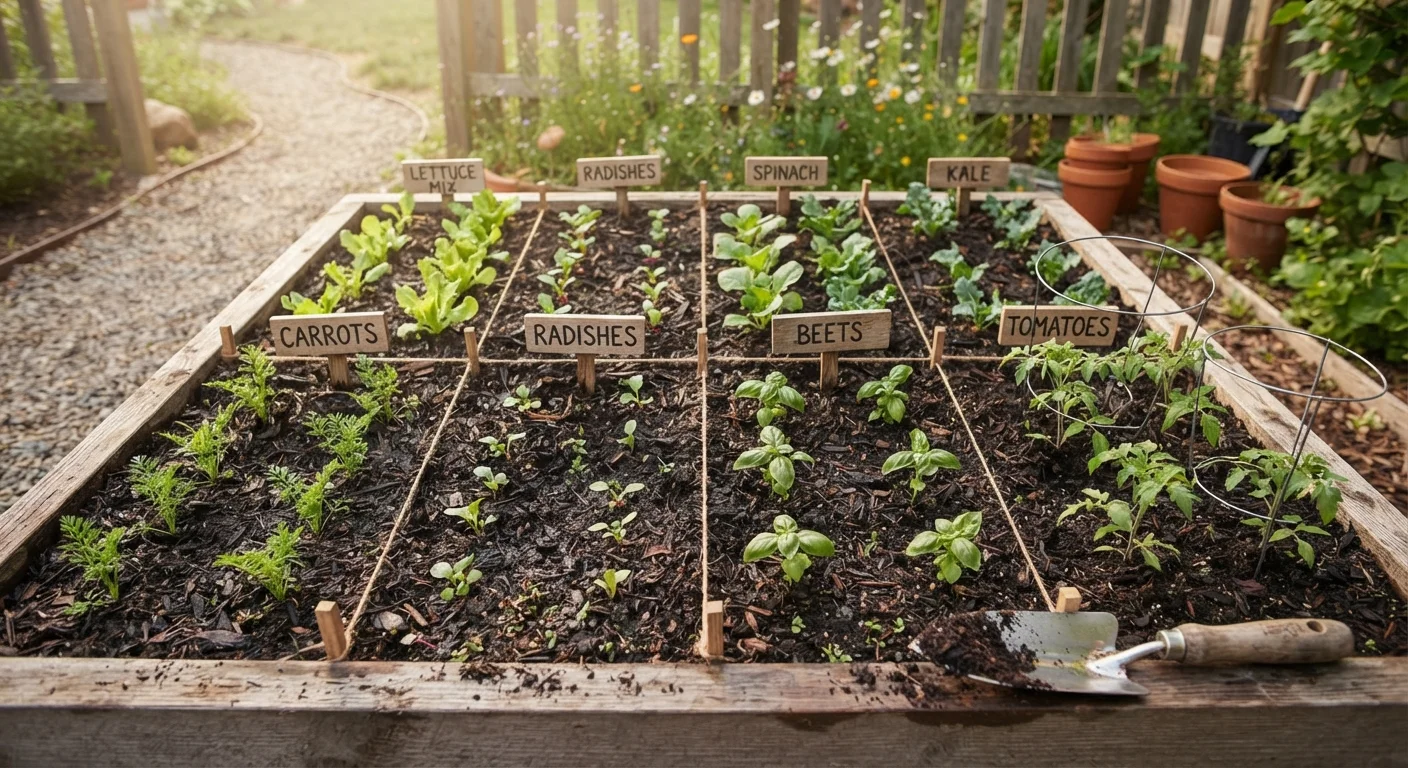
Use craft sticks or repurposed popsicle sticks to mark each planting row with the crop name and date planted. After a few weeks, different seedlings can look nearly identical, and tracking what's where becomes surprisingly difficult without labels. This habit also helps you compare germination timing and growth rates across your first season.
Spend a few minutes in the garden every couple of days during the first month. Early observation lets you catch pest pressure, wilting, or yellowing leaves before small problems become season-ending ones. Removing weeds while they're small is also significantly easier than dealing with established ones later.
Setting Realistic First-Season Expectations
A first vegetable garden is a learning experience as much as a food source. You will likely encounter at least one pest, one failed crop, and one surprise success. That combination is normal and genuinely useful - it builds the practical knowledge that makes every subsequent season easier.
Managing costs wisely from the start helps. Seeds are nearly always cheaper than transplants. Borrowing or repurposing tools where possible keeps startup expenses down - many basic tasks require only a trowel, a hoe, and a watering can. The smart budgeting strategies hub offers broader household financial context if you're thinking about how garden spending fits into your overall priorities.
Harvesting promptly once vegetables reach maturity encourages continued production in many crops and prevents overripe produce from going to waste. Once you're harvesting, cooking methods that make vegetables more appealing can help the whole family enjoy what the garden produces.
By the end of your first season, you'll know which crops thrived, which struggled, and what your specific space and schedule can realistically support. That knowledge is worth more than any single harvest.
This article provides general gardening guidance for informational purposes. Soil conditions, climate, and local regulations vary - consult your local cooperative extension service for region-specific planting advice.