

Key Takeaways
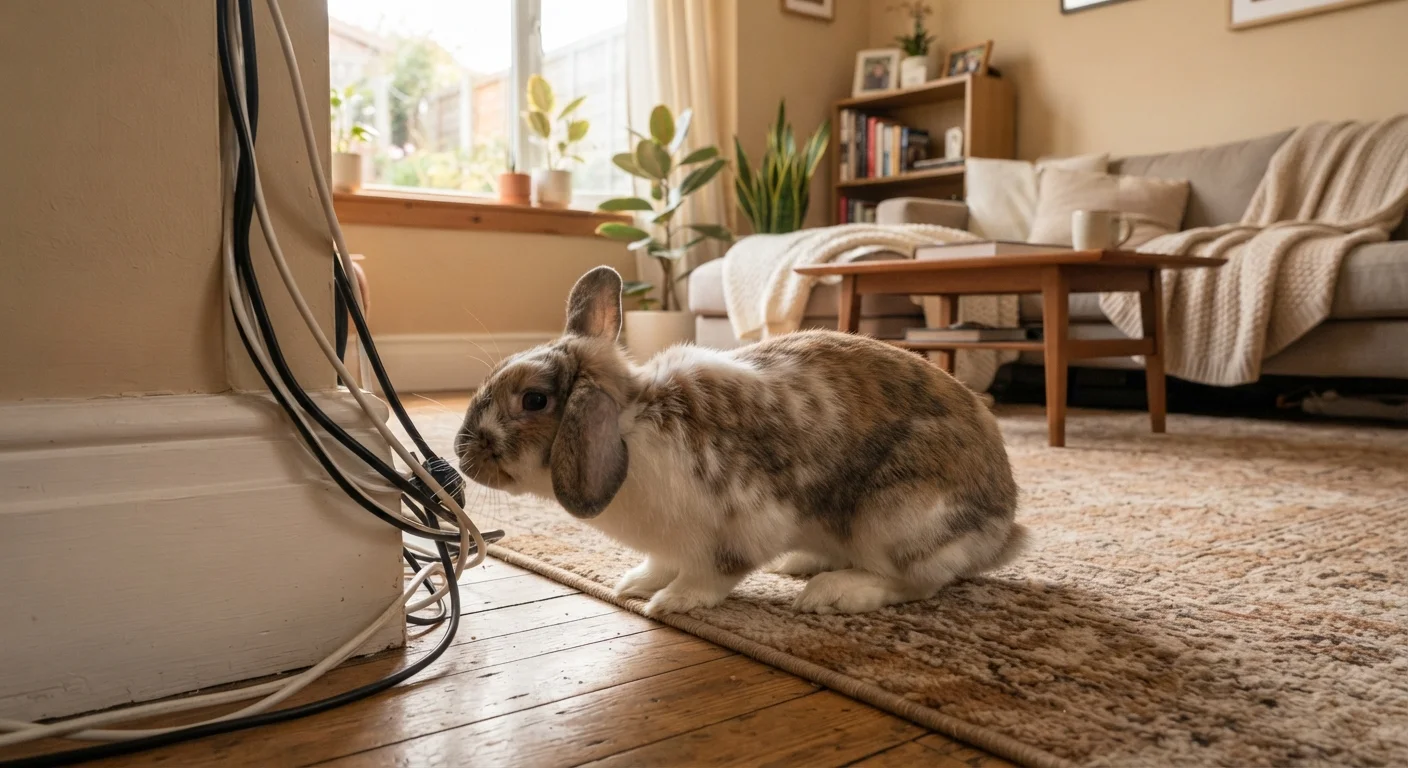
- Electrical cords are the single biggest hazard for free-roaming rabbits and must be covered or rerouted.
- Many common houseplants are toxic to rabbits - identify and remove them before allowing access.
- Rabbits chew constantly; baseboards, furniture legs, and carpets all need protection.
- Small gaps behind appliances and under furniture can trap or injure a roaming rabbit.
- Room-by-room preparation is safer than trying to manage the whole home at once.
- Supervision during early free-roam sessions helps you spot hazards you may have missed.
What you will need
Why Rabbit-Proofing Is Different From Other Pet-Proofing
Rabbits are wired to chew - it's not misbehavior, it's biology. Their teeth grow continuously throughout their lives, and gnawing is how they keep them worn down. That means anything at floor level is fair game: power cords, furniture legs, baseboards, carpet edges, books on low shelves, even drywall. Unlike dogs, rabbits are also silent chewers, so the damage (or danger) is often discovered after the fact.
If you're already familiar with puppy-proofing your home, rabbit-proofing shares the same room-by-room logic - but the chewing risk is substantially higher, and rabbits can squeeze into surprisingly tight spaces. Before you let your rabbit roam, walk each room at bunny-eye level (yes, literally get low to the floor) and think like a creature that wants to chew everything it can reach.
For a broader look at what living with a rabbit actually involves day to day, see our guide on what life with a bunny actually looks like.
What you will need
Room-by-Room Hazard Checklist
Tackle one room at a time. Fully secure a space before opening it to your rabbit, rather than attempting a whole-home overhaul in one afternoon.
Living Room
This is typically the highest-risk room because of entertainment system cables. Bundle cords together and run them through split-loom tubing or plastic cable conduit - both are inexpensive and widely available at hardware stores. Anchor bundles to walls or tuck them behind furniture that the rabbit cannot move. Block access behind TV stands and media consoles with cardboard or a purpose-built barrier; rabbits love those dark, enclosed spaces.
Check every low shelf and coffee table for items a rabbit might pull down or chew: remote controls, phone chargers, magazines. Move houseplants to counters or rooms the rabbit cannot access - common favorites like pothos, philodendron, and peace lily are toxic to rabbits. Your veterinarian or a reliable veterinary toxicology resource (such as the ASPCA Animal Poison Control Center database) can help you verify any plant you're unsure about.
Kitchen
Keep rabbits out of the kitchen during cooking - hot surfaces and dropped food are real hazards. If you allow access at other times, block the gap under the stove and refrigerator with foam weather-stripping or rigid cardboard. Rabbits can crawl into those spaces and become stuck, or contact heating elements. Store cleaning products, trash bins, and plastic bags in closed cabinets.
Bedroom
Mattress and box-spring undersides are a magnet for burrowing rabbits, and the fabric lining is easily chewed through. Use a bed skirt barrier or solid foam blockers. Protect lamp cords and phone charger cables the same way you would in the living room. Be mindful of small items on the floor - hair ties, buttons, and loose coins are ingestion hazards.
Hallways and Stairs
Rabbits can tumble down stairs. Install a baby gate at the top of any staircase before allowing free-roam access. Check hallway baseboards for loose sections a rabbit could strip away, and look for gaps around pipes or HVAC vents at floor level.
Use an Exercise Pen as a Transitional Tool
If you're not ready to fully rabbit-proof an entire room, a portable wire exercise pen lets your rabbit roam a defined safe zone while you work on the larger space. Ensure the pen has no horizontal bars that could serve as footholds - rabbits are surprisingly capable jumpers. This approach is especially helpful in households with young children who may leave small items on the floor.
Step-by-Step: Securing Each Room
Do a floor-level walkthrough of the target room
Get down to your rabbit's eye level - roughly 4-6 inches from the floor - and scan the entire perimeter. Note every cord, gap, plant, and reachable object. Take photos so you have a reference for what still needs addressing.
Cover or reroute all electrical cords
Feed every low-lying cord through split-loom tubing or a rigid plastic conduit. Anchor the covered bundle to the baseboard using adhesive cable clips. If a cord cannot be rerouted, block access to that area of the room entirely using a physical barrier or exercise pen panel.
Block gaps behind and under appliances and furniture
Use rigid foam cut to size, cardboard panels, or commercially available furniture gap blockers to seal spaces behind refrigerators, stoves, washing machines, and entertainment units. Check that any barrier is secure enough that the rabbit cannot push it aside.
Remove or relocate toxic plants and unsafe objects
Move all houseplants to surfaces the rabbit cannot reach or to a room the rabbit will not access. Cross-reference your plants against a veterinary toxicology database if you're unsure. Clear floor-level shelves of small items that could be ingested: rubber bands, coins, buttons, batteries, and plastic packaging.
Protect baseboards, furniture legs, and carpet edges
Wrap wooden furniture legs with cardboard sleeves or purchase plastic leg protectors. Tack flexible plastic carpet edge trim over any exposed or fraying carpet borders. For baseboards in high-chew zones, adhesive-backed clear vinyl guards can reduce damage - though the only guaranteed solution is a physical barrier between the rabbit and the surface.
Install baby gates and restrict staircase access
Choose gates with a solid panel or openings smaller than 1 inch. Pressure-mounted gates work for most doorways; use wall-mounted hardware gates at the top of any staircase. Walk the gate's full perimeter after installation to ensure there are no gaps a rabbit could squeeze through.
Supervise the first free-roam session and note any new hazards
Let your rabbit explore the prepared room while you watch. Observe where they go first, what they attempt to chew, and whether they find any gaps you missed. Make notes and address new hazards before the next session. This first supervised visit is your quality-control check.
Ongoing Safety and Supervision
Rabbit-proofing is not a one-time task. As furniture shifts, new electronics arrive, or seasonal decorations appear, new hazards are introduced. Do a quick floor-level scan every few months, or any time the room layout changes significantly.
During your rabbit's first few free-roam sessions in a newly prepared room, stay present and watch closely. You may spot chewing attempts on spots you overlooked - that's valuable information, not failure. Use those observations to add additional cord covers or barriers before the next session.
For help creating a safe home base habitat - the enclosure your rabbit returns to when they're not roaming - our guide to setting up a safe indoor rabbit enclosure covers flooring, hiding spots, and layout in detail. And if you're still deciding whether a rabbit is the right companion for your household, comparing rabbits and guinea pigs can help clarify the commitment involved.
This article is for general informational purposes only. Always consult a qualified veterinarian for advice specific to your rabbit's health, behavior, or safety concerns.