

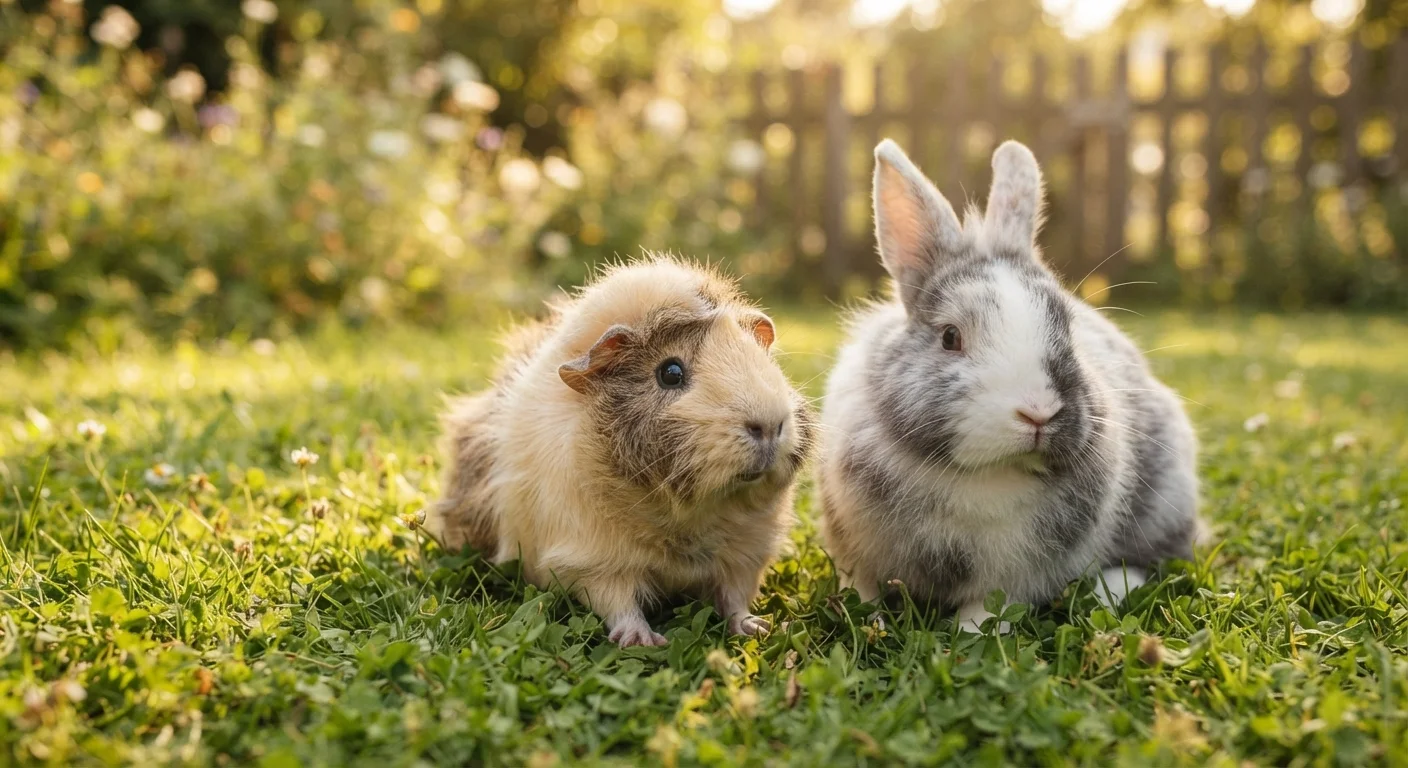
Key Takeaways
- Guinea pigs are generally calmer and more tolerant of handling, making them a gentler fit for younger children.
- Rabbits need significantly more space and daily free-roaming time outside their enclosure.
- Guinea pigs are social animals that typically require at least one same-species companion to thrive.
- Rabbits are more prone to costly health issues and benefit strongly from veterinary spay or neuter procedures.
- Both animals need hay as the bulk of their diet and regular veterinary care from an exotic-animal-experienced vet.
- Neither pet is truly low-maintenance - ongoing time, space, and financial commitments apply to both.
Option A
Guinea Pig
The sociable, low-to-the-ground companion.
Best for: Families with younger children who want a gentle, vocal pet that thrives with a cage-mate and predictable handling routines.
Option B
Rabbit
The curious, free-roaming house pet with big personality.
Best for: Families with older children or adults who can provide supervised roaming time, enrichment, and consistent, patient handling.
If you have young children (under 8) who want an interactive pet
Guinea Pig
Guinea pigs are sturdier than they look, rarely bite, and their frequent vocalizations make them engaging for kids. They tend to tolerate gentle handling more readily than rabbits.
If you have a larger living space and time for daily enrichment
Rabbit
Rabbits can be litter-trained and free-roam like a small cat, which suits families who can bunny-proof their home and provide active interaction each day.
If you want a pair of pets that bond visibly and communicate clearly
Guinea Pig
Guinea pigs are highly social and should live in bonded pairs or small groups. Watching two guinea pigs interact - and hearing their wheeks and purrs - is genuinely entertaining.
If you're an experienced small-pet owner comfortable with more complex care
Rabbit
Rabbits have more nuanced needs around diet, housing, and health monitoring, but reward attentive owners with affectionate, intelligent companionship.
If keeping ongoing costs as manageable as possible is a priority
Guinea Pig
While neither pet is cheap, guinea pigs generally involve lower veterinary expenses and don't require the same level of home modification that a free-roaming rabbit does.
Temperament and Handling: Which Animal Is More Kid-Friendly?
Guinea pigs have a well-earned reputation for being approachable. They rarely scratch or bite, they vocalise expressively (those little wheeks are hard not to love), and they tend to settle in a child's lap without much fuss once they're comfortable. Their low center of gravity also makes them easier for small hands to hold safely.
Rabbits are a different story. They're not unfriendly - many are genuinely affectionate - but they're prey animals with powerful hind legs and a strong dislike of being lifted off the ground. A rabbit that feels insecure can kick hard enough to injure itself or a child. Rabbit-family bonds tend to develop through floor-level interaction rather than lap time, which can take patient adults a while to explain to excited kids.
For households with children under eight, guinea pigs are typically the more forgiving starting point. Older children and teens often connect deeply with rabbits, especially once they learn to read rabbit body language. Our guide to life with a rabbit goes into what that daily relationship really looks like.
Space, Housing, and Daily Roaming Needs
Neither animal belongs in a tiny cage. Guinea pigs need a minimum of 7-8 square feet of floor space for a pair - and more is always better. They don't climb much, so enclosures tend to be wide rather than tall, and they don't require time outside the enclosure the way rabbits do, though supervised floor time is still enriching.
Rabbits need considerably more room. Most rabbit welfare organizations recommend enclosures of at least 12 square feet combined with several hours of daily free-roaming access in a bunny-proofed area. Rabbits chew - wires, baseboards, furniture - so that proofing step is non-negotiable. Our room-by-room rabbit-proofing guide can help you plan that out before bringing a rabbit home.
| Criterion | Guinea Pig | Rabbit |
|---|---|---|
| Typical lifespan | 4-7 years | 8-12 years |
| Handling tolerance | Generally high; rarely bites | Variable; dislikes being lifted |
| Minimum enclosure space (pair) | 7-8 sq ft | 12+ sq ft plus roaming area |
| Social needs | Requires at least one companion | Can be solo with strong human bond |
| Vitamin C requirement | Yes - must come from diet | No - self-produced |
| Litter-trainable | Partially | Yes, reliably |
| Vet costs (general) | Moderate | Higher (spay/neuter advised) |
| Home modification needed | Low | High (chew-proofing required) |
If you're in an apartment or a home without a dedicated pet-safe area, a guinea pig habitat is meaningfully easier to fit into your existing setup.
Social Needs, Diet, and the Real Cost of Care
Social needs matter. Guinea pigs are wired for companionship. Housing a single guinea pig is generally considered a welfare concern - they can become anxious and withdrawn without a companion. Plan for at least two. Rabbits can live solo if they receive substantial daily human interaction, though many do well in bonded pairs too. For a deeper look at what guinea pig isolation does, see why guinea pigs need a friend.
4-7 yrs
Average guinea pig lifespan
Guinea pigs generally live 4 to 7 years, which is a meaningful long-term commitment for families, particularly those with young children.
8-12 yrs
Average domestic rabbit lifespan
Well-cared-for domestic rabbits routinely live 8 to 12 years, making them a longer commitment than many families anticipate at adoption.
~80%
Diet that should be hay (both species)
Veterinary nutritionists broadly agree that unlimited grass hay should form the large majority of both guinea pig and rabbit diets to support dental and digestive health.
Diet basics are similar but not identical. Both animals should eat unlimited grass hay as the foundation of their diet - it keeps their continuously growing teeth and digestive systems healthy. Guinea pigs, unlike rabbits, cannot produce their own vitamin C, so fresh leafy greens and a small amount of appropriate fresh vegetables are essential every day, not optional. For a handy overview of what each animal should eat (and what to avoid), check our small pet feeding reference.
Costs add up for both. Bedding, hay, fresh produce, enclosures, and routine vet care from an exotic-animal-experienced veterinarian are ongoing expenses for either pet. Rabbits tend to carry higher veterinary costs overall - spay and neuter surgery is strongly recommended to reduce health risks and behavioral problems, and rabbits are prone to conditions like GI stasis that require prompt (and often expensive) treatment. Our piece on the hidden costs of small pet ownership breaks down what new owners frequently underestimate.
This article is for general informational purposes only and does not constitute veterinary advice. Always consult a qualified exotic-animal veterinarian for guidance specific to your pet's health and care needs.