

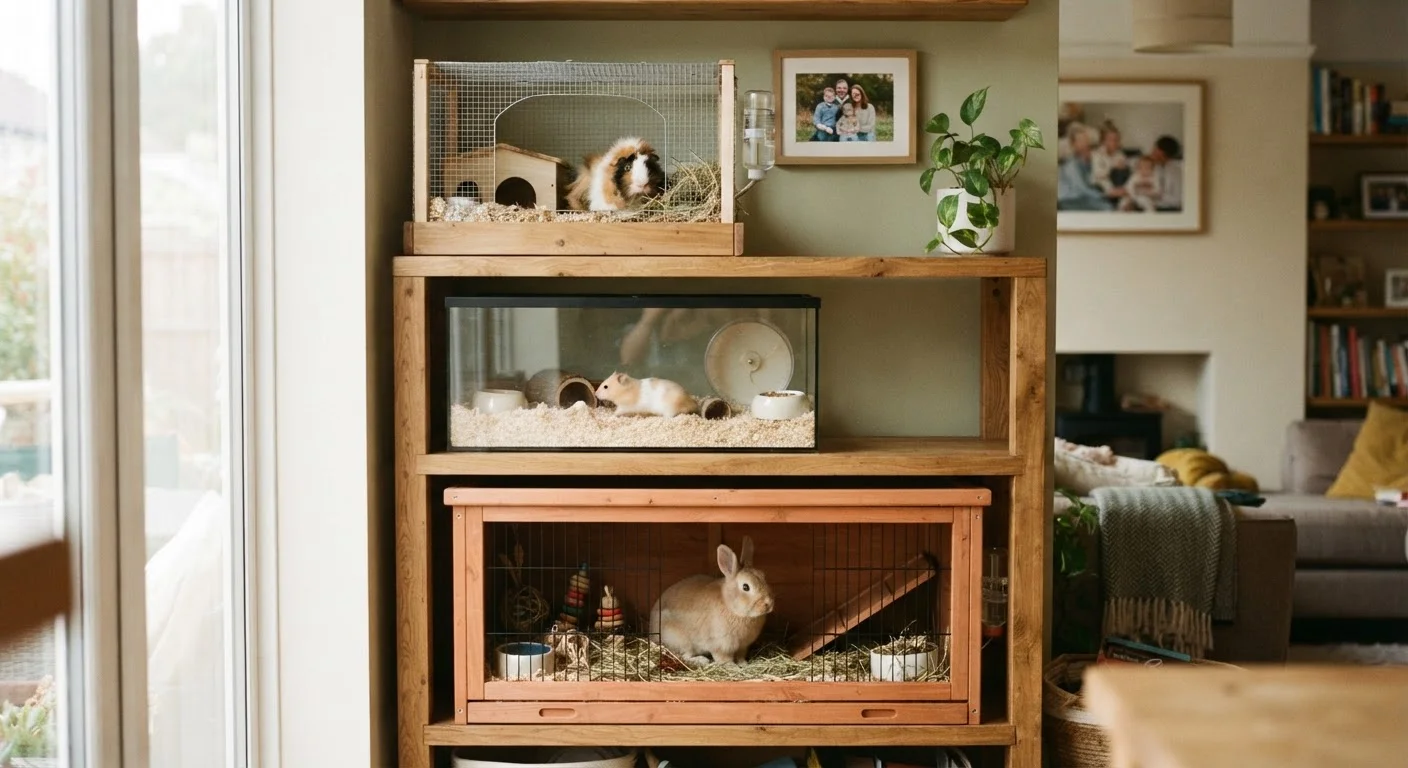
Key Takeaways
- Hamsters need much more space than most starter cages provide - small cages cause real stress.
- Rabbits should not live on pellets alone; hay must make up the majority of their diet.
- Guinea pigs are social animals and generally do better in pairs than living alone.
- Birds can be seriously harmed by common household fumes, not just obvious toxins.
- Small pets do get sick and do benefit from veterinary care - they are not low-maintenance by nature.
Why Small Pet Myths Are More Dangerous Than They Look
Small pets - hamsters, rabbits, guinea pigs, birds, and gerbils - are often marketed as easy starter animals, especially for families with young children. That framing, while well-intentioned, has quietly produced a body of conventional wisdom that ranges from misleading to genuinely harmful. Because these animals are small and relatively inexpensive, early warning signs of poor husbandry can go unnoticed until a problem is serious.
The myths below aren't obscure edge cases. They're the kinds of beliefs passed along at pet stores, in schoolyards, and on social media every day. Clearing them up won't just make your pet more comfortable - it could meaningfully extend their life. For a broader look at the actual dietary needs of these animals, see our feeding reference for small pets.
Myth
Hamsters are happy in small cages because they're tiny animals.
Fact
Hamsters are active foragers that can travel several miles per night in the wild - small cages cause chronic stress and stereotypic behaviors like repetitive bar-chewing.
Cage size is one of the most misunderstood aspects of hamster care. In their natural habitat, hamsters roam extensively each night in search of food. Confining them to a small enclosure - especially without adequate burrowing depth or enrichment - produces visible stress behaviors that welfare researchers recognize as indicators of poor psychological health. Larger, appropriately furnished enclosures aren't a luxury; they're a baseline welfare requirement.
Myth
Rabbits thrive on a diet of mainly pellets and the occasional vegetable.
Fact
Hay should make up roughly 80-90% of an adult rabbit's diet. Pellets are a supplement, not a staple, and an excess of them can contribute to serious digestive and dental problems.
A rabbit's digestive system is built around constant, slow-moving fiber - the kind that comes from unlimited grass hay. Without it, gut motility slows, which can lead to life-threatening GI stasis. Teeth also need the grinding action of long hay fibers to wear down properly; pellet-heavy diets are linked to dental disease that's both painful and costly to treat. Think of pellets as a vitamin supplement: useful in appropriate amounts, but not the foundation of the meal.
Myth
Guinea pigs are solitary animals that do fine on their own.
Fact
Guinea pigs are highly social animals; most animal welfare organizations recommend keeping them in same-sex pairs or compatible groups wherever possible.
In the wild, guinea pigs live in social groups. Keeping a single guinea pig alone deprives them of a fundamental behavioral need: companionship from their own species. A lone guinea pig may appear calm, but research on their stress hormones and behavioral repertoire suggests social isolation takes a real toll. Many countries in Europe have actually made it illegal to keep a single guinea pig. Introductions between guinea pigs require care, but the effort is well worth it for the animal's wellbeing.
Myth
Pet birds only need to avoid obviously toxic foods like avocado or chocolate.
Fact
Birds are also highly sensitive to airborne toxins - including non-stick cookware fumes, scented candles, aerosol sprays, and certain essential oil diffusers - which can be fatal very quickly.
A bird's respiratory system is extraordinarily efficient, which is precisely what makes it so vulnerable. Polytetrafluoroethylene (PTFE), the coating on many non-stick pans, releases fumes when overheated that are barely perceptible to humans but can kill a bird in minutes. Scented candles, air fresheners, and even cleaning products used in the same room pose meaningful risks. Good bird care means thinking carefully about air quality throughout the home, not just what goes in the food bowl.
Myth
Small pets rarely need a vet because they're inexpensive and short-lived anyway.
Fact
Small animals get sick, feel pain, and benefit meaningfully from veterinary care - and many conditions are far more treatable when caught early.
The "not worth the vet bill" mindset often leads to preventable suffering. Rabbits, for instance, can develop conditions like dental malocclusion or uterine cancer (in unspayed females) that are treatable when addressed promptly. Hamsters can develop wet tail (a bacterial infection) that becomes fatal within days without intervention. The financial calculus of small-pet ownership is also worth understanding upfront - see our overview of the hidden costs of small pet ownership for a realistic picture of ongoing expenses, including veterinary care.
Housing, Handling, and the Bigger Picture
Beyond diet and social needs, many small-pet households get housing wrong in ways that compound daily. Cages sold as "hamster starter kits" are frequently far below the space recommendations supported by animal welfare research. A Syrian hamster, for example, is generally considered to need a minimum of 450 square inches of unbroken floor space - a figure most commercial starter cages don't come close to meeting. Our guide on common cage setup mistakes breaks this down room by room.
Don't Wake a Sleeping Small Pet to Play
Repeatedly disturbing hamsters, gerbils, or other small nocturnal pets during their rest period is a significant stressor that can affect their health over time. Schedule handling and interaction for the times when your pet is naturally alert and active. If your pet's schedule doesn't align with your family's routine, it's worth thinking carefully about whether that species is the right fit.
Handling expectations matter too. Many small pets - particularly hamsters and gerbils - are crepuscular or nocturnal, meaning they're naturally active at dawn, dusk, or overnight. Waking them during the day repeatedly to handle them isn't just inconvenient for the animal; it's a genuine stressor that can affect immune function and behavior over time. Families considering a first small pet may also find it useful to read what families should think through before getting a small pet - especially around age-appropriate expectations for children.
Finally, it's worth recognizing that small pets aren't a workaround for vet costs. Illness in small animals often progresses quickly, and many conditions are treatable if caught early. Knowing the signs your small pet may be unwell is one of the most practical things any owner can do.
This article provides general educational information about small pet care and is not a substitute for advice from a qualified veterinarian familiar with your specific animal.