
What Small Pets Eat: A Feeding Reference for Rabbits, Guinea Pigs, Hamsters, and Birds

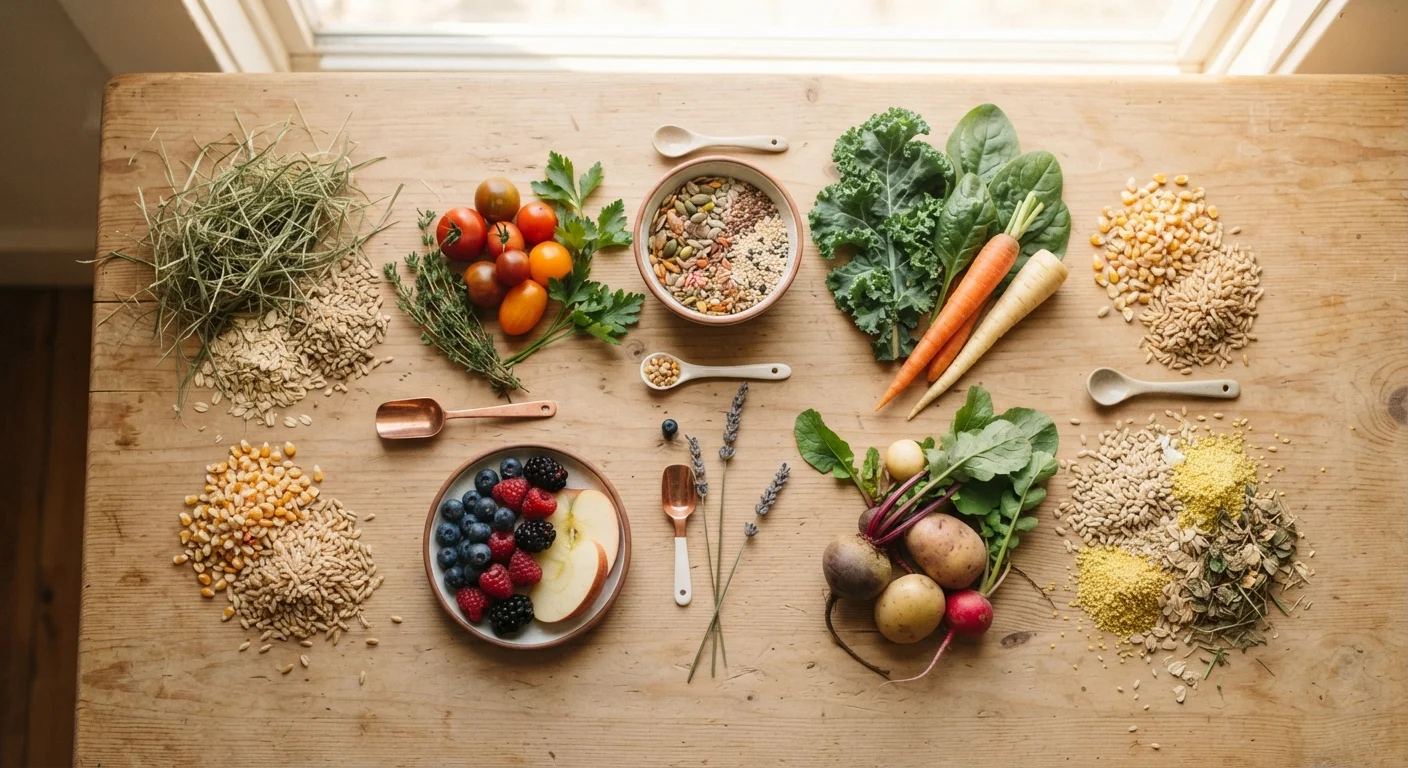
| Rabbit diet foundation | Unlimited timothy or orchard grass hay (approx. 80% of diet) |
| Guinea pig critical nutrient | Vitamin C - must come from fresh food daily |
| Hamster diet type | Omnivore - pellets, vegetables, and occasional protein |
| Bird diet baseline | Species-appropriate pellets + fresh vegetables; seeds as supplement only |
| Universal toxic food | Avocado - harmful to rabbits, guinea pigs, and most birds |
| Fresh water | Required daily for all four species without exception |
Why Feeding Basics Matter More Than You Think
Small pets are easy to underestimate. They're compact, quiet, and low-drama - but their nutritional needs are surprisingly specific, and common feeding mistakes are one of the leading reasons these animals end up unwell. The good news: once you know what each species actually needs, it's straightforward to get right. This reference covers rabbits, guinea pigs, hamsters, and common pet birds - the four groups most likely to share a family home.
For deeper context on what daily life with one of these animals looks like beyond feeding, see our guide to life with a rabbit or our small pet myths article - both cover care gaps that catch first-time owners off guard.
| Rabbit diet foundation | Unlimited timothy or orchard grass hay (approx. 80% of diet) |
| Guinea pig critical nutrient | Vitamin C - must come from fresh food daily |
| Hamster diet type | Omnivore - pellets, vegetables, and occasional protein |
| Bird diet baseline | Species-appropriate pellets + fresh vegetables; seeds as supplement only |
| Universal toxic food | Avocado - harmful to rabbits, guinea pigs, and most birds |
| Fresh water | Required daily for all four species without exception |
Rabbits: Hay Is the Whole Foundation
Rabbits have a digestive system built around constant fiber intake. Unlimited grass hay - timothy or orchard grass for adults, alfalfa only for young rabbits under six months - should make up roughly 80% of their diet. Without enough hay, gut motility slows and a life-threatening condition called GI stasis can develop.
Fresh leafy greens round out the diet: romaine lettuce, cilantro, parsley, and leafy kale are solid choices. Pellets are fine in small quantities (about ¼ cup per 5 lbs of body weight daily), but many owners overfeed them at the expense of hay. Fruits are occasional treats only - a small slice of apple or a few blueberries, a couple of times per week at most.
Foods to avoid: iceberg lettuce (too watery, near zero nutrition), avocado, onion, garlic, rhubarb, and anything sugary or processed. Muesli-style mixed seed and grain mixes marketed for rabbits are widely considered unsuitable by veterinary nutritionists - rabbits selectively eat the sugary pieces and leave the rest.
Guinea Pigs: The Vitamin C Requirement You Can't Skip
Guinea pigs, like humans, cannot synthesize their own vitamin C. A deficiency causes scurvy - real, serious, and entirely preventable. Fresh vegetables rich in vitamin C (bell peppers are especially good, as are leafy greens like kale and parsley) should be offered daily. Hay is equally essential here: unlimited timothy hay for adults supports healthy digestion and dental wear.
Pellets formulated specifically for guinea pigs - not rabbits - provide additional nutrients, but fresh food is where vitamin C primarily comes from. Citrus fruits can supplement C but should be limited due to acidity. Water must always be fresh and available.
Foods to avoid: onion, garlic, potato and potato tops, rhubarb leaves, and avocado are toxic. Dairy and meat are inappropriate for this herbivore. As with rabbits, muesli mixes are discouraged by most exotic pet veterinarians. If you're weighing guinea pigs against rabbits as a family pet, our guinea pig vs. rabbit comparison walks through the full picture.
Guinea Pigs Are Social - and That Affects Feeding
Guinea pigs are highly social animals and are typically kept in pairs or small groups. When housing multiple guinea pigs, ensure each animal has reliable access to food and water without competition. Dominant animals can block others from reaching hay or fresh food, particularly in smaller enclosures. See our article on why guinea pigs need a companion for more on their social needs.
Hamsters and Birds: Different Needs, Common Pitfalls
Hamsters are omnivores with simple but specific needs. A quality hamster-formulated lab block or pellet provides the core diet. They also benefit from small amounts of fresh vegetables (cucumber, broccoli, carrot), occasional lean protein like a small piece of cooked egg, and moderate amounts of plain seeds and grains. Hamsters naturally cache food, so portion sizes matter - uneaten fresh food should be removed daily to prevent spoilage.
Foods to avoid for hamsters: onion, garlic, citrus fruits, almonds, apple seeds, and sugary or salty human snacks. Iceberg lettuce and watery vegetables can cause diarrhea. For more on hamster-specific care and how they differ from other small rodents, see how hamsters and gerbils differ.
Pet birds vary considerably by species. Budgies, cockatiels, and finches all have different requirements, but a few principles apply broadly. Seeds alone are an incomplete diet - they're high in fat and low in essential vitamins. Most avian veterinarians recommend a pellet-based diet supplemented with fresh vegetables (leafy greens, carrots, bell peppers) and limited fruit. Fresh water daily is non-negotiable.
Foods to avoid for birds: avocado (toxic to most birds), chocolate, caffeine, onion, garlic, alcohol, and the fumes from non-stick cookware (overheated polytetrafluoroethylene can be fatal to birds). Salt and high-fat seeds like sunflower should be treats, not staples.
This article is for general informational purposes only and is not a substitute for veterinary advice. Always consult a veterinarian - ideally one experienced with exotic or small animals - for guidance specific to your pet's health and diet.