

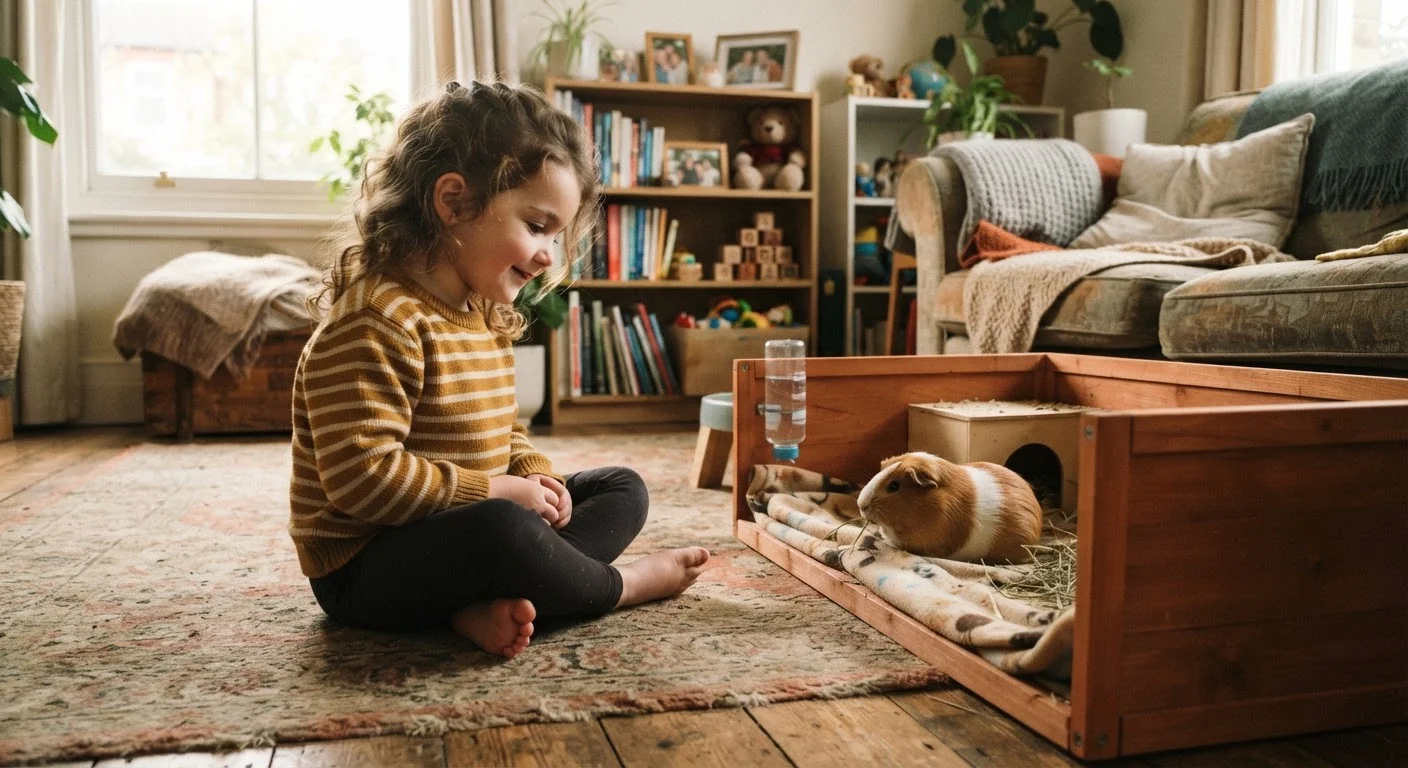
Key Takeaways
- Most small pets are not naturally suited to handling by children under age five or six.
- Adult supervision of all child-pet interactions is essential regardless of the child's age.
- Small pets still carry real ongoing costs that families should budget for in advance.
- The animal's welfare matters as much as the child's experience - both deserve consideration.
- Starting with a lower-maintenance species helps families build realistic routines before scaling up.
Age-Appropriate Pet Ownership
Age-appropriate pet ownership means choosing an animal whose care requirements, temperament, and interaction style genuinely match what a child can handle at their developmental stage. It's less about which pet looks appealing and more about which pet will thrive in a household with young children - and vice versa. A mismatch between a child's age and a pet's needs is one of the most common reasons small pets are rehomed within months of arriving.
Veterinary and behavioral guidelines generally distinguish between animals that tolerate handling (guinea pigs, some rabbits) and those that are stress-sensitive to it (hamsters, gerbils, birds), which informs age-matching recommendations.
Why 'A Pet for the Kids' Often Gets Complicated
The idea sounds lovely: a small, furry companion that teaches children responsibility and gives them something to care for. Families imagine a hamster happily spinning on its wheel while a six-year-old refills its water bottle. What actually happens, more often than parents expect, is that the adults end up doing most of the feeding, the child loses interest within weeks, and the animal lives out its days in a cage that's too small, in a corner of the house nobody visits.
This isn't a reason to skip a small pet entirely - it's a reason to go in with honest expectations. The families who have genuinely good experiences with small pets are those who treated the animal's needs as a real priority, not a backdrop for a lesson in responsibility. Before you commit, it helps to think through a few things the pet store visit won't cover.
Small Doesn't Mean Simple
Small pets are sometimes marketed as 'easy' or 'low-maintenance' starter animals, but this framing can be misleading. Many small species have specific environmental, dietary, and social needs that require real attention. Our guide to common small pet myths and our small pet feeding reference are good places to build a realistic picture before making any decisions.
Matching the Pet to Your Child's Developmental Stage
Small pets vary enormously in how tolerant they are of handling, noise, and unpredictable movement - all things young children bring in abundance. Guinea pigs are generally regarded by veterinary professionals as more robust and social than hamsters or gerbils, which are often nocturnal, stress-sensitive, and prone to nipping when startled. Rabbits can make wonderful family pets, but they're more complex animals than most people realize - see our overview of what life with a rabbit actually looks like before deciding.
As a general guideline, children under five have limited impulse control and grip awareness, making supervised observation a safer role than hands-on handling. Children between six and eight can begin participating in care tasks with consistent adult guidance. Older children can take on more responsibility, but the adult in the household should expect to remain the backstop - always.
Start With a 'Meet First' Visit
Many shelters and rescue organizations welcome family visits before adoption, which lets you observe how your child responds to a specific animal - and how the animal responds to your child. This is far more informative than choosing a pet based on photos or general species reputation. It also gives shelter staff a chance to flag any concerns about the match.
The Supervision Gap Most Families Underestimate
Even calm, well-socialized small animals can bite, scratch, or injure themselves if picked up incorrectly. Children - even well-meaning, gentle ones - frequently hold animals too tightly, drop them, or misread the signals an animal is sending. Stress in small animals often looks subtle: flattened ears, freezing in place, chattering teeth. Without knowing what to watch for, a child may not realize the animal is frightened until a bite has already happened.
Supervision isn't just about injury prevention. It's also about the animal's quality of life. A hamster that gets handled during daylight hours when it's naturally asleep is chronically sleep-deprived. A guinea pig kept in a cage without adequate enrichment becomes bored and anxious. Our article on building enrichment into your small pet's daily routine offers practical ideas that work even for busy families.
~50%
Small pets rehomed or surrendered within one year
Various animal welfare organizations report that a significant share of small pets - particularly rabbits and guinea pigs - are surrendered within the first year, often due to unmet expectations or underestimated care needs.
5-7 years
Average guinea pig lifespan
Guinea pigs live considerably longer than many families anticipate, meaning a 'starter pet' for a young child may still be in the household when that child reaches their early teens.
3x
Higher vet cost for exotic vs. companion animal visits
Exotic animal veterinarians - who treat small mammals, birds, and reptiles - typically charge more per visit than general-practice vets, and they are less widely available in many US communities.
The Honest Budget Conversation
Small pets carry a 'low cost' reputation that doesn't quite hold up. The initial outlay for a guinea pig, hamster, or bird is modest, but the ongoing expenses - quality bedding, species-appropriate food, enrichment items, and veterinary care - accumulate quickly. Exotic veterinarians (the specialists who treat small mammals, birds, and reptiles) are less common than dog and cat vets, and visits tend to cost more per appointment.
Before bringing any animal home, it's worth running through the real numbers. Our breakdown of the hidden costs of owning a small pet is a useful starting point, and families juggling a tight household budget can find broader strategies at our family budgeting hub. The goal isn't to discourage pet ownership - it's to make sure the animal lands in a home where it will consistently receive what it needs.
Setting Up for a Genuinely Good Experience
The families who report the best outcomes tend to share a few habits: they research the specific species before buying, they set up the enclosure correctly from day one, and they involve children in age-appropriate ways without overpromising what a small animal will deliver emotionally. A guinea pig will not cuddle the way a dog does. A hamster may never become handleable. That's okay - observing, talking to, and gently caring for an animal still carries real value for children, even when it looks quieter than they imagined.
If you're in the early planning stage, our first-week checklist for new small pet owners covers the practical setup in detail. And before any pet comes home, it's worth reviewing common small pet myths that can cause real harm when taken as fact. A little preparation upfront makes a meaningful difference for both the child and the animal.
This article is for general informational purposes only and does not constitute veterinary or medical advice. Consult a qualified veterinarian for guidance specific to your pet's health and care needs.