

Key Takeaways
- Gerbils are social animals that need a same-species companion; hamsters are typically solitary.
- Hamsters are largely nocturnal, while gerbils are active in short bursts throughout the day.
- Gerbils generally live longer than hamsters, typically two to five years versus one to three.
- Both animals need more space and enrichment than most starter cages provide.
- Neither species is an ideal pet for very young children without close adult supervision.
Our Verdict
Hamsters and gerbils are both rewarding small pets, but they suit different households. Gerbils are the better fit for families who want an interactive, daytime-active animal and are willing to house a bonded pair. Hamsters are lower-maintenance in the social sense and can be better for people who want a single, independent pet - provided they don't mind a schedule that skews toward evenings.
| Best for | Recommended |
|---|---|
| Families who want daytime activity and social interaction | Gerbils (housed in a bonded pair) |
| Those preferring a single, independent pet | Hamster |
| Owners looking for a longer average lifespan | Gerbils |
| Evening or night-owl households | Hamster |
Why People Confuse These Two Animals
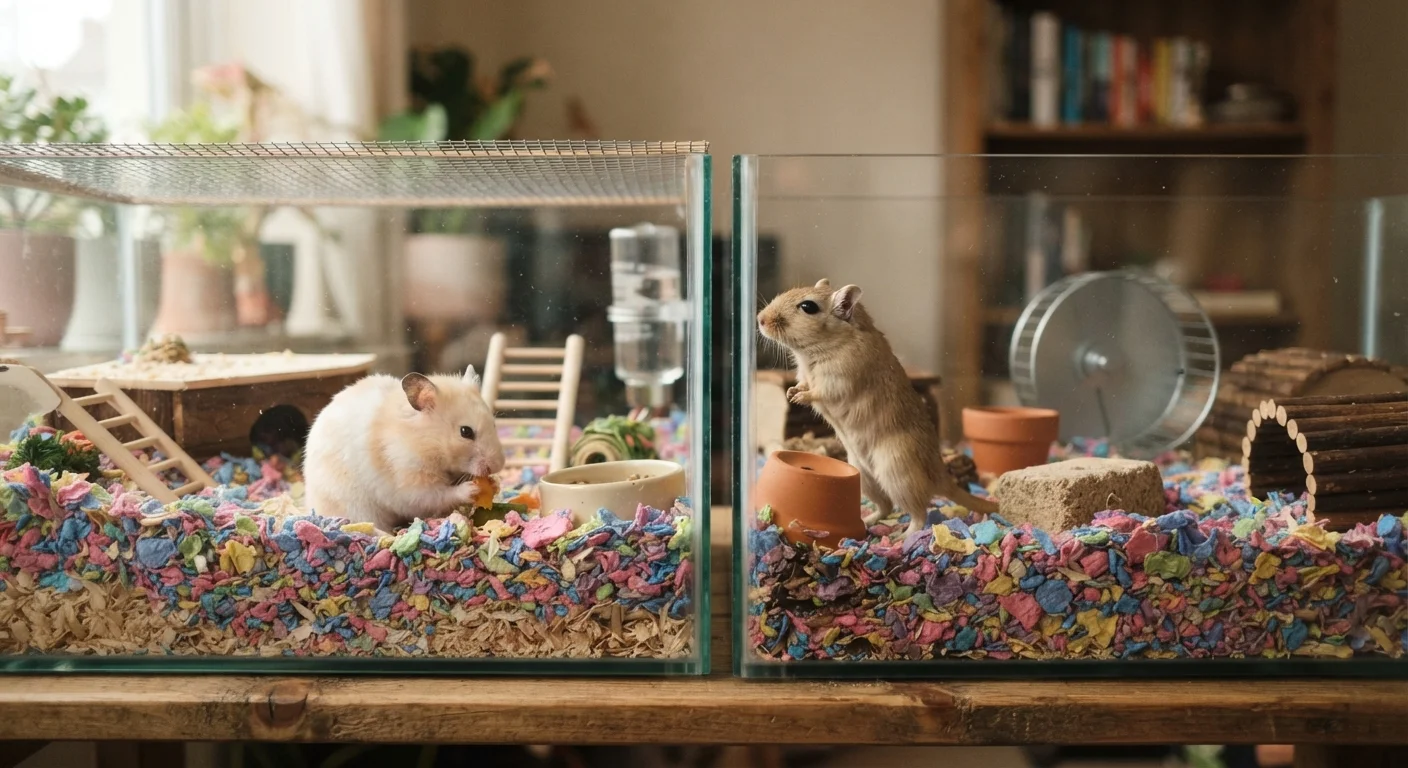
Walk into any pet store and you'll likely see hamsters and gerbils housed in adjacent tanks, surrounded by similar tubes and wheels. They're roughly the same size, both covered in fur, and both described as "starter pets." That proximity leads a lot of families to treat them as interchangeable - but they're not. Their biology, behavior, and social needs differ enough that what works well for one can genuinely harm the other.
If you're weighing which small pet fits your home, it helps to look past the surface similarities. Check out our guide on common small pet myths for more on assumptions that can inadvertently cause problems.
Social Lives: One Is a Loner, One Needs a Friend
This is the single biggest practical difference between the two species. Hamsters are solitary by nature. In the wild, Syrian hamsters (the most common pet variety) are highly territorial and will fight other hamsters if housed together. Even dwarf hamster varieties, which are sometimes kept in pairs, require careful monitoring and can become aggressive. As a rule, each hamster needs its own enclosure.
Gerbils are the opposite. They evolved as colony animals and genuinely need the company of at least one other gerbil to stay mentally healthy. A lone gerbil is a stressed gerbil. Ideally, you'll adopt a same-sex bonded pair from the start, since introducing unfamiliar gerbils later can be tricky. This is one reason gerbils often compare favorably to other highly social small pets - for context, see our piece on why guinea pigs also need companionship.
| Hamster | Gerbil | |
|---|---|---|
| Social needs | Solitary - one per enclosure | Social - needs a bonded companion |
| Activity pattern | Primarily nocturnal | Active in short bursts, day and night |
| Typical lifespan | 1-3 years | 2-5 years |
| Ease of handling | Moderate; can nip if startled | Quick and skittish; needs gentle approach |
| Odor level | Moderate; requires weekly cleaning | Generally lower odor |
| Child-friendliness | Older children with supervision | Older children with supervision |
Activity Patterns and Handling
Hamsters are primarily nocturnal. They sleep heavily during the day and become most active after dark. This means your hamster may be running its wheel at 2 a.m. - charming for night owls, disruptive for light sleepers who keep the cage in a bedroom. It also means that a child hoping to play with a hamster after school may consistently find a drowsy, grumpy animal that doesn't particularly want to be handled.
Gerbils operate on short, frequent activity bursts spread across the day - a pattern sometimes called ultradian rhythms. They're curious and quick, which makes them fun to watch but harder to handle safely, especially for small children. Neither animal is a great fit for toddlers; both require calm, gentle hands and adult oversight. For a broader look at small pet temperaments suited to families, our guinea pig vs. rabbit comparison covers similar ground.
Give Them Time to Warm Up
Both hamsters and gerbils need a settling-in period when you first bring them home - usually one to two weeks of minimal handling so they can adjust to new sights, sounds, and smells. Resist the urge to handle them constantly right away. Short, calm interactions from the start build far more trust than overwhelming an already-stressed animal. Let the pet approach your hand rather than grabbing it.
Diet, Housing, and Lifespan
Both animals eat a diet based on high-quality pellets, supplemented with small amounts of fresh vegetables and occasional protein (like plain cooked egg or mealworms). Our small pet feeding reference has specifics on what to avoid. The main dietary difference is that hamsters are notorious hoarders - they'll stuff food into cheek pouches and cache it - so you'll need to check the enclosure regularly to remove anything perishable before it spoils.
On lifespan, gerbils generally outlive hamsters. Syrian hamsters typically live one to three years; gerbils average two to five. That longer commitment is worth factoring in, especially for families with children who will form emotional attachments. Be aware that both species can carry real ongoing costs in bedding, enrichment, and occasional vet visits - our article on hidden small pet costs breaks down what to budget for.
For housing, both animals need far more space than basic starter kits offer. Deep bedding for burrowing is essential for both; hamsters in particular need at least six inches to express natural digging behavior. A wheel is non-negotiable for hamsters; gerbils benefit from one too, but they'll also spend significant time tunneling and gnawing.