

Key Takeaways
- Guinea pigs are herd animals that experience real stress and decline when kept alone.
- Loneliness in guinea pigs can lead to depression-like behavior, compulsive habits, and a weakened immune response.
- Same-sex pairs or small groups are the most practical setup for most families.
- Introductions require patience - pairing two guinea pigs properly prevents long-term conflict.
- Human interaction helps but cannot replace the constant social contact another guinea pig provides.
Guinea Pig Sociality
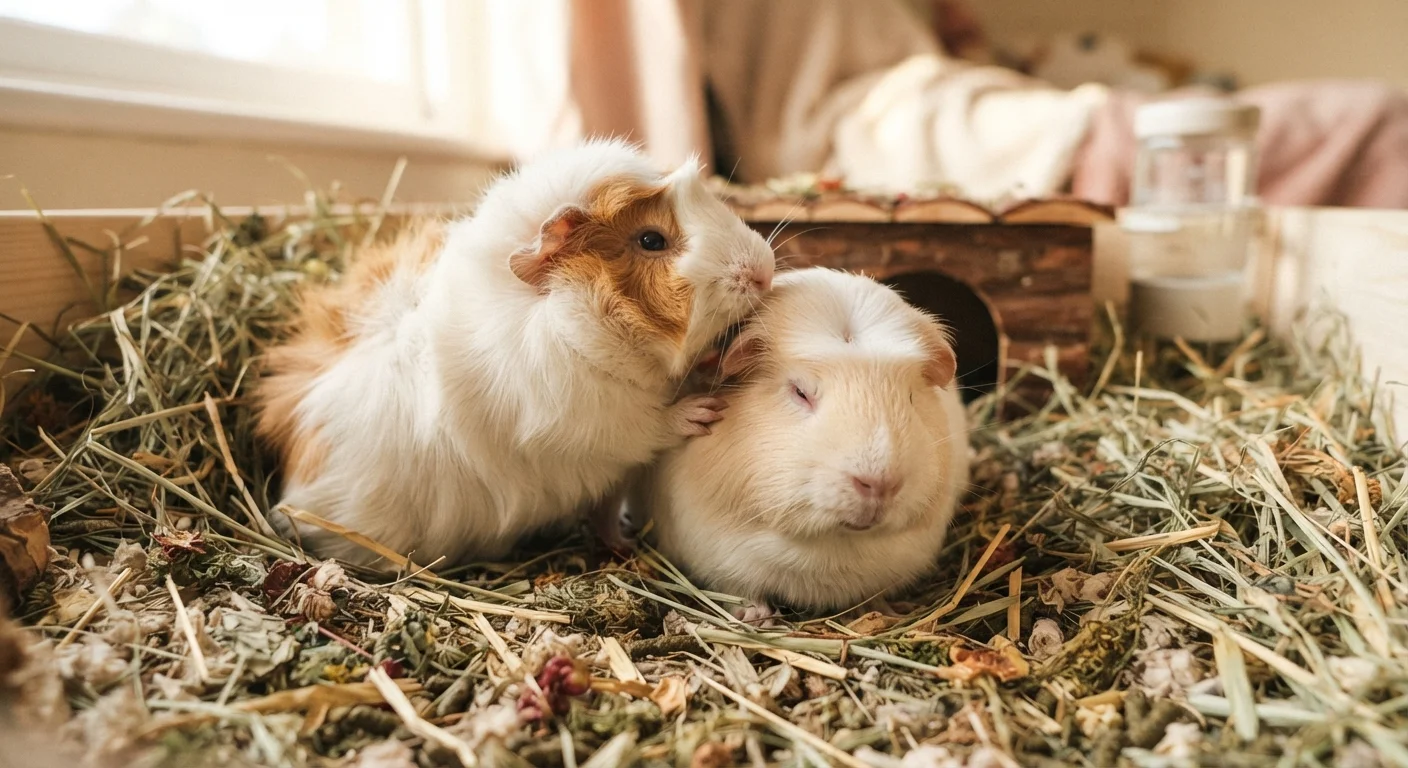
Guinea pigs are herd animals that naturally live in groups in the wild. Their brains and bodies are wired to expect constant companionship - communication, shared warmth, mutual grooming, and the simple comfort of not being alone. Keeping a single guinea pig without appropriate social contact is one of the most common, and consequential, mistakes new owners make.
In behavioral science, guinea pigs are classified as obligate social species, meaning social interaction is not optional enrichment but a core welfare requirement recognized by veterinary and animal welfare organizations.
The Social Wiring Behind the Squeaks
In the grasslands and rocky slopes of South America where guinea pigs originate, these animals never live alone. Wild guinea pigs (called cavies) move in groups, alert each other to danger, huddle for warmth, and maintain near-constant contact through a rich vocabulary of chirps, purrs, and rumbles. That same hardwiring exists in every domestic guinea pig living in a bedroom or living room today.
When you bring a guinea pig home, you're not housing a solitary creature that tolerates company - you're housing a herd animal whose entire nervous system expects a companion nearby. Understanding this distinction changes how you set up their care from day one. If you're still deciding whether a guinea pig is right for your household, our guinea pig vs. rabbit comparison walks through what life with these animals actually looks like.
~16 hrs
Daily social interaction time guinea pigs seek
Animal behavior research indicates guinea pigs spend the majority of their waking hours engaged in social behaviors when housed with companions.
2+
Minimum recommended guinea pigs per enclosure
The RSPCA, the Humane Society, and most small animal welfare organizations officially recommend guinea pigs be kept in pairs or small groups.
10-12 sq ft
Minimum floor space for a bonded pair
The Humane Society and small animal welfare guides recommend this floor-space baseline for two guinea pigs to coexist comfortably.
What Isolation Actually Does to a Guinea Pig
A lone guinea pig doesn't simply miss the company - isolation triggers measurable stress responses. Research in animal behavior and veterinary welfare science documents that socially isolated guinea pigs show elevated stress hormones, reduced immune function, and behavioral changes consistent with chronic anxiety. In plain terms: loneliness makes them sick.
Common signs that a solo guinea pig is struggling include:
- Lethargy and reduced activity - moving less, sitting hunched for long periods
- Repetitive or compulsive behaviors - pacing, bar-chewing, or circling the enclosure
- Decreased appetite - which in guinea pigs can quickly become dangerous
- Reduced vocalization - a quiet guinea pig is often an unhappy one
- Over-dependence on human interaction - distress when you leave the room
None of these are inevitable with attentive ownership, but they are predictable without a companion. The environment matters too - an undersized or poorly set-up enclosure compounds these problems significantly. Our guide on common small pet housing mistakes covers the setup issues that most frequently affect guinea pig wellbeing.
Check Local Rescues First
Many guinea pig rescues adopt out already-bonded pairs, which sidesteps the introduction process entirely. Adopting a bonded pair means both animals arrive comfortable with each other, reducing stress on the guinea pigs and the guesswork for you. It's often the smoothest path for first-time owners.
How to Pair Guinea Pigs Successfully
The good news: most guinea pigs accept companions readily when introductions are handled thoughtfully. Same-sex pairs are the simplest starting point. Two females typically settle quickly; two males can coexist well given enough space (at least 10-12 square feet of floor space per pair is a widely cited guideline). A neutered male paired with one or more females is also stable and often very harmonious.
For introductions, follow a gradual process:
- Begin in a fully neutral space - somewhere neither pig has been before
- Allow sniffing, mild chasing, and rumblestrutting (a low-pitched dominance vocalization) - this is normal negotiation
- Separate at the first sign of biting or prolonged aggressive chasing
- Repeat short sessions daily, extending them as the pigs relax with each other
- Move them into a shared, freshly cleaned enclosure only after consistent calm interaction
Patience here pays off. A rushed introduction that leads to injury or entrenched conflict makes bonding much harder. If you're navigating this for the first time, a vet or experienced rescue volunteer can offer hands-on guidance.
When Human Interaction Isn't Enough
Many first-time guinea pig owners assume that frequent handling and playtime can fill the social gap. Human interaction genuinely enriches a guinea pig's day and strengthens the bond between pet and family - but it can't replicate what another guinea pig provides. A fellow pig is present 24 hours a day. It communicates in the same language. It provides the physical closeness - side-by-side sleeping, mutual grooming - that regulates a guinea pig's sense of safety.
Think of it this way: you can be a wonderful, attentive friend to someone who speaks a different language, but you can't fully replace a companion who shares their native tongue.
“Guinea pigs are highly social animals and should always be kept with at least one other guinea pig. A single guinea pig can become stressed and depressed, which can lead to health problems.”
— RSPCA Animal Welfare Team, Royal Society for the Prevention of Cruelty to Animals - small animal welfare guidance
The practical upshot is simple: plan for at least two guinea pigs from the beginning. The additional cost of food and a slightly larger enclosure is modest, and the welfare benefit to both animals is substantial. Guinea pigs are also genuinely more entertaining to watch when they're interacting with each other - which tends to deepen the whole family's connection to them. For guidance on what to feed your new pair, our small pet feeding reference covers guinea pig nutrition alongside other popular companions.
This article is for general informational and educational purposes. For concerns about your guinea pig's health or behavior, consult a veterinarian with small animal or exotic pet experience.