

Key Takeaways
- Move to safety first - assess yourself and others for injuries before anything else.
- Always call 911 if there are injuries, road hazards, or disputed fault.
- Document the scene thoroughly with photos and written notes before vehicles are moved.
- Never admit fault or apologize at the scene - let insurers and authorities determine liability.
- Notify your insurance company promptly, even if the damage appears minor.
What you will need
Why the First Minutes Matter Most
A collision happens in an instant, but the decisions you make in the minutes that follow can affect your safety, your finances, and your legal standing for months. Disorientation, shock, and stress are normal reactions - which is exactly why having a clear mental plan in advance is so valuable.
Understanding how to respond also helps your entire household. If you're building broader safe-driving habits for your family, see our family driver safety plan for a fuller framework. And while you can't always prevent another driver's mistake, reducing your own risk factors matters - for instance, our guide on why tailgating is more dangerous than most drivers realize explains how following distance directly affects your ability to avoid rear-end crashes.
What you will need
What You'll Need at the Scene
Being prepared before an accident happens is the best way to stay calm during one. Keep your insurance card, vehicle registration, and a basic emergency kit accessible in your car at all times. A pre-trip vehicle check is a good opportunity to verify that these documents are current and that your emergency supplies are in place.
Smartphone or camera
Photograph vehicle damage, the overall scene, license plates, and any relevant road conditions.
Pen and notepad
Record driver details, witness names, and officer badge numbers when your phone battery is low or signal is poor.
Emergency roadside kit
Includes reflective triangles or flares to warn oncoming traffic while you manage the scene.
Insurance card and registration
Required for exchanging information with the other driver and filing a police report.
Step-by-Step: What to Do After a Collision
Follow these steps in order. If emergency services are already on the scene, defer to their direction - but use this sequence as your baseline when you're managing the situation yourself.
Never Admit Fault at the Scene
Even a casual apology like "I'm sorry" can be used against you in an insurance claim or legal proceeding. Stick to factual exchanges - name, contact details, insurance information, and license plate number. Let investigators and insurers determine fault based on evidence.
Check for injuries and call 911 if needed
Before you do anything else, take a breath and assess yourself for pain or disorientation. Then check on any passengers. If anyone is injured - or if you're unsure - call 911 immediately. Do not attempt to move an injured person unless they are in immediate danger from fire or oncoming traffic; movement can worsen spinal or neck injuries.
Move to a safe location and activate hazard lights
If the vehicles are drivable and it is safe to do so, move them out of active traffic lanes - typically to a shoulder or nearby parking lot. Turn on your hazard lights immediately to alert other drivers. If you cannot move the vehicle, stay inside with your seatbelt fastened until emergency services arrive, especially on a high-speed road.
Call the police and request an official report
In many states, you are legally required to report accidents involving injury or damage above a specified dollar threshold. Even when it is not required, an official police report provides a neutral third-party record that is invaluable if an insurance dispute arises later. Give the responding officer an accurate, factual account of what happened without speculating about fault.
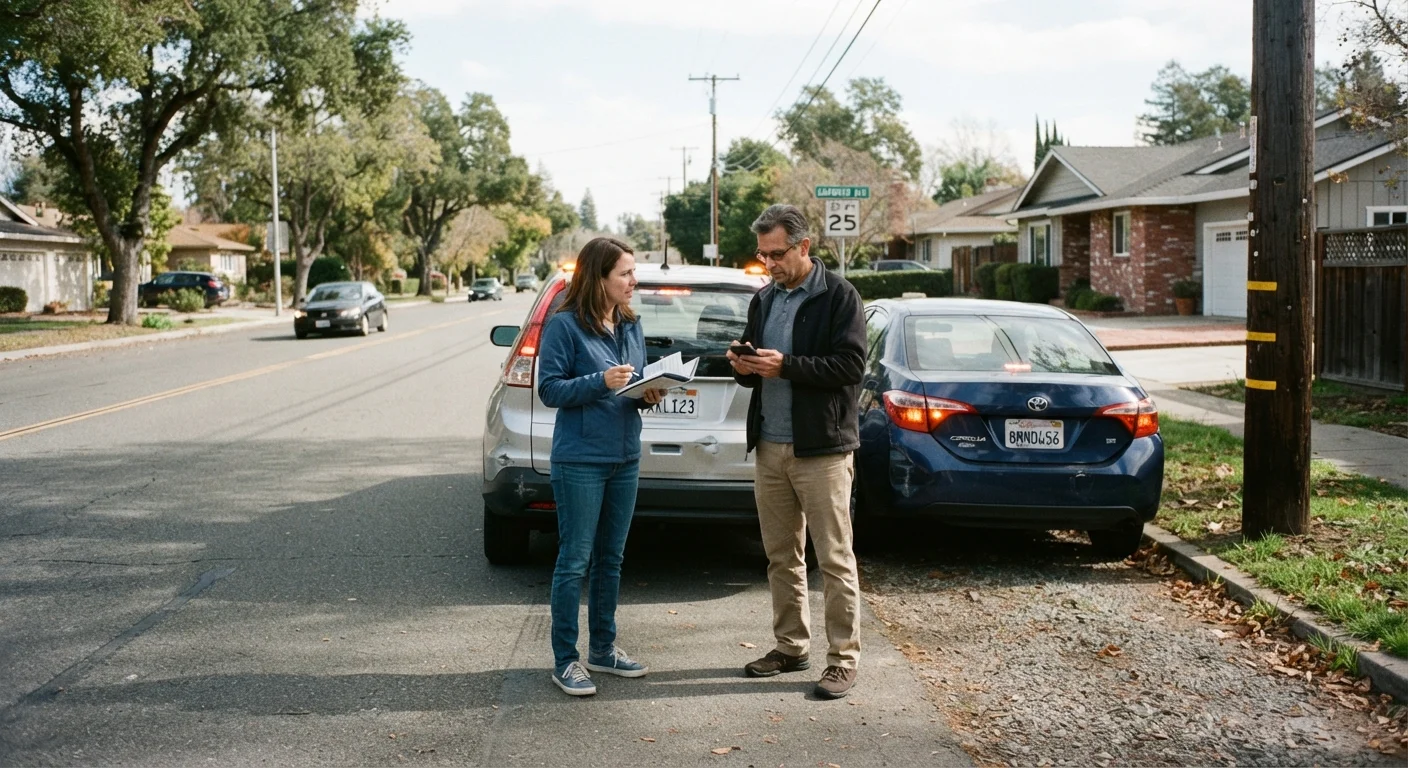
Exchange information with the other driver
Collect the following from every driver involved:
- Full name, address, and phone number
- Driver's license number and issuing state
- License plate number
- Insurance company name and policy number
- Vehicle make, model, and year
If there are witnesses, ask for their names and contact details as well. Keep the exchange civil and factual.
Document the scene thoroughly
Use your phone to photograph everything before vehicles are moved (if possible): overall scene, damage to all vehicles, skid marks, traffic signals or signs, road conditions, and any visible injuries. Capture multiple angles. Note the time, date, weather, and street names in a voice memo or written note while details are fresh.
Notify your insurance company
Contact your insurer as soon as reasonably possible - ideally the same day. Most policies require prompt reporting, and delays can complicate your claim. Give them an accurate account and provide the information and photos you collected. Ask what next steps they need from you and whether you should obtain a repair estimate before the vehicle is inspected.
Seek medical evaluation
Regardless of how you feel at the scene, consider visiting a healthcare provider within 24-48 hours, particularly after any impact above a low speed. Some injuries - including concussions and soft-tissue damage - present symptoms later. A documented medical evaluation also creates a record that may be important if a claim involves injury compensation. Always follow the advice of a qualified medical professional regarding your specific situation.
Keep an Accident Info Card in Your Glove Box
Print a simple checklist - what to photograph, what information to collect, and your insurance company's claims number - and store it in your glove box. In the shock of a crash, having a physical prompt can prevent costly oversights.
Common Mistakes to Avoid
Beyond the critical issue of admitting fault, several other missteps can create problems down the road:
- Leaving the scene prematurely: Departing before exchanging information or speaking to police can constitute a hit-and-run, even in a minor incident.
- Settling on the spot: Accepting cash from the other driver and agreeing not to involve insurance removes the paper trail you may need later if hidden damage or injuries emerge.
- Posting about the accident on social media: Anything you publish publicly can be accessed during a claims dispute or legal proceeding.
- Delaying medical care: Gaps between the accident and your first medical visit can be used to challenge the severity of your injuries.
Don't Skip the Police Report
Even in minor fender-benders, a police report creates an official, neutral record of events. Without one, a disagreement about fault later becomes your word against theirs. Many states require you to report accidents that exceed a certain damage threshold - check your state's DMV guidelines.
Modern vehicles come with safety systems that can help prevent collisions in the first place. Our overview of vehicle safety technologies explains how features like automatic emergency braking work - and when they have limitations.
This article provides general information for educational purposes and is not legal or insurance advice. Consult a qualified attorney or licensed insurance professional regarding your specific situation and policy terms.