

Key Takeaways
- Composting reduces household food waste and keeps organic material out of landfills.
- Finished compost improves soil structure, water retention, and microbial health over time.
- A compost pile requires consistent effort - turning, moisture management, and correct material ratios.
- Pests, odors, and slow decomposition are common problems that discourage beginners.
- Low startup costs make composting accessible, but results can take several months to appear.
Reduces household food waste sent to landfills
Organic material in landfills breaks down without oxygen, generating methane - a potent greenhouse gas. Composting at home diverts that material into a productive cycle instead.
Produces a free, high-quality soil amendment
Finished compost improves soil structure, drainage, and water retention while feeding soil microbes. Buying comparable bagged amendments regularly adds up over a growing season.
Improves long-term garden productivity
Repeated compost applications build organic matter in the soil over years, which supports healthier plant root systems and can reduce the need for supplemental fertilizers.
Low startup cost for a basic system
A simple wire or wooden bin can be assembled inexpensively from on-hand materials, making composting one of the more accessible home garden projects.
Reduces need for synthetic soil inputs
Consistent compost use can decrease reliance on purchased fertilizers and soil conditioners, though it rarely eliminates the need entirely in nutrient-demanding gardens.
Requires consistent, ongoing physical effort
Turning the pile every one to two weeks is necessary for active decomposition. Skipping this step causes the pile to stall and can create anaerobic conditions and odor problems.
Results take months, not days
Under typical conditions, a well-managed pile takes three to six months to produce finished compost. Colder climates extend this timeline further during fall and winter.
Can attract pests if managed poorly
Improperly enclosed bins or the inclusion of meat, dairy, or cooked foods can attract rodents and raccoons. Sturdy bin construction and correct inputs significantly reduce this risk.
Potential for odors near the home
An unbalanced pile - too wet, too nitrogen-heavy, or poorly aerated - can develop unpleasant smells. Regular turning and proper carbon-to-nitrogen ratios prevent most odor issues.
Requires learning a new set of skills
Understanding what materials to add, how to manage moisture, and how to troubleshoot a slow pile involves a learning curve that can frustrate beginners expecting an automatic process.
Space requirements may not suit every yard
Even a modest compost bin needs a few square feet of level, accessible ground. Very small yards or HOA-restricted properties may face practical or policy barriers.
Our Verdict
Backyard composting delivers real, lasting benefits for soil health and waste reduction, but it asks for genuine commitment in return. Households willing to build a routine around turning the pile and managing inputs will find the payoff worthwhile. Those with limited space, time, or patience may find the process frustrating before they see results.
Composting suits homeowners with an active vegetable or flower garden, a regular supply of kitchen and yard waste, and the willingness to tend the pile weekly.
What Backyard Composting Actually Involves
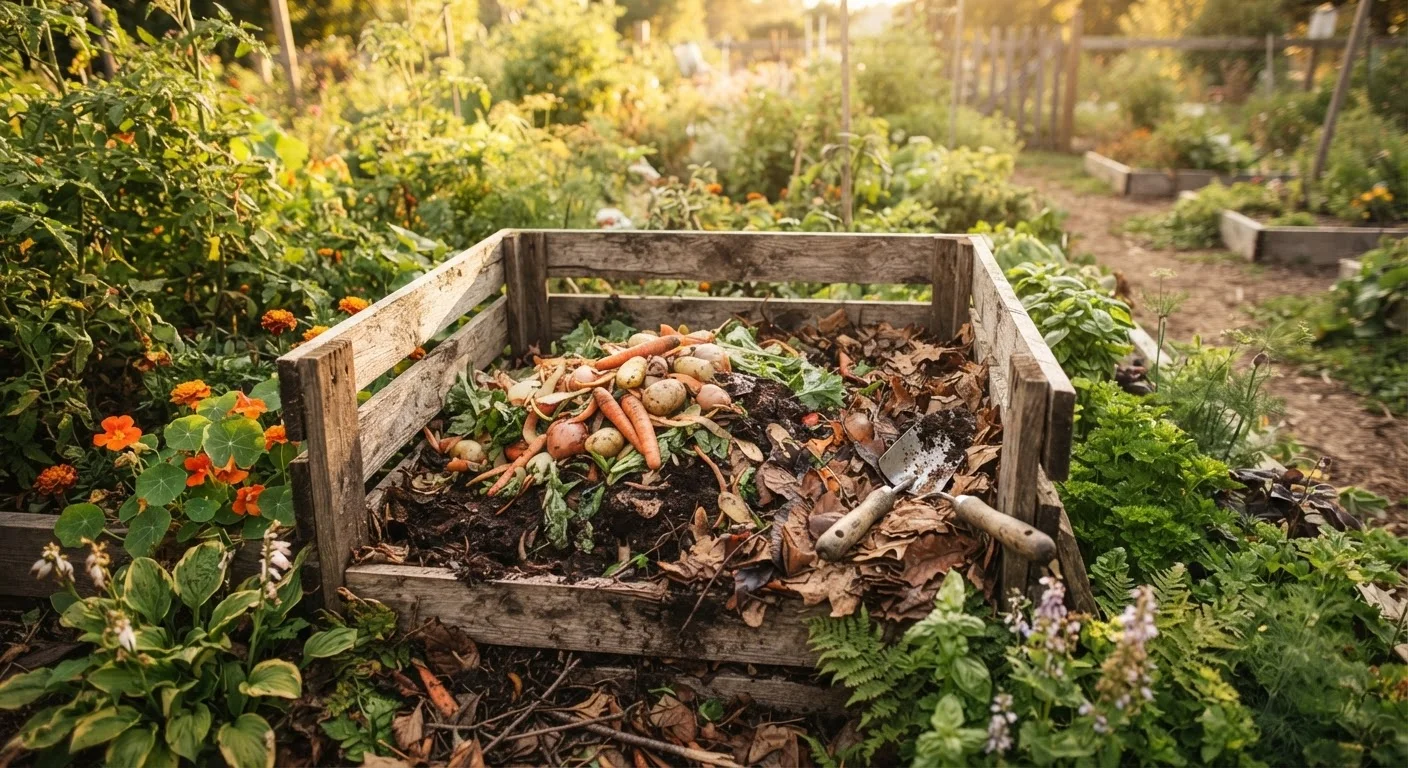
Composting is the managed decomposition of organic matter - fruit and vegetable scraps, coffee grounds, grass clippings, dry leaves, and similar materials - into a dark, crumbly amendment called humus. At its core, the process relies on bacteria, fungi, and other organisms breaking down carbon- and nitrogen-rich materials when air and moisture are present.
A functional home compost system requires three ongoing inputs: the right mix of materials (roughly three parts carbon-rich "browns" like dry leaves to one part nitrogen-rich "greens" like food scraps), enough moisture to feel like a wrung-out sponge, and regular turning to introduce oxygen. Without these, decomposition slows or stops entirely. Most beginners underestimate how active this maintenance needs to be, especially in the first few months.
If you want a broader overview of how the process works and what materials belong in the pile, see our guide on home composting basics.
Reduces household food waste sent to landfills
Organic material in landfills breaks down without oxygen, generating methane - a potent greenhouse gas. Composting at home diverts that material into a productive cycle instead.
Produces a free, high-quality soil amendment
Finished compost improves soil structure, drainage, and water retention while feeding soil microbes. Buying comparable bagged amendments regularly adds up over a growing season.
Improves long-term garden productivity
Repeated compost applications build organic matter in the soil over years, which supports healthier plant root systems and can reduce the need for supplemental fertilizers.
Low startup cost for a basic system
A simple wire or wooden bin can be assembled inexpensively from on-hand materials, making composting one of the more accessible home garden projects.
Reduces need for synthetic soil inputs
Consistent compost use can decrease reliance on purchased fertilizers and soil conditioners, though it rarely eliminates the need entirely in nutrient-demanding gardens.
The Real Drawbacks Worth Knowing
Composting is not passive gardening. It introduces management responsibilities that can trip up even motivated homeowners, and the challenges are worth understanding before you invest in a bin.
Requires consistent, ongoing physical effort
Turning the pile every one to two weeks is necessary for active decomposition. Skipping this step causes the pile to stall and can create anaerobic conditions and odor problems.
Results take months, not days
Under typical conditions, a well-managed pile takes three to six months to produce finished compost. Colder climates extend this timeline further during fall and winter.
Can attract pests if managed poorly
Improperly enclosed bins or the inclusion of meat, dairy, or cooked foods can attract rodents and raccoons. Sturdy bin construction and correct inputs significantly reduce this risk.
Potential for odors near the home
An unbalanced pile - too wet, too nitrogen-heavy, or poorly aerated - can develop unpleasant smells. Regular turning and proper carbon-to-nitrogen ratios prevent most odor issues.
Requires learning a new set of skills
Understanding what materials to add, how to manage moisture, and how to troubleshoot a slow pile involves a learning curve that can frustrate beginners expecting an automatic process.
Space requirements may not suit every yard
Even a modest compost bin needs a few square feet of level, accessible ground. Very small yards or HOA-restricted properties may face practical or policy barriers.
Odors are among the most common complaints. A pile that skews too wet or contains too many nitrogen-heavy materials - such as meat scraps or excessive grass clippings - can produce sulfurous or ammonia smells that drift toward neighboring properties. Pests are a related concern: rats and raccoons are attracted to food scraps, particularly in open or loosely constructed bins.
Decomposition timelines also catch beginners off guard. Cold temperatures in fall and winter significantly slow microbial activity, meaning a pile started in October may not yield usable compost until late the following spring. Compared to purchasing a bag of amendment from a garden center, that wait demands patience.
For households weighing compost against other soil-enrichment options, our comparison of organic and synthetic fertilizers covers the trade-offs in nutrient release and cost.
~30%
Share of household waste that is compostable
The U.S. Environmental Protection Agency estimates that food scraps and yard trimmings together make up roughly 30% of what American households throw away.
3-6 months
Typical time to finished compost
Under active management with regular turning and correct moisture levels, most home piles produce usable compost within three to six months in temperate climates.
Matching Composting to Your Garden Goals
The case for composting strengthens considerably when it connects to a specific garden purpose. Finished compost works as a soil amendment when preparing new beds, a top-dressing for established plantings, or an ingredient in potting mixes. Gardeners growing vegetables especially benefit, since compost encourages the kind of biologically active soil that supports healthy root development and natural pest resistance.
If you are building a vegetable garden for the first time, starting a vegetable garden from scratch explains how soil preparation - including amending with compost - shapes first-season results. Similarly, if you are deciding between bed types, raised beds versus in-ground plots explains how compost fits into each setup differently.
Families with limited outdoor space can still compost using enclosed tumbler-style bins, which contain odors better and speed decomposition by retaining heat. Those with very small yards or apartment balconies may find food-scrap pickup programs or vermicomposting (worm bins kept indoors) a more practical fit. There is no single right format - the goal is finding one that fits your actual habits, not an idealized version of them.
What You Should Not Add to a Home Pile
Meat, fish, dairy products, oily foods, and pet waste can attract pests and create harmful pathogens in a standard backyard bin. Diseased plant material and weeds that have gone to seed are also best kept out, as home piles rarely reach the sustained high temperatures needed to neutralize them. Sticking to fruit and vegetable scraps, coffee grounds, eggshells, dry leaves, and untreated yard trimmings keeps the process manageable and safe.