

| Recommended Mulch Depth | 2-4 inches for most applications (University cooperative extension consensus) |
| Straw Longevity | One growing season |
| Wood Chip Longevity | 2-4 years depending on climate |
| Rubber Mulch Longevity | 10+ years |
| Pine Needle Longevity | 1-2 years |
| Best Mulch for Vegetable Gardens | Straw or compost |
| Best Mulch for Slopes | Shredded bark or pine needles |
| Keep Mulch Away from Trunks | At least 2-3 inches clearance (International Society of Arboriculture guidance) |
Why Mulch Type Matters
Mulch does more than make a yard look tidy. It conserves soil moisture, regulates root temperature, suppresses weeds, and - depending on the material - can gradually feed the soil as it breaks down. The catch: different mulches behave very differently, and picking the wrong one for a situation can mean wasted money, pest problems, or stunted plants.
This reference guide covers the most common mulch types available to US homeowners, including their estimated cost ranges, how long they last, and the specific situations where each one earns its place. For tips on fitting mulching into a full seasonal routine, see seasonal yard maintenance tasks.
| Recommended Mulch Depth | 2-4 inches for most applications (University cooperative extension consensus) |
| Straw Longevity | One growing season |
| Wood Chip Longevity | 2-4 years depending on climate |
| Rubber Mulch Longevity | 10+ years |
| Pine Needle Longevity | 1-2 years |
| Best Mulch for Vegetable Gardens | Straw or compost |
| Best Mulch for Slopes | Shredded bark or pine needles |
| Keep Mulch Away from Trunks | At least 2-3 inches clearance (International Society of Arboriculture guidance) |
Organic Mulch Options
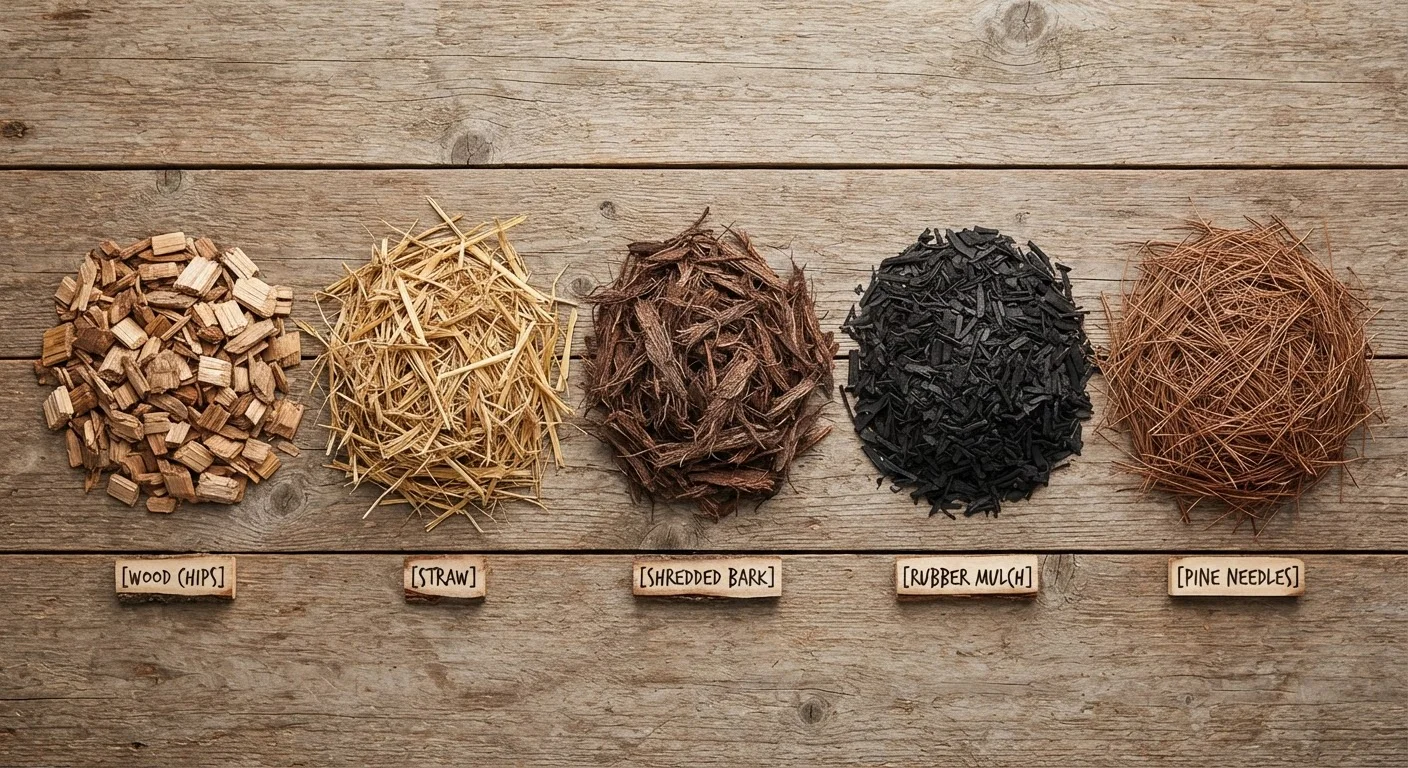
Wood Chips
Best for: Around trees, shrubs, and perennial beds. Wood chips decompose slowly, improving soil structure over time. They perform well in areas that don't need frequent replanting. Avoid mounding them against tree trunks - this can cause rot and invite pests.
Shredded Bark
Best for: Sloped beds and decorative areas. Shredded bark knits together as it settles, making it resistant to washing away on inclines. It lasts longer than wood chips but contributes fewer nutrients to the soil.
Straw
Best for: Vegetable gardens and newly seeded lawns. Straw is lightweight, affordable, and lets rain pass through easily. It breaks down within a single growing season, adding organic matter - a genuine benefit for food gardens. Avoid hay, which often carries weed seeds.
Pine Needles (Pine Straw)
Best for: Acid-loving plants such as blueberries, azaleas, and rhododendrons. Pine needles break down slowly, lock together well on slopes, and create a slight acidic effect in the topmost soil layer. They're a cost-effective option in regions where pine trees are common. See native plant considerations when selecting what to grow beneath them.
Compost
Best for: Vegetable beds and new planting areas where soil improvement is the priority. Compost used as mulch (2-3 inches deep) feeds soil biology directly but breaks down quickly and needs annual replenishment. Pair it with organic or synthetic soil inputs thoughtfully - learn how they compare in our guide to organic vs. synthetic fertilizers.
Grass Clippings
Best for: Vegetable garden pathways or as a thin top-dressing. Free and readily available, clippings decompose quickly into nitrogen-rich material. Apply no deeper than 1-2 inches - thick layers mat down and block air and water.
Organic Mulch
Any mulch made from once-living plant material - wood, straw, pine needles, compost, or grass clippings. Organic mulches break down over time, adding nutrients and organic matter to the soil.
Inorganic Mulch
Mulch made from non-living materials such as rubber, gravel, or landscape fabric. Inorganic mulches don't decompose, so they don't improve soil but also don't need annual replacement.
Mulch Depth
The thickness of the mulch layer applied to the soil surface. A 2-4 inch depth is recommended for most situations - too shallow reduces weed suppression; too deep can suffocate roots and cause rot.
Volcano Mulching
The harmful practice of piling mulch in a thick cone against a tree trunk. It traps moisture against the bark, promotes rot, and invites pests. Mulch should be kept a few inches away from any trunk or stem.
Soil Amendment
A material mixed into or applied atop soil to improve its physical properties or nutrient content. Decomposing organic mulches act as slow-release soil amendments over time.
Weed Suppression
The ability of a mulch layer to block sunlight from reaching the soil surface, preventing weed seeds from germinating. A consistent 2-3 inch layer is typically needed for effective suppression.
Inorganic Mulch Options
Rubber Mulch
Best for: Playgrounds and high-traffic decorative areas. Made from recycled tires, rubber mulch doesn't decompose, so it doesn't need annual replenishment. It provides good cushioning and long-term weed suppression. The trade-off: it doesn't improve soil, can heat up significantly in direct sun, and is difficult to remove once installed. It is not recommended for vegetable gardens or edible landscapes.
Landscape Fabric with Gravel or Rock
Best for: Permanent, low-maintenance pathways and dry-climate yards. Gravel and crushed rock don't break down, making them truly long-term solutions. Paired with landscape fabric underneath, they suppress weeds effectively. Be aware that landscape fabric can impede earthworm activity and water infiltration over time if not maintained. Rock mulch also raises soil temperature - a drawback in hot climates, but useful in cool ones.
If you're planning a raised bed setup where mulch choice intersects with soil management, compare raised beds to in-ground plots for full context.
Check for Local Free Mulch Programs
Many municipal utilities and tree service companies offer free or low-cost wood chips to homeowners. Checking with your local parks department, utility provider, or waste management program can yield large quantities of organic mulch at no cost. Quality may vary, so inspect for signs of disease or contamination before applying to garden beds.
Making a Cost-Smart Choice
The least expensive mulch upfront isn't always the lowest cost over time. A cheap organic mulch that needs replacing twice a year may cost more in labor and materials than a slower-decomposing option applied once annually. Consider these factors before buying:
- Area size: Large landscapes benefit from bulk wood chips, which can sometimes be sourced free from local tree services or municipal composting programs.
- Plant type: Match the mulch chemistry and depth to what's growing - shallow-rooted annuals need different treatment than established shrubs.
- Climate: In dry climates, any mulch that retains moisture well pays dividends on water bills. In wet climates, avoid dense mats that stay waterlogged.
- Replenishment frequency: Factor in the annual cost of topping up organic mulches vs. the higher upfront cost of inorganic options.
Smart mulch selection is one of the simpler ways to stretch your yard budget without cutting corners on plant health. A 2-4 inch layer applied correctly can meaningfully reduce watering needs and weeding time season after season.
Up to 25%
Reduction in soil moisture loss with mulch
A consistent mulch layer can meaningfully reduce evaporation, according to cooperative extension research on landscape water use.
50-70%
Decrease in weed emergence
Studies on organic mulch applied at 3-inch depth consistently show significant reductions in weed seed germination rates.
$2-$6
Typical cost per cubic foot for bagged mulch
Costs vary widely by region, mulch type, and whether purchased in bulk or in bags; bulk pricing is generally lower per unit.