

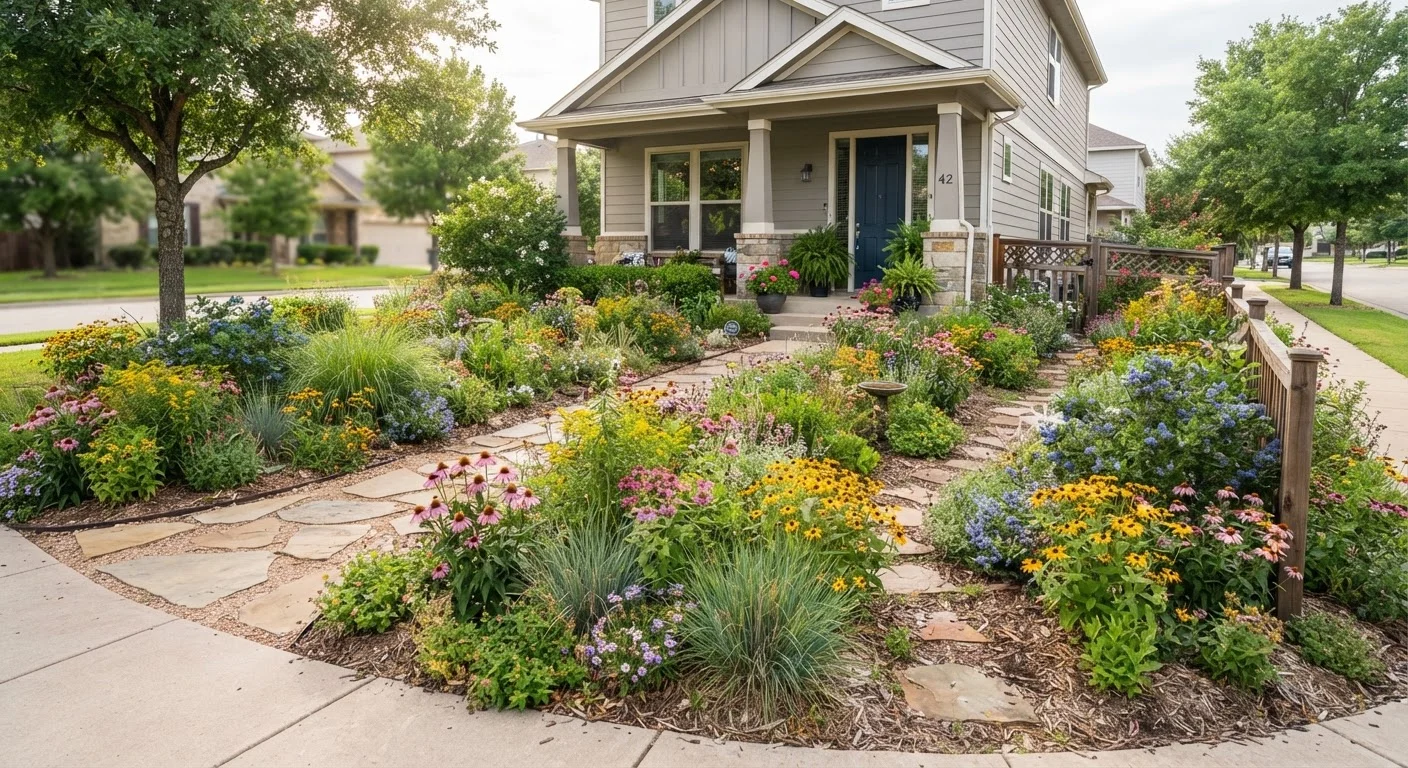
Key Takeaways
- Native plants evolved with local soils and climate, making them naturally lower-maintenance once established.
- They support local insects, pollinators, and birds in ways that non-native ornamentals often cannot.
- Native landscapes typically require less supplemental watering and fewer chemical inputs over time.
- Many native species are visually attractive and can anchor a beautiful, functional yard design.
- Choosing plants native to your specific region - not just the country - delivers the greatest ecological benefit.
Native Plants
Native plants are species that naturally occur in a specific region without human introduction, having evolved there over thousands of years. Because they developed alongside local soils, rainfall patterns, insects, and wildlife, they are well-adapted to the conditions of their home region. In a landscape context, "native" generally means indigenous to your specific state or broader ecological region, not just to North America at large.
Ecologists distinguish between "locally native" plants - those from within a specific county or ecoregion - and species that are simply native somewhere in the country. For maximum ecological benefit, locally sourced plants from within 100-200 miles of your property are typically preferred.
What Makes a Plant "Native" - and Why the Definition Matters
The term "native" is frequently used but not always defined precisely in gardening contexts. A plant qualifies as native when it established itself in a region through natural processes - not through intentional or accidental human introduction. These species co-evolved with local insects, birds, fungi, and soil conditions over long periods, creating ecological relationships that persist today.
The geographic scale of "native" matters considerably. A plant native to the eastern United States may be ecologically irrelevant in the Pacific Northwest, even though both are within the same country. Ecologists generally encourage homeowners to think in terms of ecoregions - areas sharing similar climate, soils, and plant communities - rather than state or national boundaries. Your local cooperative extension service can point you toward lists specific to your area.
Non-native ornamentals, by contrast, were introduced from other countries or distant regions for their visual appeal. Many are perfectly harmless, but they evolved with different insects and wildlife and may offer little food or habitat value to the species already living in your yard.
The Ecological Case Ecologists Make for Native Plantings
Ecologists recommend native plants for home landscapes primarily because of their established relationships with local wildlife. Native insects - including many specialist bee species and caterpillars - often cannot use non-native plants for food or reproduction. Research by entomologist Doug Tallamy and colleagues has highlighted that many native caterpillar species depend on specific native host plants to complete their life cycles, and without those plants, bird populations that rely on caterpillars as a primary food source can decline.
“Restoring native plant communities to residential landscapes is one of the most powerful things individual homeowners can do to support the local food web that sustains birds, insects, and other wildlife.”
— Doug Tallamy, Professor of Entomology and Wildlife Ecology, University of Delaware
Pollinators provide another compelling argument. While generalist bees visit a wide range of flowers, many native bee species evolved to forage on specific plant families. A yard rich in native flowering plants can support a far greater diversity of native bee species than one planted primarily with ornamental imports.
Beyond insects, native plantings contribute to soil health. Deep-rooted native prairie grasses and perennials, for example, build organic matter and improve water infiltration - reducing runoff and erosion over time. These are practical benefits that compound quietly year after year.
70%
Of US land managed by private landowners
According to the US Department of Agriculture, the majority of American land is privately owned, meaning residential landscaping choices have significant cumulative ecological effects.
90%+
Of native specialist bees dependent on specific plant genera
Research published in ecology journals suggests a large proportion of specialist native bee species rely on particular native plant families for pollen and reproduction.
6,000-9,000
Caterpillar species supported by native oaks (genus Quercus) in eastern US
Entomological research by Doug Tallamy's lab at the University of Delaware has documented native oaks as among the most ecologically valuable trees for supporting insect-based food webs.
Practical Benefits for Budget-Conscious Homeowners
Ecological arguments are compelling, but many homeowners also want to know: what does this mean for my time and wallet? The practical case for natives is strong once you move past the establishment phase.
Because native plants are adapted to local rainfall patterns, they typically need little to no supplemental irrigation after their roots are established - usually within one to two growing seasons. This can translate into meaningfully lower water bills, especially in drier regions. For more ideas on reducing water demand in your yard, see our guide on drought-tolerant landscaping.
Native plants also tend to require fewer chemical inputs. Having evolved with local pest pressure, many are more resistant to common insects and diseases than exotic ornamentals, which can reduce reliance on pesticides. Similarly, native species adapted to your region's soil chemistry often thrive with little or no fertilizer. Our comparison of organic vs. synthetic fertilizers can help if you do want to supplement soil nutrition.
Maintenance time also tends to drop over the long term. Established native perennials and shrubs often handle seasonal transitions - dormancy, spring regrowth - without intervention. Pairing native plants with an appropriate mulch layer further reduces weeding and moisture loss; see our guide to mulch types for practical options.
Getting Started: Incorporating Natives Into Your Existing Landscape
You don't need to remove your entire yard to benefit from native plants. Most ecologists and landscape designers suggest a gradual approach: replace plants as they die back naturally, convert one bed at a time, or start with a dedicated pollinator patch in a corner of the yard.
A few practical starting points:
- Identify your ecoregion. Use resources from your state's native plant society or cooperative extension office to find species appropriate for your specific area, soil type, and sun exposure.
- Start with reliable performers. Species like native coneflowers, black-eyed Susans, native asters, and switchgrass are widely adapted, visually appealing, and relatively easy to establish in many US regions.
- Consider the full season. Aim for a mix of species that bloom at different times, providing resources for wildlife from spring through fall.
- Plan for structure. Natives work well alongside conventional garden planning approaches. Whether you're using raised beds or in-ground plots, native plants can fit either format.
Integrating native plants into your seasonal yard maintenance routine - planting in fall, cutting back in late winter - helps them establish well and reduces overall workload.