

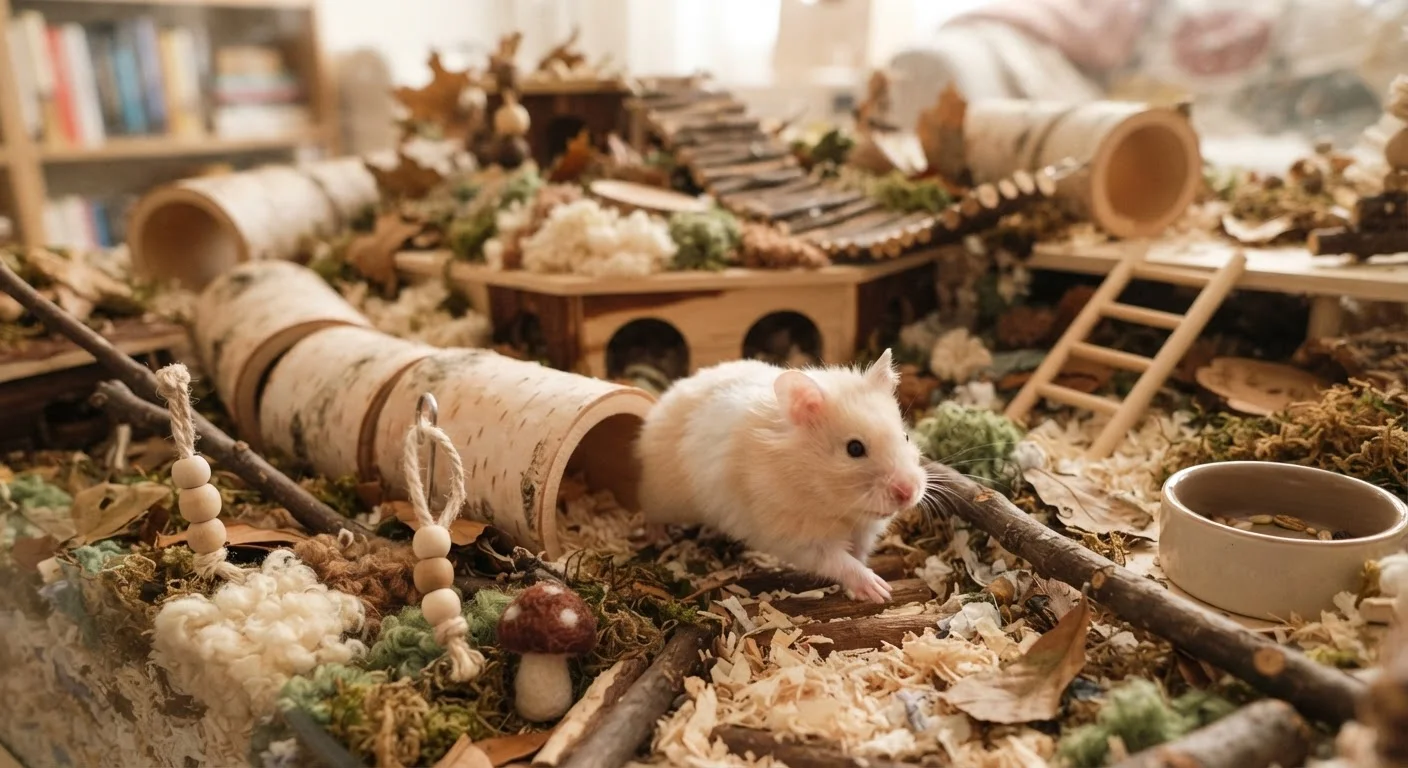
Key Takeaways
- Small pets like hamsters, guinea pigs, and rabbits need mental stimulation just as much as physical care.
- Enrichment doesn't require expensive supplies - many effective ideas use household items.
- Rotating activities and introducing novelty regularly helps prevent boredom and stress-related behaviors.
- Matching enrichment to your pet's species-specific instincts makes activities far more effective.
- Consistent daily interaction, even brief, contributes meaningfully to a small pet's overall well-being.
Why Enrichment Matters for Small Pets
It's easy to assume that a well-fed small pet living in a clean enclosure is a happy one. But animals like guinea pigs, rabbits, hamsters, gerbils, and rats are curious, active creatures whose wild counterparts spend hours foraging, burrowing, and socializing each day. Without similar outlets at home, boredom can take a real toll.
Signs of under-stimulated small pets include repetitive pacing, bar-chewing, over-grooming, lethargy, and even aggression. These behaviors aren't personality quirks - they're signals that something is missing from the animal's environment. Enrichment is simply the practice of building that missing variety back in, and it doesn't have to cost much. (If you're weighing the full picture of small-pet ownership, our article on the real ongoing costs of small pets is worth a read.)
Best Practices for Daily Small-Pet Enrichment
The practices below apply broadly across common small companion animals, though you'll want to adjust based on your specific pet's species, age, and temperament.
Rotate toys and objects every few days rather than leaving the same items in place permanently.
Familiarity reduces stimulation value quickly. Rotating items restores novelty, which encourages exploration and investigation - two behaviors that are naturally satisfying for small animals. It also means you can achieve variety without constantly buying new things.
Incorporate foraging opportunities into daily feeding rather than placing food directly in a bowl.
Most small animals are natural foragers, spending significant portions of their waking hours searching for food in the wild. Hiding food or spreading it through bedding taps into this instinct and turns mealtime into an engaging mental exercise. It also slows eating, which can aid digestion.
Provide species-appropriate burrowing or hiding material in sufficient depth.
The ability to hide and burrow is a fundamental safety behavior for prey animals. When small pets can't perform these behaviors, low-level stress tends to persist. Deep, appropriate bedding addresses this at a basic environmental level.
Introduce safe, novel textures and scents on a regular basis.
Smell is a primary sense for most small mammals, and new scents prompt investigation and cognitive engagement. This is one of the simplest and least expensive enrichment tools available to owners.
Schedule brief, consistent handling or supervised out-of-enclosure time daily.
Social interaction and controlled exploration outside the habitat provide stimulation that can't be replicated by in-enclosure enrichment alone. Consistency matters more than duration - short daily sessions are generally more beneficial than occasional long ones.
Quick Wins You Can Start Today
You don't need a full habitat overhaul to make a difference. These small steps can be implemented immediately and often have a noticeable impact within days.
For families with children involved in pet care, keeping enrichment activities age-appropriate is just as important as the activities themselves. Our guide on small pets and young children walks through how to involve kids safely and meaningfully.
Putting It All Together
Building enrichment into a daily routine doesn't mean adding a long to-do list. Even five to ten minutes of intentional variety - a new foraging opportunity here, a rearranged enclosure there - adds up to a meaningfully better quality of life for your pet. The goal is to make novelty and mental challenge a normal part of how your small animal experiences each day, not a special occasion.
Your enclosure setup plays a big role too. If you haven't reviewed your pet's housing recently, it's worth checking our piece on common cage setup mistakes to make sure the basics are working in your pet's favor. And if you have dogs in the household looking for similar inspiration, low-cost dog enrichment ideas can help keep the whole household engaged.
This article provides general pet care information for educational purposes only. For concerns about your pet's health or behavior, consult a qualified veterinarian or certified animal behaviorist.